CM Himanta Links Navami Blessings to Assam's Women Enterprise Push
Synopsis
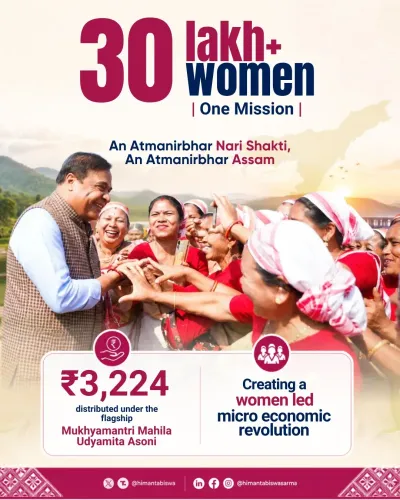
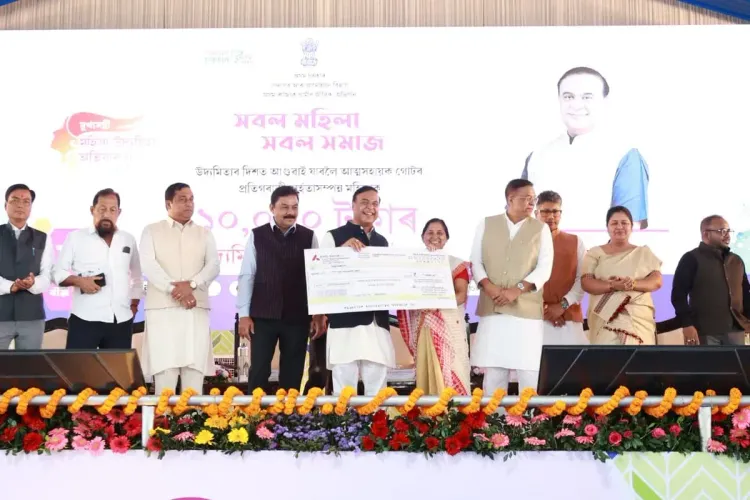
Assam CM Himanta Biswa Sarma used Maha Navami to spotlight the Mukhyamantri Mahila Udyamita Abhiyan, a scheme offering women SHG members a stepped capital ladder from ₹10,000 to ₹50,000 across three years, targeting a ₹1 lakh annual income goal called Lakhpati Baideu.
Key Takeaways
Maha Navami hook: CM Himanta Biswa Sarma used the occasion of Maha Navami on 20 October 2026 to highlight the Mukhyamantri Mahila Udyamita Abhiyan.
Three-year capital ladder: Eligible SHG women receive ₹10,000 (year 1), ₹25,000 (year 2, half state grant + half bank loan), and ₹50,000 (year 3, same co-financing) contingent on demonstrated use.
Lakhpati Baideu target: The scheme's stated goal is for each participating woman to earn at least ₹1 lakh annually .
Active sectors: Women have already reached the income threshold through bakeries, food processing, fish farming, and vegetable cultivation .
Bank linkage: From year two onward, bank loans are integrated into the capital structure, building formal credit histories for participants.
Watch point: Verified data on how many women have crossed the ₹1 lakh threshold and future budget allocations in the Assam assembly will test the scheme's actual scale.
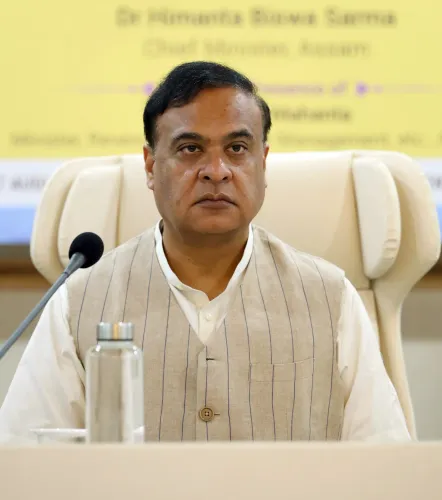
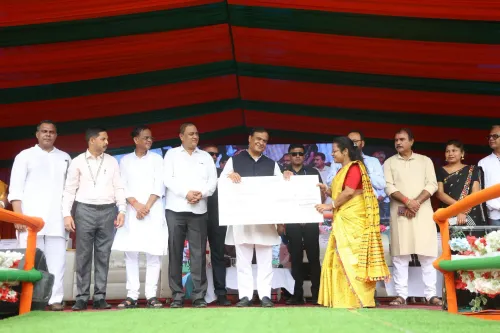
On the auspicious occasion of Maha Navami, Assam Chief Minister Himanta Biswa Sarma invoked the blessings of Maa Siddhidatri — the goddess of achievement and fulfilment — and turned the moment into a pointed spotlight on the state's flagship women entrepreneurship drive, the Mukhyamantri Mahila Udyamita Abhiyan.
Three-Year Ladder: From ₹10,000 Seed to a ₹1 Lakh Income
The scheme works on a stepped capital model. In the first year, every eligible woman member of a self-help group receives ₹10,000 as seed capital — no strings, just a start. Demonstrate that the money is working and the second year unlocks ₹25,000, split equally between a state grant and a bank loan. Use that well and the third year brings ₹50,000 on the same co-financing structure. The design is deliberate: each tranche is contingent on demonstrated use of the last, weaving financial discipline into the programme's DNA.
The end target carries a name that travels easily in Assamese society: Lakhpati Baideu — a 'sister' earning at least ₹1 lakh a year. The label does something beyond branding; it sets a concrete, measurable finish line for every participant and for the administration tracking them.
Bakeries, Fish Ponds, and the Enterprises Behind the Numbers
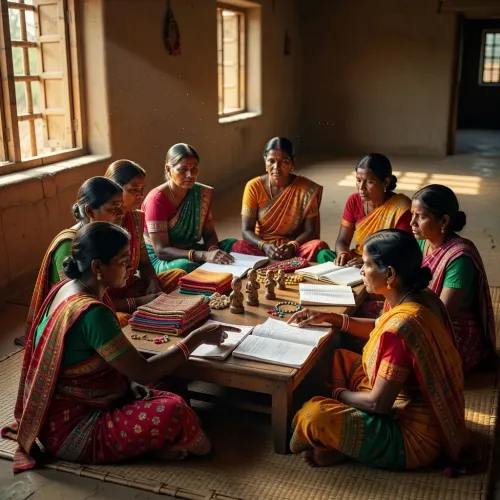
Sarma's post names the sectors where women have already crossed that threshold: bakeries, food processing, fish farming, and vegetable cultivation. These are not aspirational categories — they map directly onto Assam's existing rural economy, where women have long supplied the labour without capturing the returns. The scheme's logic is to close that gap by converting subsistence activity into structured micro-enterprise.
The broader pattern here echoes strategies adopted across eastern and northeastern India, where staged grants combined with self-help group infrastructure have proven more durable than one-time transfers. Linking each payout to a bank relationship also builds credit history — a quiet but transformative shift for women who have historically operated outside the formal financial system.
Navratri as a Policy Platform
Sarma's framing — weaving the goddess's attribute of 'siddhi' (divine accomplishment) directly into the scheme's achievements — is a studied rhetorical choice. It places the Abhiyan inside a cultural register that resonates deeply in rural Assam, making the policy feel less like a government programme and more like a natural extension of the season's values. Whether one reads it as communication strategy or genuine conviction, the effect is that a welfare announcement lands on one of the year's highest-traffic religious moments.
The next concrete signal to watch: scheme progress data on how many participants have genuinely crossed the ₹1 lakh annual income threshold, and what budget the Assam assembly allocates to the Abhiyan's next phase.
Point of View
Which, if tracked rigorously, could become a meaningful data point in Assam's financial inclusion story ahead of assembly budget cycles.
NationPress
20 Oct 2026
Frequently Asked Questions
What is the Mukhyamantri Mahila Udyamita Abhiyan in Assam?
It is an Assam government scheme that provides phased seed capital to women members of self-help groups to help them start micro-enterprises. Women receive ₹10,000 in the first year, ₹25,000 (half grant, half bank loan) in the second year, and ₹50,000 on the same co-financing basis in the third year.
What is Lakhpati Baideu?
'Lakhpati Baideu' is the target goal of the Mukhyamantri Mahila Udyamita Abhiyan — it means a woman ('Baideu' is Assamese for sister) who earns at least ₹1 lakh per year through her micro-enterprise.
Who is eligible for the Mukhyamantri Mahila Udyamita Abhiyan?
According to CM Himanta Biswa Sarma's post, every eligible woman member of a self-help group (SHG) in Assam qualifies to receive the scheme's seed capital.
What businesses are women starting under the Assam women entrepreneurship scheme?
CM Sarma cited bakeries, food processing, fish farming, and vegetable cultivation as sectors where women have already achieved the Lakhpati Baideu income milestone under the scheme.
How does the Assam scheme's capital ladder work?
The scheme releases capital in three annual tranches contingent on demonstrated use of the previous tranche: ₹10,000 as a direct grant in year one, ₹25,000 (state grant plus bank loan) in year two, and ₹50,000 on the same co-financing structure in year three.