CM Majhi pledges disaster-resilient Odisha on risk reduction day
Synopsis
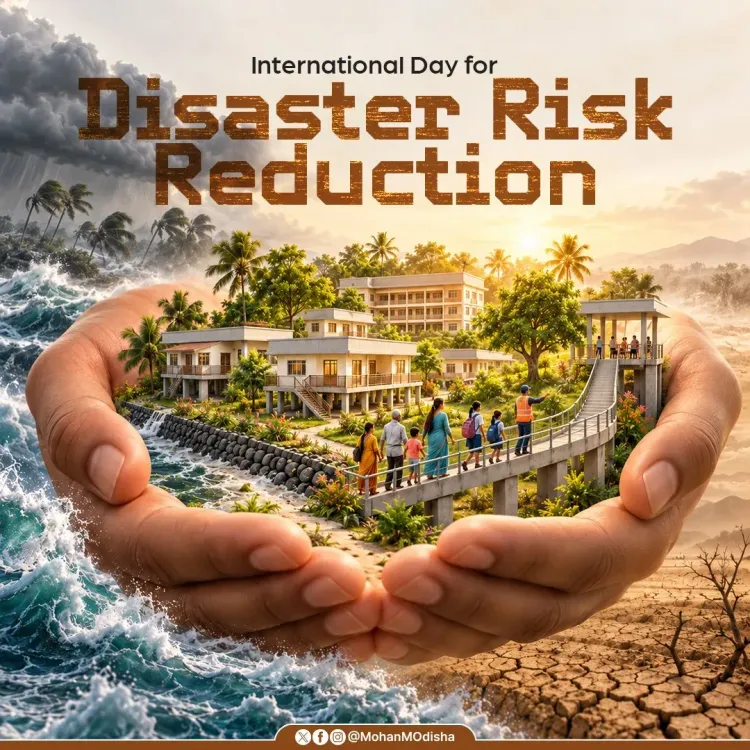
On International Day for Disaster Risk Reduction, Odisha CM Mohan Charan Majhi reaffirmed his government's commitment to preparedness, awareness, and collective action — pledging to build a disaster-resilient Odisha amid the state's long history of cyclone vulnerability.
Key Takeaways
Odisha CM Mohan Charan Majhi marked International Day for Disaster Risk Reduction on October 13, 2026 with a public commitment to disaster resilience.
He called for 'strengthening preparedness, raising awareness, and fostering collective action' as the pillars of a resilient Odisha.
Odisha's 1,100-km Bay of Bengal coastline makes it India's most cyclone-exposed state, with the 1999 super-cyclone killing over 10,000 people .
The state's turnaround is well-documented: Cyclone Fani (2019) saw over 1.2 million people evacuated in under 48 hours , with fatalities under 90 .
The CM's framing emphasises shifting from reactive emergency response to proactive community-level resilience.
Odisha faces layered disaster risks — cyclones, river floods, interior droughts, and growing heat-wave events — making year-round preparedness a governance priority.
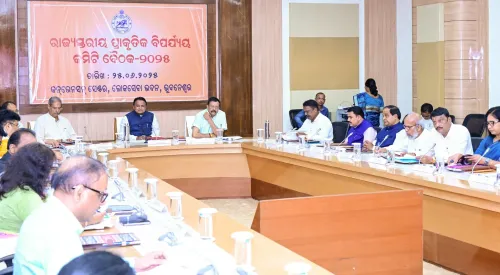
Every year, October 13 marks the International Day for Disaster Risk Reduction — a global reminder that preparedness saves lives. On that day in 2026, Odisha Chief Minister Mohan Charan Majhi used the occasion to reaffirm his government's commitment to building a state that can face nature's worst without breaking.
In his post, CM Majhi called for 'strengthening preparedness, raising awareness, and fostering collective action to face every challenge with courage and coordination' — a message aimed squarely at Odisha, a state that sits on the front lines of India's climate vulnerability.
Why Odisha's disaster record makes this more than a calendar moment
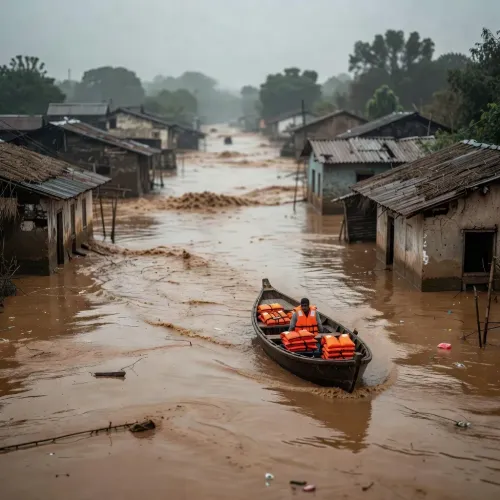
Odisha has long carried a dual reputation: as one of India's most cyclone-battered coastlines, and as the country's most improved disaster-response machine. The state's 1,100-kilometre coastline along the Bay of Bengal makes it the first landfall point for nearly every major cyclone that brews in the eastern Indian Ocean. Historically, storms here were catastrophic — the 1999 super-cyclone killed over 10,000 people and devastated entire districts.
What followed was a two-decade transformation. Odisha built a network of cyclone shelters, early-warning systems, and community-level disaster management teams that became a model studied globally. By the time Cyclone Fani struck in 2019 — one of the most powerful storms to hit India in decades — the state evacuated over 1.2 million people in under 48 hours, limiting fatalities to under 90. The contrast with 1999 is staggering.
The current push: from response to resilience
CM Majhi's emphasis on 'collective action' signals a shift in framing — from reactive disaster response to proactive community resilience. The distinction matters. Preparedness infrastructure (shelters, sirens, trained responders) handles the emergency; resilience means communities can absorb, adapt, and recover faster, reducing long-term economic and human cost.
Odisha faces not just cyclones but also floods along its river systems, droughts in its interior districts, and heat-wave events that have grown more frequent. Disaster risk, in that context, is a year-round governance challenge, not a seasonal one.
On a day when the global conversation turns to reducing risk rather than merely counting casualties, Odisha's journey — from tragedy to template — stands as evidence that political will, institutional investment, and community trust together can rewrite the odds.
Point of View
And every successive government has an incentive to protect and extend that brand. The shift in language toward 'resilience' and 'collective action' reflects a broader national and global pivot: disaster policy is increasingly framed not as crisis management but as development investment. For a BJP government in Odisha — a state whose coastal districts are both electorally significant and climate-vulnerable — demonstrating ownership of this legacy is both governance and politics, each reinforcing the other.
NationPress
13 Oct 2026
Frequently Asked Questions
What is International Day for Disaster Risk Reduction?
International Day for Disaster Risk Reduction is observed every year on October 13 to promote a global culture of risk awareness, preparedness, and disaster loss reduction.
Why is Odisha particularly vulnerable to natural disasters?
Odisha has a 1,100-km coastline along the Bay of Bengal , making it the primary landfall zone for cyclones that form in the eastern Indian Ocean. It also faces floods, droughts, and increasing heat-wave events.
How has Odisha improved its disaster management over the years?
After the devastating 1999 super-cyclone that killed over 10,000 people , Odisha built cyclone shelters, early-warning systems, and trained community teams. By Cyclone Fani in 2019 , over 1.2 million people were evacuated in under 48 hours with fewer than 90 fatalities.
What did CM Majhi say on Disaster Risk Reduction Day 2026?
CM Mohan Charan Majhi called for strengthening preparedness, raising public awareness, and fostering collective action to build a disaster-resilient Odisha , marking the occasion on October 13, 2026 .
What is the difference between disaster response and disaster resilience?
Disaster response handles the immediate emergency — evacuations, rescue, relief. Disaster resilience means communities and systems are built to absorb shocks, adapt, and recover faster, reducing the long-term human and economic toll before a disaster even strikes.