CM Rekha Gupta Cites IMF 7% Growth Forecast for India
Synopsis
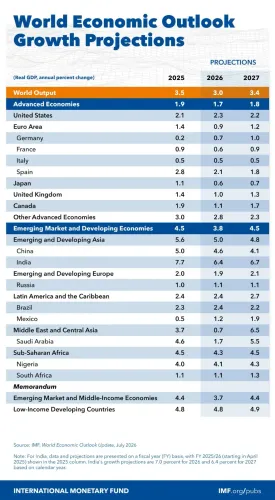
The IMF's World Economic Outlook projects 7.0% GDP growth for India in both 2026 and 2027. Delhi CM Rekha Gupta highlighted the forecast on October 13, 2026, linking it to a decade of reforms under PM Modi and the Viksit Bharat 2047 vision.
Key Takeaways
The IMF World Economic Outlook projects India's GDP growth at 7.0% in both 2026 and 2027 .
The projection positions India as the world's fastest-growing major economy among large nations.
Delhi CM Rekha Gupta cited the forecast on October 13, 2026 , attributing it to reforms under PM Narendra Modi .
The post references infrastructure expansion, manufacturing growth, and investment as key drivers.
The Viksit Bharat by 2047 goal — developed-nation status by India's centenary Independence Day — is cited as the overarching national target.
BJP state-level leaders are amplifying the Union government's economic narrative, using IMF data as an independent, non-partisan anchor.
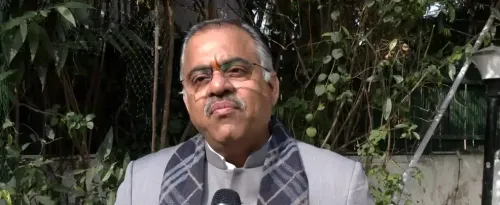
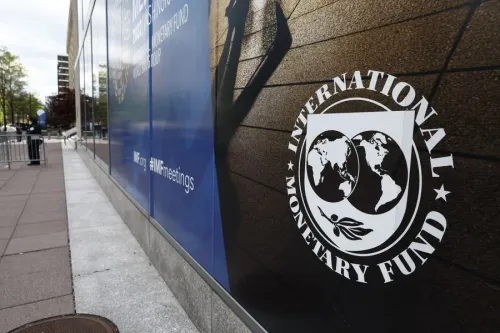
India is the world's fastest-growing major economy — and the numbers to prove it just landed from the IMF. Delhi Chief Minister Rekha Gupta on Tuesday, October 13, 2026, highlighted the International Monetary Fund's World Economic Outlook projection of 7.0% GDP growth for India in both 2026 and 2027, framing it as a validation of a decade of economic transformation under Prime Minister Narendra Modi.
What the IMF projection says — and why 7% matters
Seven percent is not a routine number. At a moment when major Western economies are navigating sluggish growth, elevated debt, and persistent inflation, a back-to-back 7.0% projection for India from the IMF places it in a league of its own among large economies. The IMF's World Economic Outlook is the fund's flagship twice-yearly assessment — a reading that moves markets, shapes sovereign credit narratives, and signals where global capital looks next. Gupta's post quotes the projection directly, calling it a reaffirmation of India's position as 'the world's fastest-growing major economy.' The framing ties the forecast to structural policy choices — 'bold economic reforms, infrastructure expansion, manufacturing and investment' — rather than a one-off cyclical bounce.A decade of reforms cited as the foundation
The CM's post situates the IMF number inside a longer arc: roughly ten years of policy shifts credited to the Modi government. Infrastructure push, a manufacturing-led pivot encouraged through initiatives like Production Linked Incentive (PLI) schemes, and sustained foreign direct investment inflows have collectively repositioned India's growth story from a consumption-driven narrative to a broader investment and export-readiness one. The phrase 'Viksit Bharat by 2047' — 'Developed India by 2047' — anchors the post in the government's stated centenary goal: reaching developed-economy status by India's 100th Independence Day. The 2047 target has become the organising principle behind a wide range of Union government policy documents, budget priorities, and state-level development frameworks.Confidence amid global headwinds
Gupta's note that India is 'moving ahead with confidence, stability and a clear resolve' even 'amid global uncertainties' is a deliberate contrast with the choppy international backdrop — geopolitical stress, trade fragmentation, and uneven recoveries elsewhere. For a state government leader to amplify a Union-level economic data point underscores how the BJP's national economic narrative is being carried through its network of state governments as a unified political message. The IMF endorsement, when it comes from an institution that is decidedly non-partisan and globally authoritative, gives that message an independent anchor that party statistics alone cannot provide. That is the strategic weight behind what looks, on the surface, like a routine congratulatory post.Point of View
Third-party validation rather than in-house metrics alone. The invocation of 'Viksit Bharat 2047' in this context is telling: it converts a two-year forecast into a waypoint on a 25-year civilisational arc, giving the growth story a long-term political identity beyond any single election cycle. For the BJP's state leaders, echoing Union economic wins keeps the national narrative cohesive and signals to investors and voters alike that federal and state-level ambitions are aligned. The question the data will eventually have to answer is whether 7% growth translates into equally visible gains in employment quality, income distribution, and human development — the metrics by which 'Viksit Bharat' will ultimately be judged.
NationPress
13 Oct 2026
Frequently Asked Questions
What is India's GDP growth forecast for 2026 according to the IMF?
The IMF's World Economic Outlook projects India's GDP growth at 7.0% in 2026 , maintaining the same rate into 2027 , making India the fastest-growing major economy globally.
What is Viksit Bharat 2047?
Viksit Bharat — 'Developed India' — is the Indian government's stated goal of achieving developed-economy status by 2047 , the 100th anniversary of India's independence.
Why does the IMF World Economic Outlook matter for India?
The IMF World Economic Outlook is a globally authoritative, twice-yearly economic assessment that influences sovereign credit ratings, foreign investment decisions, and international confidence in an economy's trajectory.
What reforms are credited for India's strong economic growth?
The post references 'bold economic reforms, infrastructure expansion, manufacturing and investment' over the past decade — broadly encompassing Production Linked Incentive (PLI) schemes, capital expenditure drives, and a push to attract foreign direct investment.