CM Rekha Gupta Marks 12 Years of Modi's Foreign Policy Gains
Synopsis
Delhi Chief Minister Rekha Gupta on 19 June 2026 hailed PM Narendra Modi's 12-year tenure, citing 33 diplomatic honours, ₹70 lakh crore in FDI, 9 Free Trade Agreements, 20 evacuation missions, and India's COVID-19 vaccine outreach to over 100 countries as milestones of India's rising global stature.
Key Takeaways
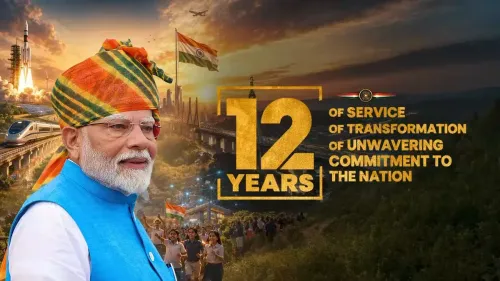
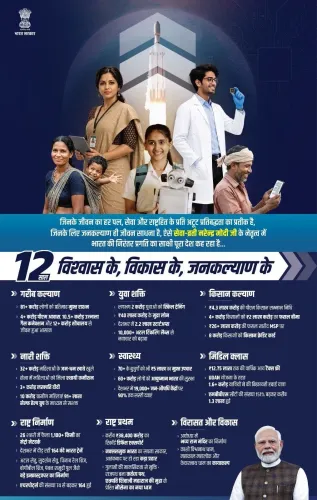
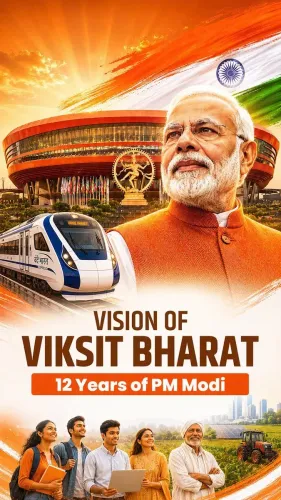
Delhi CM Rekha Gupta posted a tribute on 19 June 2026 marking 12 years of PM Narendra Modi 's leadership under the hashtag #12YearsOfIndiaFirst .
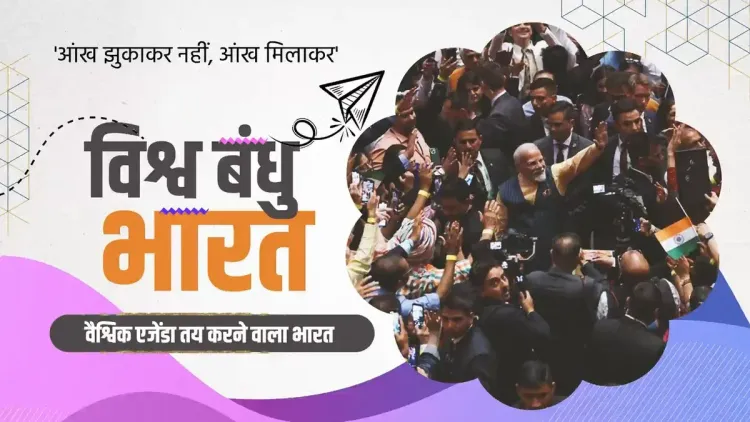
She cited 33 global honours received by PM Modi and the consensus G20 New Delhi Leaders' Declaration of September 2023 as proof of India's diplomatic standing.
The post claimed 9 Free Trade Agreements with 38 countries and more than ₹70 lakh crore in foreign direct investment over the 12-year period.
20 citizen evacuation missions — including Operation Rahat and Operation Ganga — were highlighted as evidence of the government's commitment to protecting Indians abroad.
India's supply of vaccines and food grains to more than 100 countries under the Vaccine Maitri framework was described as fulfilling the ideal of Vasudhaiva Kutumbakam .
India's digital governance model, built on platforms such as UPI , was presented as a global template being replicated internationally.
Delhi Chief Minister Rekha Gupta on Friday, 19 June 2026, credited Prime Minister Narendra Modi with reshaping India's global standing over the past 12 years, citing diplomatic honours, record foreign investment, and humanitarian outreach as evidence of a transformed foreign policy doctrine.
Context
Posting under the hashtag #12YearsOfIndiaFirst, CM Gupta described the Modi government's tenure as one defined by the principle of 'nation first' in every decision. She wrote that India is now being established as a 'credible global partner' — 'विश्वसनीय वैश्विक साझेदार' — on the world stage. The post marks the 12th anniversary of Narendra Modi assuming office as Prime Minister in May 2014.
Gupta pointed to 33 global honours received by the Prime Minister from various countries and the landmark consensus achieved on the G20 New Delhi Leaders' Declaration in September 2023 as proof of India's growing international credibility. The New Delhi Declaration was notable for achieving agreement on contentious geopolitical language at a time of deep divisions among major powers.
Policy Backdrop
On the economic front, Gupta's post claimed that 9 Free Trade Agreements covering 38 countries have been signed, and that India has attracted more than ₹70 lakh crore in foreign direct investment during this period. Among the significant agreements are Comprehensive Economic Partnership Agreements signed with the UAE and Australia in 2022, which expanded India's trade network considerably.
The post also highlighted 20 citizen evacuation missions — including well-documented operations such as Operation Rahat in Yemen in 2015 and Operation Ganga during the Ukraine conflict in 2022 — as demonstrations of the government's commitment to protecting Indians abroad. Gupta described these as reflecting an 'unbreakable dedication' to the safety of every citizen.
India's Make in India initiative, launched in 2014, underpins the broader economic strategy of boosting domestic manufacturing and attracting global capital, forming the industrial backbone of the FDI narrative Gupta invokes.
Stakeholders and Impact
Gupta invoked the Sanskrit principle of 'Vasudhaiva Kutumbakam' ('the world is one family') to frame India's humanitarian role, noting that the country supplied vaccines and food grains to more than 100 countries during difficult global periods. This is a reference to the Vaccine Maitri programme, launched in January 2021, under which India exported domestically produced COVID-19 vaccines to scores of nations during the pandemic.
The post further highlighted India's digital governance model — built on platforms such as UPI and Aadhaar-linked systems — as a global template that other nations are watching closely. Foreign investors, the Indian diaspora, and developing nations seeking affordable digital infrastructure are the primary stakeholders in this soft-power projection.
What's Next
India's ongoing bilateral trade negotiations and the potential addition of new Free Trade Agreements remain key markers of whether the economic diplomacy gains Gupta describes can be consolidated. The international uptake of Indian digital public infrastructure models — particularly UPI — across Southeast Asia, Africa, and beyond will be a concrete test of the 'global model' claim. As the BJP approaches future electoral cycles, the 12-year foreign policy record is likely to remain a central plank of the party's governance narrative, with senior leaders like CM Gupta amplifying it across states.
Point of View
Designed to consolidate the party's foreign-policy narrative ahead of future electoral contests. By anchoring the tribute in quantified claims — FDI figures, FTA counts, evacuation tallies — the post attempts to shift the discourse from domestic governance pressures to India's international stature. The invocation of 'Vasudhaiva Kutumbakam' and the Global South framing are consistent with the broader BJP strategy of positioning India as a civilisational power with universal relevance, not merely a regional actor. Whether these figures withstand independent scrutiny will determine how much political traction the narrative sustains.
NationPress
22 Sept 2026
Frequently Asked Questions
Why did Delhi CM Rekha Gupta post about PM Modi's 12-year record?
Rekha Gupta posted on 19 June 2026 to mark the 12th anniversary of PM Narendra Modi's government, highlighting achievements in foreign policy, economic diplomacy, and humanitarian outreach under the hashtag #12YearsOfIndiaFirst.
What is the G20 New Delhi Leaders' Declaration?
The G20 New Delhi Leaders' Declaration is the consensus document adopted at the G20 Leaders' Summit hosted by India in New Delhi in September 2023, covering global economic and geopolitical issues at a time of significant international divisions.
What is the Vaccine Maitri programme mentioned in the context of India's global outreach?
Vaccine Maitri is India's initiative, launched in January 2021, under which domestically produced COVID-19 vaccines were supplied to over 100 countries, positioning India as a humanitarian partner for developing nations during the pandemic.
How many evacuation missions has India conducted under PM Modi?
Rekha Gupta's post claims 20 citizen evacuation missions have been conducted since 2014, including well-documented operations such as Operation Rahat in Yemen in 2015 and Operation Ganga during the Ukraine conflict in 2022.
What free trade agreements has India signed under the Modi government?
According to Rekha Gupta's post, India has signed 9 Free Trade Agreements covering 38 countries during the Modi government's 12-year tenure, including Comprehensive Economic Partnership Agreements with the UAE and Australia in 2022.