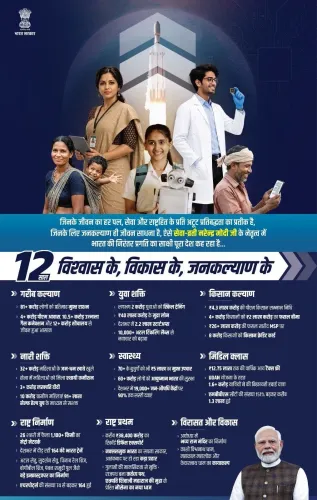
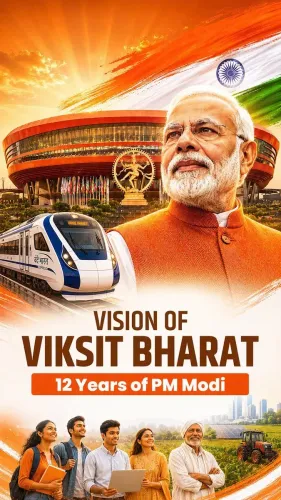
CM Rekha Gupta marks 12 years of PM Modi's governance
Synopsis
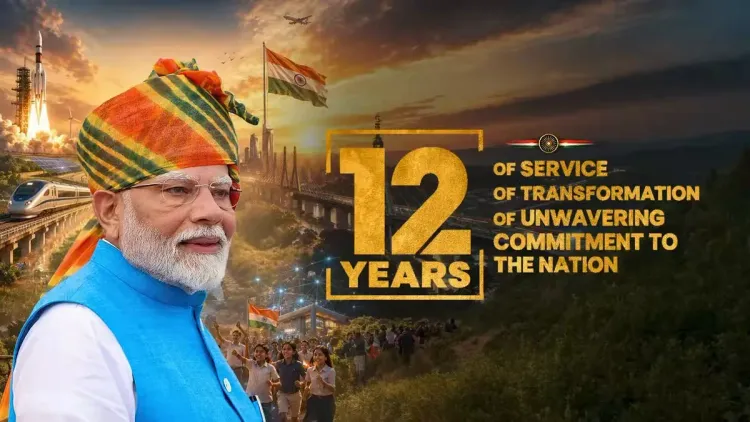
Delhi Chief Minister Rekha Gupta on 10 June 2026 marked PM Narendra Modi's 12-year, 4,399-day tenure with a tribute on X, highlighting Digital India, welfare schemes and infrastructure as pillars of a historic governance journey toward Viksit Bharat 2047.
Key Takeaways
Delhi CM Rekha Gupta posted a tribute on X on 10 June 2026 marking 12 years and 4,399 days of PM Modi's tenure.
She described the period as a 'historic journey' toward the Viksit Bharat goal, citing service, good governance and public welfare.
The Digital India programme, launched 1 July 2015 , and welfare schemes such as PM Awas Yojana and PM-KISAN were highlighted as key achievements.
Gupta referenced India's rising global stature alongside world-class infrastructure as markers of the twelve-year arc.
The post used the hashtag #LongestServingElectedPMModi , framing the milestone as a record of democratic public trust.
BJP state leaders routinely align with central government milestone communications, reinforcing the Viksit Bharat 2047 narrative.
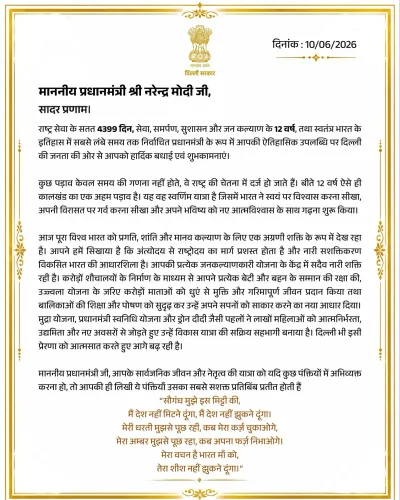
Delhi Chief Minister Rekha Gupta on Wednesday, 10 June 2026, took to X to mark 12 years and 4,399 days of Prime Minister Narendra Modi's tenure, calling the period a 'historic journey of taking the resolve of Viksit Bharat to fruition.'
Context
PM Modi was first sworn in on 26 May 2014 after the BJP-led NDA secured a decisive majority in the general election, marking the beginning of what the party has described as a transformative era in Indian governance. Gupta's post, tagged #LongestServingElectedPMModi, frames the milestone as evidence of sustained public trust in the Prime Minister's leadership.
In her post, Gupta wrote: '4399 dinon aur 12 varshon ki yeh yatra Viksit Bharat ke sankalp ko siddhi tak pahunchane ki aitihasik yatra hai' — translated as: 'This journey of 4,399 days and 12 years is the historic journey of taking the resolve of Viksit Bharat to fruition.' She further described the period as 'a new chapter of service, good governance and public welfare' written under Modi's leadership.
Policy Backdrop
Gupta's tribute specifically cites the Digital Revolution and poverty-alleviation programmes as defining pillars of the twelve-year tenure. The Digital India programme, formally launched on 1 July 2015, aimed to expand e-governance, broadband connectivity and digital payments across the country and has since been credited with transforming public service delivery at scale.
Flagship welfare schemes including PM Awas Yojana (affordable housing) and PM-KISAN (direct income support to farmers) were rolled out between 2015 and 2019, forming the backbone of the central government's anti-poverty architecture. Gupta's post situates these initiatives within a broader arc she describes as 'converting public trust into the power of development.'
The post also references world-class infrastructure and India's 'growing prestige on the global stage' — a reference to the country's increased diplomatic footprint, including its presidency of the G20 in 2023 and its assertive positioning in multilateral forums.
Stakeholders and Impact
As Delhi Chief Minister, Gupta's public alignment with the central government's development narrative carries significance for the capital's residents, who are direct beneficiaries of both centrally sponsored schemes and Delhi-specific infrastructure projects. BJP state leaders have consistently echoed the Centre's communication template at tenure milestones, reinforcing continuity between national and sub-national governance.
Welfare beneficiaries — including housing scheme recipients, farmers enrolled in PM-KISAN, and users of digital public infrastructure — form the core constituency invoked in such tributes. The post closes with a three-line refrain: '12 years of trust. 12 years of development. 12 years of public welfare,' underscoring the party's framing of the tenure as a unified, citizen-centric project.
What's Next
With the Viksit Bharat 2047 vision — the government's long-term goal of making India a developed nation by the centenary of independence — as the stated destination, BJP leaders at both the Centre and state level are expected to intensify milestone-based communications in the months ahead. For Delhi specifically, the rollout of pending central infrastructure and welfare projects in the capital will serve as a test of how closely state delivery aligns with the national development narrative Gupta has endorsed.
Point of View
Where state-level leaders amplify the Centre's governance narrative to reinforce vertical party coherence. By anchoring the tribute to concrete programme pillars — Digital India, PM Awas Yojana, PM-KISAN — rather than purely rhetorical claims, the post attempts to ground political loyalty in policy outcomes. The invocation of 'Viksit Bharat 2047' signals that the party intends to extend this narrative arc well beyond the current term, using the twelve-year mark as a launchpad for the next phase of electoral messaging. For Delhi, where the BJP is simultaneously managing state governance and central alignment, such public endorsements also serve to consolidate Gupta's own positioning within the party hierarchy.
NationPress
20 Sept 2026
Frequently Asked Questions
Why is PM Modi called the longest serving elected PM of India?
PM Narendra Modi completed 12 years and 4,399 days in office by June 2026, a tenure that BJP leaders and the hashtag #LongestServingElectedPMModi cite as a record for a democratically elected Prime Minister of India, though independent verification of the exact historical comparison requires comprehensive electoral records.
What is Viksit Bharat 2047?
Viksit Bharat 2047 is the Indian government's long-term vision to make India a fully developed nation by 2047, the centenary of independence, encompassing goals across infrastructure, digital governance, welfare and global standing.
What did Delhi CM Rekha Gupta say about PM Modi's 12 years?
Delhi CM Rekha Gupta described PM Modi's twelve-year tenure as a 'historic journey of taking the resolve of Viksit Bharat to fruition,' crediting the period with a digital revolution, welfare programmes and growing global prestige for India.
What are the key achievements of 12 years of Modi government?
BJP leaders highlight the Digital India programme (launched 2015), PM Awas Yojana for affordable housing, PM-KISAN for farmer income support, large-scale infrastructure expansion and India's elevated diplomatic profile as the defining achievements of the twelve-year tenure.