CM Majhi Welcomes BRICS Disaster Meet to Odisha

Synopsis
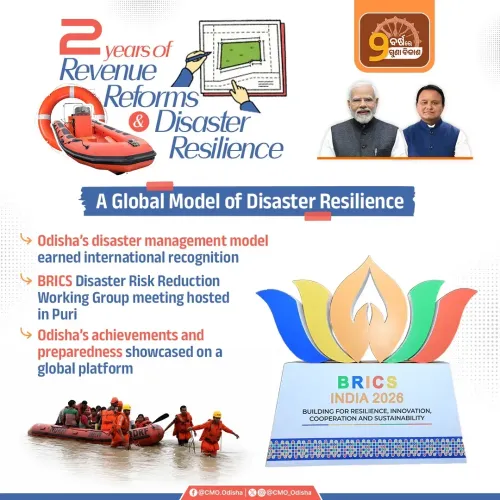
Odisha Chief Minister Mohan Charan Majhi has welcomed the BRICS Disaster Risk Reduction Working Group's second technical meeting to Puri from June 3 to 5, 2026, calling it global recognition of Odisha's disaster management model and an opportunity to advance the 'Viksit Odisha' vision through international cooperation.
Key Takeaways
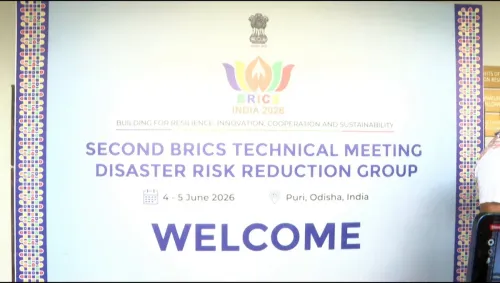
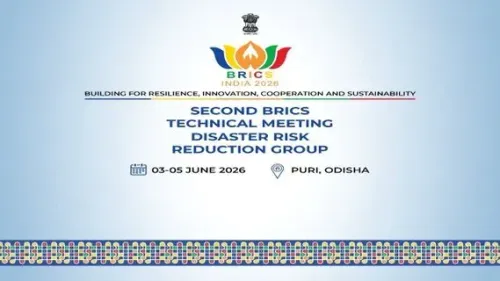
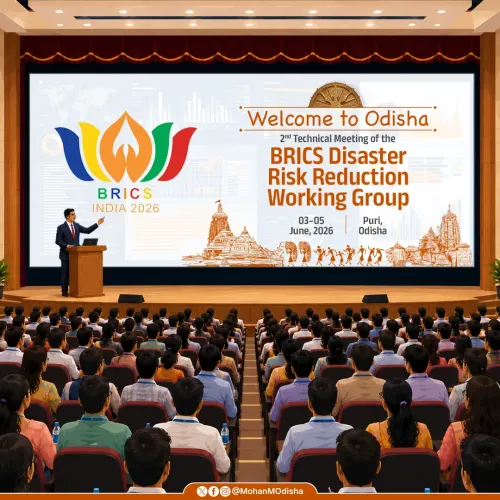
Odisha CM Mohan Charan Majhi announced the state will host the BRICS Disaster Risk Reduction Working Group's second technical meeting from June 3 to 5, 2026 .
The meeting will be held in Puri , the coastal pilgrimage city and seat of the Jagannath Temple .
Majhi described the event as global recognition of Odisha's disaster management model , built on early-warning systems and coordinated governance developed after the 1999 super cyclone .
He linked the meeting to his government's 'Viksit Odisha' (Developed Odisha) agenda, framing it as a new chapter in the state's progress.
The hosting aligns with New Delhi's sub-national diplomacy strategy of showcasing regional expertise through plurilateral forums.
BRICS delegates were welcomed with the traditional principle of 'Atithi Devo Bhava' , underscoring Odisha's cultural hospitality alongside its technical credentials.
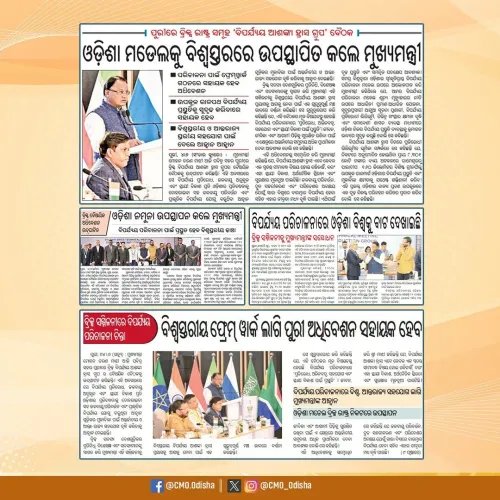
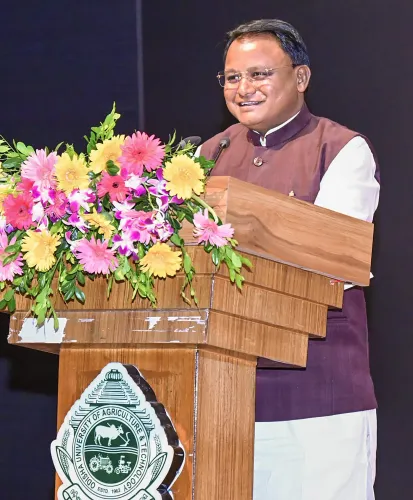
Odisha Chief Minister Mohan Charan Majhi on Tuesday, June 2, 2026, welcomed the decision to host the second technical meeting of the BRICS Disaster Risk Reduction Working Group in the state, calling it a moment of pride and an opportunity to showcase Odisha's world-class disaster management model on a global stage. The meeting is scheduled from June 3 to 5 in Puri, the coastal pilgrimage city on Odisha's Bay of Bengal coast.
Posting in Odia on X, the Chief Minister said, 'ଓଡ଼ିଶାର ସ୍ୱାଭିମାନ ଓ ସାମର୍ଥ୍ୟ ଆଜି ବିଶ୍ୱ ମଞ୍ଚରେ ସ୍ୱୀକୃତି ପାଇଛି' ['Odisha's self-respect and capability have received recognition on the world stage today']. He expressed confidence that the discussions would 'add a new chapter to the progress of Viksit Odisha' [Developed Odisha] by strengthening global disaster resilience and mutual cooperation.
Context
The BRICS Disaster Risk Reduction Working Group is a technical body within the BRICS intergovernmental framework, established to institutionalise the sharing of best practices for managing natural hazards among member nations. Hosting its second technical meeting in Odisha places the state at the centre of a multilateral conversation on climate adaptation and disaster resilience. Chief Minister Majhi also invoked the Sanskrit principle of 'Atithi Devo Bhava' ['The guest is god'] to welcome BRICS delegates to Puri, the sacred seat of Mahaprabhu Shri Jagannath.
Policy Backdrop
Odisha's credentials in disaster management trace back to the devastating 1999 super cyclone, which prompted the state to build dedicated early-warning systems, evacuation infrastructure, and a professional disaster management authority. Successive storms since then have recorded sharply lower fatalities, drawing international attention to the state's preparedness model. The broader institutional framework was reinforced by India's National Disaster Management Act of 2005, which enabled states like Odisha to professionalise their response mechanisms.
The BRICS grouping — which has expanded well beyond its original economic coordination mandate — formalised the Disaster Risk Reduction Working Group in the mid-2010s to address shared developmental challenges such as resilience against floods, cyclones, and other natural hazards. Hosting the meeting in Puri aligns with New Delhi's broader approach of encouraging state governments to host sectoral meetings of plurilateral forums, allowing sub-national expertise to be showcased internationally.
Stakeholders and Impact
The meeting brings together technical delegations from BRICS member states, state disaster management agencies, and practitioners working on coastal and climate resilience. For Odisha's coastal communities — among the most cyclone-exposed populations in South Asia — international recognition of the state's preparedness model carries both symbolic and practical significance. It can attract technical cooperation, funding, and knowledge exchange that further strengthens local resilience infrastructure.
Chief Minister Majhi framed the event as a platform to display not just disaster management expertise but also Odisha's 'rich culture and sustainable infrastructure' to a global audience, signalling a dual agenda of diplomatic visibility alongside technical collaboration.
What's Next
The three-day technical meeting in Puri from June 3 to 5, 2026 will be closely watched for any joint statements, cooperation frameworks, or follow-on mechanisms that emerge among BRICS member states. Any formal outcomes could position Odisha — and by extension India — as a reference model within the BRICS disaster resilience agenda. The event also sets a precedent for future editions of the working group meeting being hosted in India, reinforcing the country's sub-national diplomacy strategy on climate and disaster preparedness.
Point of View
Framing the event as global validation of Odisha's disaster resilience model reinforces the BJP government's narrative of competent, internationally recognised governance — a contrast to the Congress-era framing of Odisha as perpetually vulnerable. The invocation of 'Viksit Odisha' alongside a BRICS platform also signals Majhi's intent to project the state's development story beyond domestic audiences. More broadly, the meeting reflects the BRICS grouping's gradual evolution from an economic bloc to a forum addressing shared developmental challenges, with India leveraging that shift to embed its states as reference points in global climate adaptation discourse.
NationPress
16 Oct 2026
Frequently Asked Questions
What is the BRICS Disaster Risk Reduction Working Group meeting in Odisha?
It is the second technical meeting of the BRICS Disaster Risk Reduction Working Group, hosted in Puri, Odisha from June 3 to 5, 2026, where member nations share best practices on managing natural hazards and building disaster resilience.
Why is Odisha considered a model for disaster management?
After the catastrophic 1999 super cyclone, Odisha built dedicated early-warning systems, evacuation infrastructure, and a professional disaster management authority, which have been credited with dramatically reducing fatalities in subsequent storms.
What did CM Mohan Majhi say about the BRICS meeting in Puri?
CM Majhi said the hosting of the meeting was a matter of pride, calling it global recognition of Odisha's self-respect and capability, and expressed confidence it would strengthen disaster resilience and add a new chapter to the 'Viksit Odisha' vision.
Where exactly is the BRICS disaster meeting being held in Odisha?
The meeting is being held in Puri, the coastal pilgrimage city in Odisha known for the Jagannath Temple, from June 3 to 5, 2026.
What is 'Viksit Odisha' mentioned by CM Majhi?
'Viksit Odisha' translates to 'Developed Odisha' and is the Majhi government's development vision for the state, which the Chief Minister linked to the international recognition brought by hosting the BRICS working group meeting.