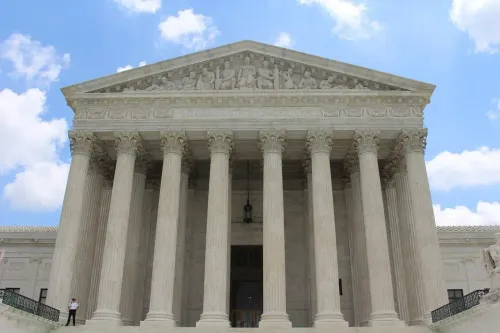
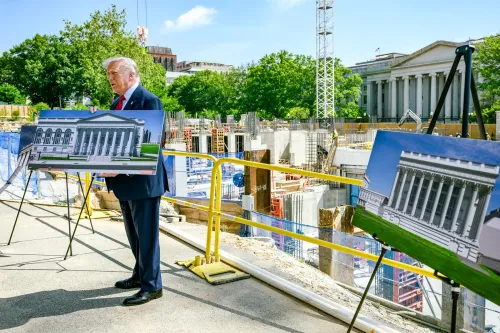
White House Hails Supreme Court Nod for Ballroom/Military Complex
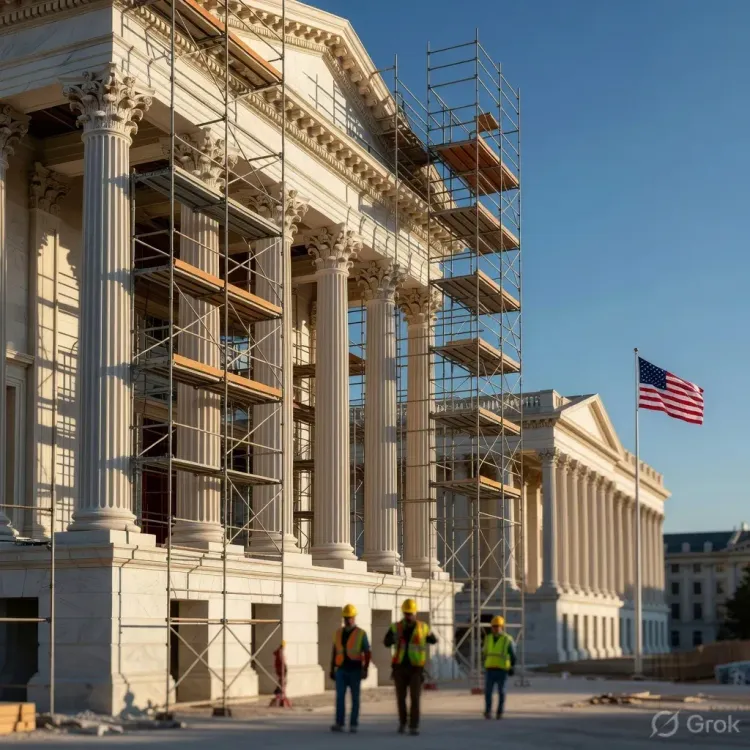
Synopsis
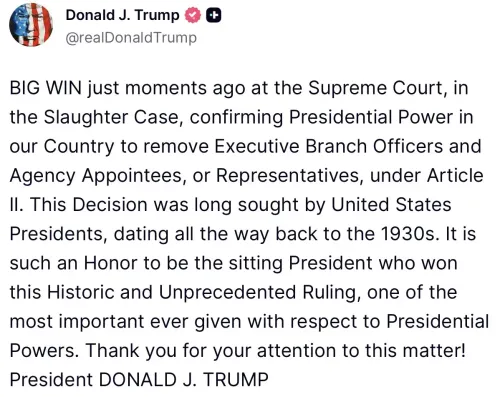
The White House announced on August 31, 2026 that the US Supreme Court has ruled in favour of the Ballroom/Military Complex, removing all legal barriers to construction. The administration framed the decision as a milestone in its national renewal agenda, promising one of the greatest buildings ever constructed.
Key Takeaways
The US Supreme Court ruled in favour of the Ballroom/Military Complex project on August 31, 2026 .
The White House says the ruling removes all remaining 'contingency, doubt, or threat' blocking construction.
The administration placed the decision within its broader 'Golden Age of America' national renewal narrative.
Specific project details — location, budget, military function — were not disclosed in the announcement.
The full Court opinion is awaited; subsequent executive orders and congressional funding measures are expected to follow.
The United States Supreme Court has ruled in favour of a project the White House is calling the Ballroom/Military Complex, clearing what the administration described as all remaining legal obstacles to its construction. The announcement, made on Monday, August 31, 2026, was framed by the executive office as a landmark victory in its broader national renewal agenda.
What the White House Says the Ruling Settles
In its post, the White House stated it was 'pleased to report' that the Court had ruled 'without any further contingency, doubt, or threat' — language suggesting prior legal challenges had repeatedly stalled or complicated the project. The administration cast the decision as definitive, closing the door on further judicial interference with the build.
The post also placed the ruling within a larger rhetorical frame, declaring the United States to be living in 'the Golden Age of America' and predicting the completed structure will be 'one of the Greatest ever built.' The choice of language is consistent with prior executive messaging on infrastructure and national prestige.
Supreme Court and Federal Construction: A Recurring Battleground
Supreme Court rulings on federally backed construction projects have historically touched on executive authority, land-use rights, and congressional appropriations — often becoming flashpoints in separation-of-powers debates. When a project carries both civilian and military dimensions, as this one appears to, legal scrutiny tends to intensify, drawing in defence stakeholders and the broader construction sector alike.
The specific details of the Ballroom/Military Complex — its location, budget, and precise military function — were not elaborated upon in the White House post. The full Court opinion, once publicly released, is expected to clarify the constitutional grounds on which the justices ruled and whether any dissent was recorded.
What Comes Next for the Project
With the Supreme Court's green light now in place, attention turns to the practical machinery of construction: executive orders, congressional funding measures, and procurement timelines. The administration's framing suggests it intends to move quickly, treating the ruling as a mandate rather than merely a legal clearance.
Whether Congress aligns on appropriations — and how defence and construction industry stakeholders respond to the project's next phase — will determine how swiftly the White House's ambitions translate into steel and concrete.
Point of View
The ruling's scope and any dissent will matter as much as the outcome itself. How Congress responds on funding will be the real test of whether this Supreme Court win translates into a built reality.
NationPress
16 Oct 2026
Frequently Asked Questions
What is the Ballroom/Military Complex approved by the Supreme Court?
The Ballroom/Military Complex is a construction project backed by the US executive office. The White House announced on August 31, 2026 that the Supreme Court has cleared all legal hurdles for it, though specific details about its location, cost, and military function have not been publicly disclosed.
Why did the Supreme Court need to rule on this construction project?
Supreme Court involvement in federal construction projects typically arises from disputes over executive authority, land use, or congressional appropriations. The White House's language — referencing 'contingency, doubt, or threat' — suggests prior legal challenges had been blocking the project.
What does the White House's 'Golden Age of America' framing mean?
It is a recurring rhetorical device used by the current US administration to characterise its policy agenda as a period of national renewal and greatness, often applied to infrastructure, economic, and security announcements.
What happens after the Supreme Court ruling on the Ballroom/Military Complex?
The next steps are expected to include the release of the full Court opinion, potential executive orders, and congressional action on funding. Construction timelines and procurement details are likely to follow.
How does this ruling affect India or Indian interests?
There is no direct impact on India identified in this announcement. However, US defence infrastructure decisions can have broader geopolitical implications, particularly for countries with active defence partnerships with Washington.