US court blocks Trump's $400mn White House ballroom project
Synopsis
A federal appeals court has ruled that Donald Trump had no constitutional authority to demolish the White House's East Wing and replace it with a privately funded $400mn ballroom — marking what the court itself called an unprecedented act in American presidential history. The administration now has 14 days to take the fight to the Supreme Court.
Key Takeaways
The US Court of Appeals for the DC Circuit issued a 2-1 ruling on 7 August ordering a halt to Trump's $400 million White House ballroom project.
The court found Trump had no constitutional authority to unilaterally demolish the East Wing , which was built with congressional authorisation and taxpayer funds.
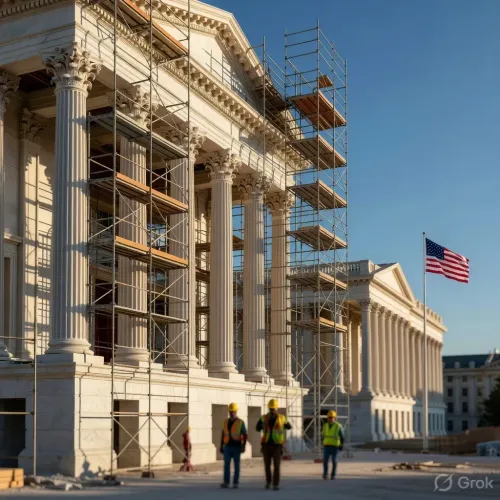
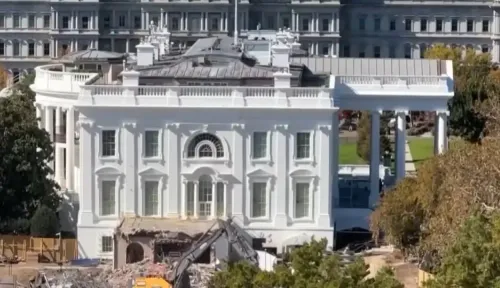
The East Wing was bulldozed over three days in October 2025 without congressional approval or prior consultations.
The ballroom was to be 90,000 square feet , funded entirely by privately collected funds with no congressional oversight.
The ruling is stayed for 14 days to allow the administration to seek US Supreme Court review.
The National Trust for Historic Preservation brought the legal challenge that led to the ruling.
A divided US Court of Appeals for the District of Columbia Circuit on Friday, 7 August ordered the Donald Trump administration to immediately halt construction of a $400 million, 90,000-square-foot ballroom at the White House, ruling that the President had no constitutional authority to unilaterally demolish and rebuild portions of the historic building. The court paused its own ruling for 14 days to allow the administration to seek review from the US Supreme Court.
What the Court Ruled
The 2-1 ruling sided with the National Trust for Historic Preservation, which had challenged the demolition of the East Wing — carried out over just three days in October 2025 — without congressional approval or promised consultations. The court was unambiguous in its framing of presidential authority over the White House.
'Each President is a temporary tenant, not the owner, of the White House and its Executive Residence. The President has no — and claims no — constitutionally assigned authority over that property, which is designed and maintained for the use of all Presidents, current and future, and for the American people,' the ruling stated.
The court further noted: 'We are aware of no instance in American history in which a President unilaterally and using privately collected funds demolished substantial portions of the White House that Congress authorised to be built and American taxpayers paid for. Until now.'
How the Demolition Happened
According to the ruling, the Trump administration bulldozed the entire East Wing in October 2025 without obtaining Congress's permission or conducting the consultations it had previously committed to. The construction of the replacement ballroom was funded through privately collected funds, with no congressional oversight. The court found this sequence of events to be without precedent in American presidential history.
What the Trump Administration Said
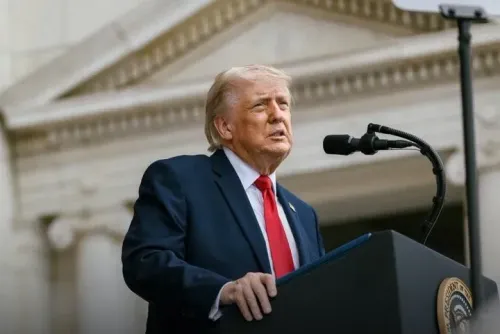
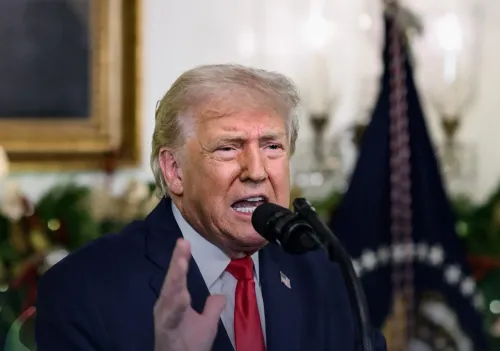
President Trump has framed the White House renovation as a symbol of what he describes as America's broader renewal. Speaking from the Rose Garden on 7 July, he devoted a significant portion of his remarks to the project, characterising it as both a preservation effort and a statement about the country's future.
Trump also argued that the United States should possess ceremonial facilities on par with — or surpassing — those of other world powers. 'I was in the Great Hall of China recently... They have a very large ballroom... we're going to have one that tops everything,' he said.
What Happens Next
The administration has 14 days from the ruling to petition the Supreme Court for an emergency stay, failing which the construction halt becomes binding. The case raises fundamental questions about the limits of executive authority over federally owned and congressionally funded property — questions that legal scholars say have no modern precedent. Whether the Supreme Court accepts the case on an expedited basis will determine whether work on the ballroom can resume in the near term.
Point of View
It compounds the accountability gap. The court's observation that this is without precedent in American history is not rhetorical — it signals how far outside established norms the demolition sits. The Supreme Court's response, if the administration escalates, will set a boundary on executive control over federally owned landmarks that could outlast this presidency by decades.
NationPress
22 Sept 2026
Frequently Asked Questions
Why did the US court block Trump's White House ballroom project?
The court ruled that President Trump had no constitutional authority to unilaterally demolish the White House's East Wing — a structure built with congressional authorisation and taxpayer funding — and replace it with a privately funded ballroom. The 2-1 ruling by the US Court of Appeals for the DC Circuit found the action was taken without congressional approval or the consultations the administration had promised.
What is the $400 million White House ballroom project?
It is a proposed 90,000-square-foot ballroom that the Trump administration began constructing at the White House after demolishing the entire East Wing over three days in October 2025. The project is funded by privately collected funds with no congressional oversight, which the court identified as a key legal problem.
What happens now that the court has issued the ruling?
The court has stayed its own ruling for 14 days, giving the Trump administration a window to petition the US Supreme Court for an emergency stay. If the Supreme Court declines to intervene, the construction halt becomes binding and work on the ballroom cannot continue.
Who challenged the White House ballroom construction?
The legal challenge was brought by the National Trust for Historic Preservation, which argued that the demolition of the East Wing and the planned ballroom construction violated historic preservation obligations and exceeded presidential authority over federally owned property.
What did Trump say about the White House renovation?
Trump has described the renovation as a symbol of America's broader renewal, arguing that the US should have ceremonial facilities that match or surpass those of other world powers. Speaking from the Rose Garden on 7 July, he cited the Great Hall of China as a benchmark, saying the new ballroom would 'top everything.'