Trump Demands White House Ballroom After Correspondents' Dinner Shooting
Synopsis
A shooting at the 2025 White House Correspondents' Dinner has given President Trump powerful new ammunition in his push to build a 90,000-sq-ft secure ballroom on White House grounds. Trump was evacuated from the Washington Hilton and is now demanding courts immediately drop legal challenges blocking the project, calling it a national security imperative.
Key Takeaways
President Donald Trump renewed his push for a 90,000-square-foot secure ballroom on White House grounds hours after a shooting at the 2025 White House Correspondents' Dinner on April 26 .
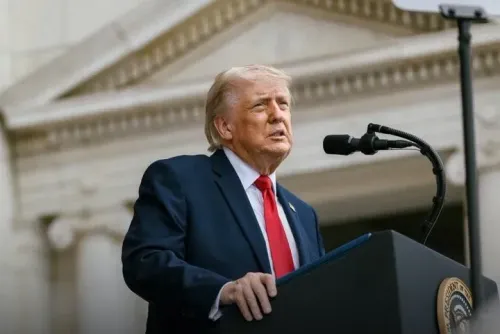
Trump was evacuated from the Washington Hilton and said he fought like hell to stay before deferring to security personnel.
Trump posted on Truth Social that the shooting would never have unfolded in a purpose-built, high-security White House facility.
The ballroom project faces ongoing legal challenges over federal approvals; Trump has demanded they be dropped immediately.
Acting Attorney General Todd Blanche praised the Secret Service and law enforcement for preventing a more serious outcome at the venue.
If constructed, the proposed facility would be the largest structural addition to the White House complex in modern history, raising historic-preservation and cost concerns.
Washington, April 26, 2025 — President Donald Trump has intensified his campaign for a dedicated, high-security ballroom on White House grounds after a shooting disrupted the annual White House Correspondents' Dinner at the Washington Hilton on Saturday, April 26. Trump argued the attack laid bare the dangers of staging major presidential events at off-site venues, and he is now demanding that all legal obstacles to the project be immediately cleared.
Shooting Triggers Renewed Ballroom Push
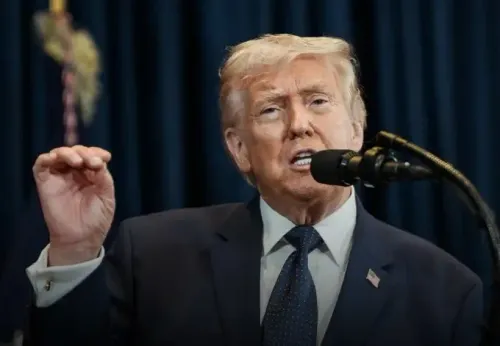
Trump was evacuated from the Washington Hilton shortly after the shooting broke out during one of Washington's most high-profile annual gatherings. Within hours of the incident, he took to Truth Social to frame the attack as definitive proof that a purpose-built, secure venue is not a luxury — it is a national security necessity.
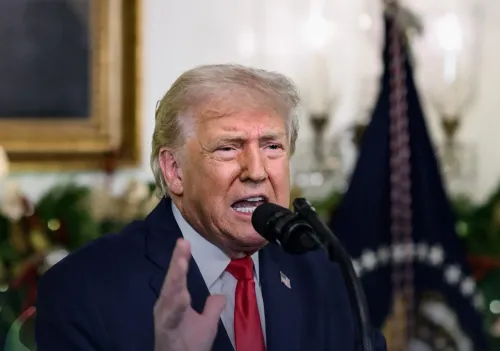
Trump wrote: What happened last night is exactly the reason that our great Military, Secret Service, Law Enforcement have been DEMANDING that a large, safe, and secure Ballroom be built ON THE GROUNDS OF THE WHITE HOUSE.
He insisted the shooting would never have unfolded inside a facility equipped with every highest level security feature there is, and declared: It cannot be built fast enough!
Details of the Proposed 90,000-Sq-Ft Facility
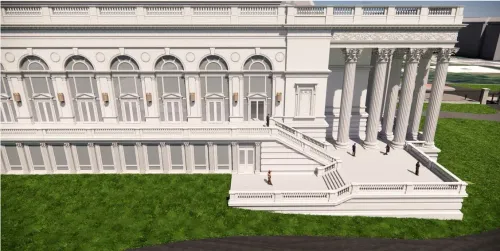
The ballroom proposal calls for a 90,000-square-foot event hall to be constructed within the perimeter of the White House complex — described by Trump as inside the gates of the most secure building in the World. The project has been in planning for months but has faced sustained legal scrutiny over whether proper federal approvals and historic-preservation reviews were followed.
Trump has now called on courts to drop those challenges immediately, according to Fox News, framing the legal delays as a direct threat to presidential security. Critics, however, have raised concerns about the project's cost and its potential impact on the historic character of the White House grounds.
The Washington Hilton has hosted the Correspondents' Dinner for decades precisely because the current White House lacks a ballroom of sufficient scale. The annual event draws senior government officials, leading journalists, and celebrities, making it one of the most security-intensive gatherings on the US political calendar.
Security Response and Presidential Reaction
Trump praised the performance of Secret Service agents and law enforcement officers who responded to the shooting, crediting their swift action with preventing greater casualties. Acting Attorney General Todd Blanche echoed that assessment at a subsequent press briefing, stating: You saw the very best — you saw law enforcement do exactly what they are supposed to do.
Trump revealed he initially resisted evacuation, saying he fought like hell to stay before ultimately deferring to security advice. He confirmed the dinner would be rescheduled, signalling that the administration does not intend to abandon the tradition — but wants it moved to a safer setting going forward.
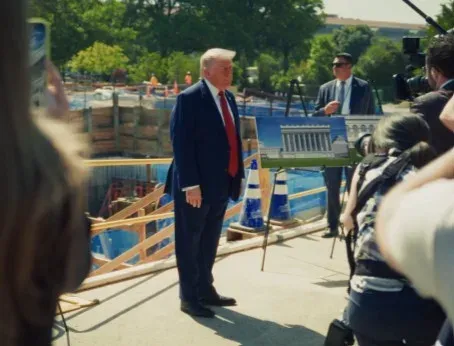
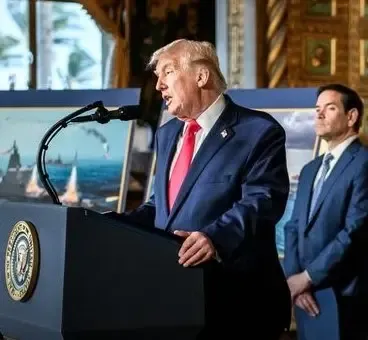
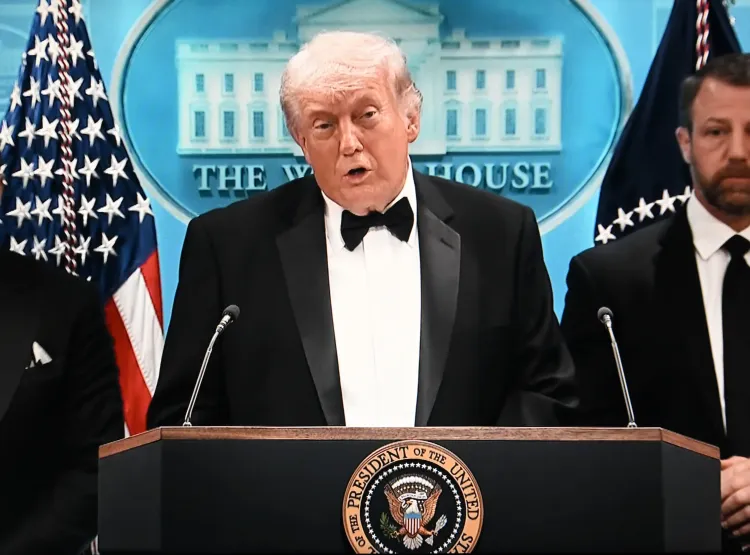
At a press conference following the incident, Trump was blunt about the current venue's limitations, describing the Washington Hilton as not a particularly secure building.
Political and Legal Context
The ballroom debate has simmered in Washington policy circles for months, but Saturday's shooting has dramatically shifted the political calculus. According to The Washington Post, Trump and his allies have moved quickly to leverage the incident as justification for accelerating the project, arguing that events involving the nation's top leadership demand fully controlled, government-operated environments.
This comes amid a broader pattern of the Trump administration seeking to consolidate high-profile governmental functions closer to the White House — a trend that critics see as an expansion of executive control over traditionally independent civic spaces, and that supporters frame as a straightforward security upgrade.
Notably, no previous administration has constructed a ballroom of this scale on White House grounds. If built, the 90,000-square-foot facility would represent the single largest structural addition to the presidential complex in modern history, raising questions about long-term precedent, public access, and the balance between security and transparency.
What Comes Next
Policymakers and federal courts will now face intensified pressure to resolve the legal challenges surrounding the ballroom proposal. The shooting is expected to feature prominently in upcoming congressional security briefings, and the Secret Service is likely to conduct a formal review of protocols for off-site presidential events.
With Trump publicly demanding the project move forward at maximum speed, the coming weeks will test whether political momentum generated by the Correspondents' Dinner incident can overcome the regulatory and legal hurdles that have stalled construction — and whether Congress will allocate the funding required to see it through.
Point of View
Real-time argument for a project his critics have dismissed as vanity construction. But the deeper question Washington must confront is this: does the answer to security vulnerabilities lie in building a fortress around the presidency, or in strengthening the systems that protect public spaces? A 90,000-square-foot ballroom inside White House gates would not just be an event venue — it would be a structural symbol of an executive branch increasingly insulated from the public sphere it governs. The legal and democratic scrutiny surrounding this project deserves to intensify, not evaporate, simply because a crisis has created political cover.
NationPress
7 Oct 2026
Frequently Asked Questions
What happened at the 2025 White House Correspondents' Dinner?
A shooting occurred at the annual White House Correspondents' Dinner held at the Washington Hilton on April 26, 2025, prompting the evacuation of President Donald Trump. The Secret Service and law enforcement responded swiftly, and the event was cut short, with Trump later confirming it would be rescheduled.
Why is Trump pushing for a White House ballroom?
Trump argues that hosting high-profile events at off-site venues like the Washington Hilton creates unacceptable security risks, as demonstrated by the April 26 shooting. He has been advocating for a 90,000-square-foot secure ballroom on White House grounds that would incorporate the highest-level security features.
What are the legal challenges blocking the White House ballroom?
Federal courts have been reviewing whether the Trump administration followed proper approval and historic-preservation processes before proceeding with the ballroom construction. Trump has called on the courts to drop these challenges immediately, framing the project as a national security necessity.
How big is the proposed White House ballroom?
The proposed facility would span 90,000 square feet and be located within the secured perimeter of the White House complex. If built, it would be the largest structural addition to the White House grounds in modern history.
Where has the White House Correspondents' Dinner traditionally been held?
The annual White House Correspondents' Dinner has traditionally been held at the Washington Hilton in Washington, D.C., due to space limitations at the White House itself. The event draws journalists, senior government officials, and celebrities, making it one of the most prominent gatherings in the US political calendar.