CM Yogi Assures Free Cashless Treatment for UP Residents
Synopsis
Uttar Pradesh Chief Minister Yogi Adityanath on 8 July 2026 publicly assured state residents that the government will bear all costs under the cashless health treatment scheme, with no charges passed on to patients — reinforcing the state's commitment to eliminating out-of-pocket hospitalisation expenses.
Key Takeaways
CM Yogi Adityanath on 8 July 2026 publicly pledged that cashless hospital treatment costs will be borne entirely by the Uttar Pradesh government.
The assurance directly targets beneficiary anxiety about hidden charges or co-payments at empanelled hospitals.
Ayushman Bharat PM-JAY , launched in 2018 , provides up to Rs 5 lakh per family per year in cashless hospitalisation coverage.
Uttar Pradesh is one of the largest implementing states under the national scheme, integrating it with state-level digital payment and governance systems.
The public commitment raises accountability for empanelled hospitals to honour cashless admissions without seeking patient-side payments.
Future focus will be on state budget allocations for health insurance premiums and expansion of empanelled hospitals in rural and semi-urban areas.
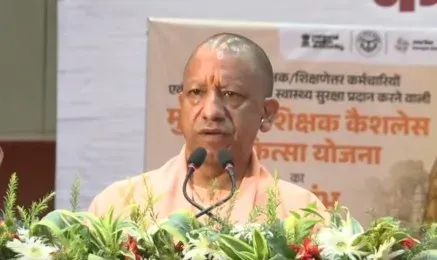
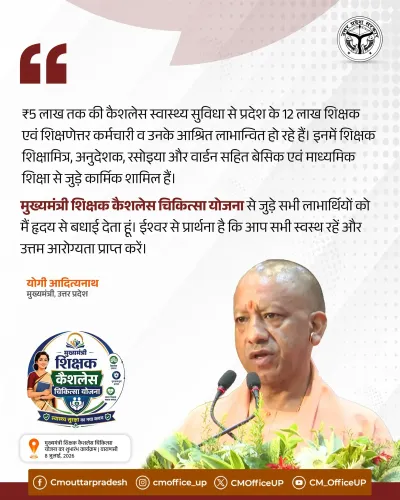
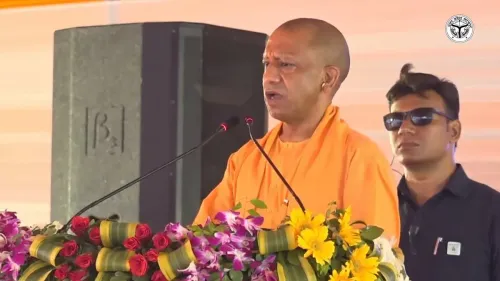
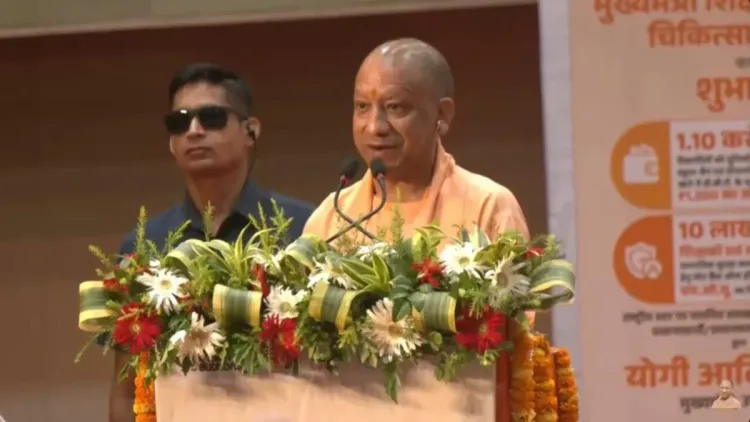
Uttar Pradesh Chief Minister Yogi Adityanath on Wednesday, 8 July 2026, directly addressed state residents with a firm assurance on cashless healthcare, declaring that the government — not patients — will bear all treatment costs under the state's health coverage programme. The statement, shared via a video post on X, underscores the administration's push to make hospitalisation financially painless for ordinary citizens in Uttar Pradesh.
Context
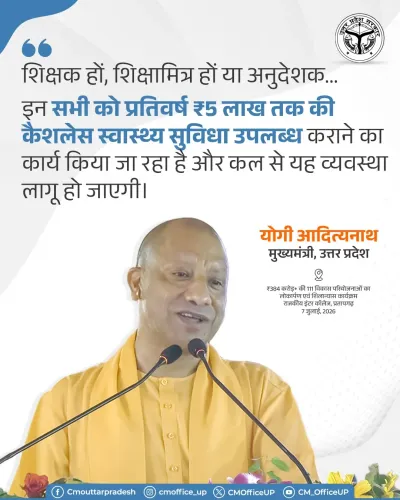
In the post, CM Yogi Adityanath stated: 'Cashless ilaaj ki jo suvidha aapko di ja rahi hai, bhugtaan hum karenge, aapse nahin lenge' — meaning, 'The cashless treatment facility being provided to you will be paid for by us; we will not take it from you.' The message is directed at beneficiaries who may be uncertain about whether they will face hidden charges or co-payments at empanelled hospitals. The clarity of the pledge is notable: the state government positions itself as the guarantor of payment, removing financial anxiety at the point of care.
Policy Backdrop
Ayushman Bharat Pradhan Mantri Jan Arogya Yojana (PM-JAY), launched nationally in 2018, provides cashless hospitalisation coverage of up to Rs 5 lakh per family per year for secondary and tertiary care at empanelled public and private hospitals. Uttar Pradesh, as India's most populous state, is among the largest implementing states under the scheme. The state has also integrated digital governance tools — including direct benefit transfers and electronic hospital payment systems — to streamline claim settlement and reduce leakages. CM Yogi's statement aligns with this broader administrative architecture, reinforcing that beneficiaries need not pay out of pocket.
The emphasis on 'we will pay, not you' addresses a persistent on-ground concern: even within cashless schemes, patients in low-income households sometimes face informal demands for payments at hospitals. The government's public reaffirmation serves as a deterrent against such practices and a signal to empanelled hospitals about compliance expectations.
Stakeholders and Impact
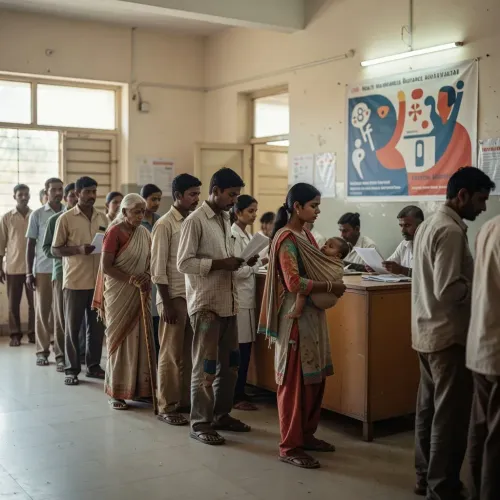
The primary beneficiaries are low- and middle-income families in Uttar Pradesh enrolled under cashless health protection schemes. Catastrophic out-of-pocket health expenditure has historically been a leading driver of household debt and poverty in the state. By publicly committing that the government absorbs all costs, the administration aims to improve scheme utilisation — a critical metric, since low awareness and distrust often suppress uptake even among eligible families. Empanelled hospitals across the state are the other key stakeholder: they are expected to honour cashless admissions without seeking patient-side payments, with the state settling bills through established channels.
For the broader health system, consistent government payment to hospitals strengthens the incentive for private facilities to remain empanelled and to invest in infrastructure and staffing that meet scheme standards.
What's Next
Attention will now turn to state budget allocations for health insurance premiums and the pace of expansion of empanelled hospitals across Uttar Pradesh's districts, particularly in underserved rural and semi-urban areas. Effective implementation of the cashless promise will depend on timely claim reimbursements to hospitals and robust grievance mechanisms for patients who face on-ground difficulties. The government's willingness to make this commitment publicly — via a video message from the Chief Minister himself — raises the political stakes for follow-through, making scheme performance a visible accountability benchmark ahead of any future electoral cycle.
Point of View
Which can meaningfully shift public trust and scheme uptake in a state where health expenditure remains a major driver of household debt. The political calculus is clear: welfare delivery credibility is a core electoral asset in Uttar Pradesh, and public reaffirmations like this serve as both policy communication and accountability benchmarks.
NationPress
8 Jul 2026
Frequently Asked Questions
What did CM Yogi Adityanath say about cashless treatment in UP?
CM Yogi Adityanath stated on 8 July 2026 that the Uttar Pradesh government will fully pay for cashless hospitalisation provided under health schemes, and patients will not be charged anything.
Which health scheme provides cashless treatment in Uttar Pradesh?
Ayushman Bharat Pradhan Mantri Jan Arogya Yojana (PM-JAY), launched in 2018, provides cashless hospitalisation of up to Rs 5 lakh per family per year at empanelled hospitals in Uttar Pradesh.
Do patients have to pay anything under the UP cashless health scheme?
According to CM Yogi Adityanath's assurance on 8 July 2026, eligible beneficiaries do not pay anything — the state government bears all hospitalisation costs under the cashless treatment facility.
Who is eligible for cashless health treatment in Uttar Pradesh?
Families enrolled under Ayushman Bharat PM-JAY and related state health protection schemes are eligible for cashless secondary and tertiary hospitalisation at empanelled hospitals across Uttar Pradesh.
What happens if a hospital charges a patient despite the cashless scheme?
The government's public commitment means empanelled hospitals are expected to honour cashless admissions without demanding patient-side payments; beneficiaries facing such demands can approach scheme grievance mechanisms for redressal.