CM Yogi directs timely Ayushman claim settlement, AYUSH inclusion
Synopsis
Chief Minister Yogi Adityanath has directed Uttar Pradesh officials to ensure time-bound settlement of Ayushman Bharat claims and to include AYUSH treatment systems in the Pandit Deen Dayal Upadhyay State Employee Cashless Scheme, strengthening health coverage for both poor families and government employees.
Key Takeaways
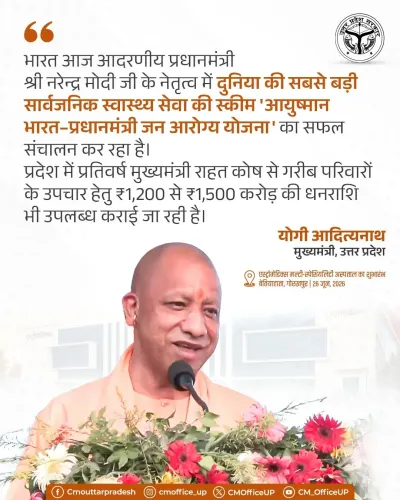
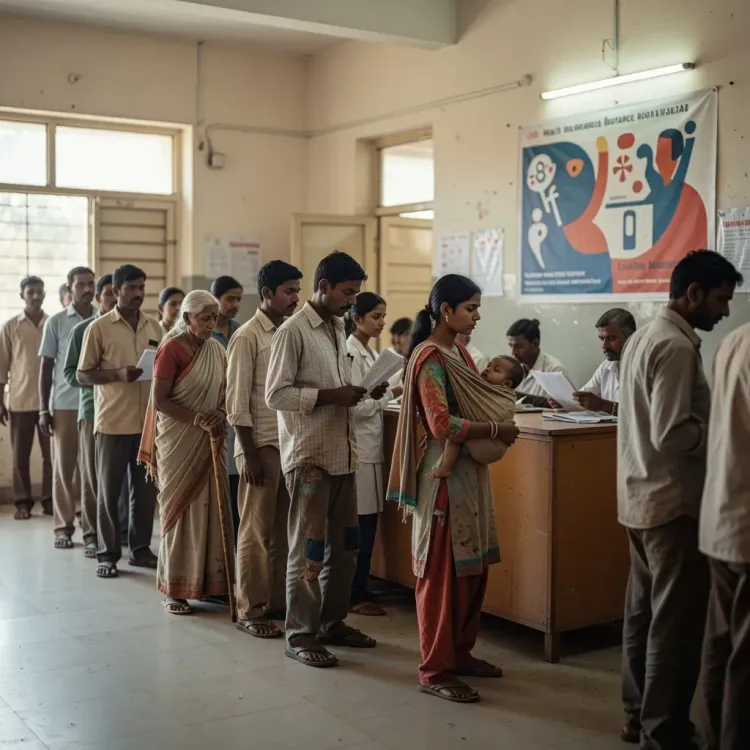
CM Yogi Adityanath described Ayushman Bharat as the 'biggest support' for poor and needy families in Uttar Pradesh .
Officials have been directed to settle Ayushman Bharat claim disputes within a fixed, defined timeframe .
The Pandit Deen Dayal Upadhyay State Employee Cashless Scheme is to be expanded to cover AYUSH treatment modalities including Ayurveda, Yoga, Unani, Siddha and Homeopathy.
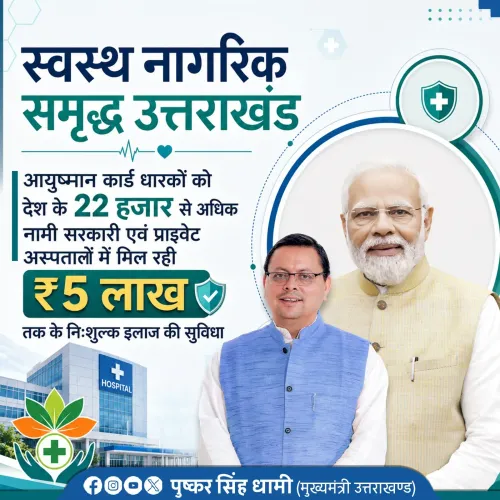
Ayushman Bharat was launched in 2018 and covers hospitalisation costs up to Rs 5 lakh per family per year for the economically weaker section.
The directives were issued on 26 May 2026 and formal government orders for implementation are awaited.
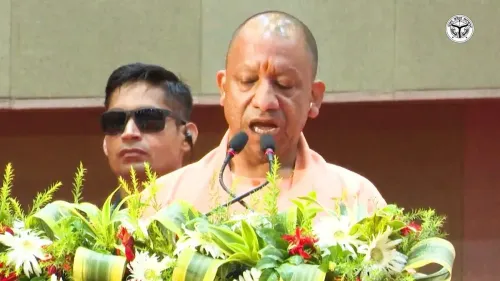
The Chief Minister's Office of Uttar Pradesh on Tuesday, 26 May 2026 shared remarks by Chief Minister Yogi Adityanath directing officials to ensure time-bound settlement of claims under the Ayushman Bharat scheme and to integrate AYUSH treatment systems into the Pandit Deen Dayal Upadhyay State Employee Cashless Scheme.
Context
Speaking to officials, CM Yogi stated that Ayushman Bharat Yojana has become the 'biggest support for poor and needy families' ('गरीब एवं जरूरतमंद परिवारों का सबसे बड़ा सहारा'). He directed that claim disputes under the scheme be resolved within a fixed timeframe, underscoring the administration's focus on last-mile delivery of health benefits.
The Chief Minister also issued instructions to include AYUSH treatment modalities — covering Ayurveda, Yoga, Unani, Siddha and Homeopathy — within the Pandit Deen Dayal Upadhyay State Employee Cashless Scheme, broadening the scope of cashless healthcare available to state government employees and their dependents.
Policy Backdrop
Ayushman Bharat Pradhan Mantri Jan Arogya Yojana was launched nationally in 2018 to provide health coverage of up to Rs 5 lakh per family per year for secondary and tertiary hospitalisation, targeting the bottom 40 percent of the population. Uttar Pradesh began empanelling hospitals under the scheme in 2018 and has progressively expanded coverage since.
The Pandit Deen Dayal Upadhyay State Employee Cashless Scheme is a state-specific initiative providing cashless medical treatment to government employees. The directive to incorporate AYUSH disciplines aligns with the national policy of mainstreaming traditional medicine within public health delivery systems, a priority pursued by the Ministry of AYUSH at the central level.
Stakeholders and Impact
The Ayushman Bharat claim-settlement directive directly affects economically weaker families across Uttar Pradesh who depend on the scheme for hospitalisation costs. Faster claim resolution reduces the financial burden on beneficiaries who may otherwise face delays in reimbursements to empanelled hospitals.
The AYUSH integration order benefits state government employees and their dependents by expanding their cashless treatment options beyond allopathic care. For traditional medicine practitioners and AYUSH hospitals in the state, empanelment under the employee scheme would open a new institutional patient base.
What's Next
Implementation will hinge on the issuance of formal government orders specifying AYUSH empanelment criteria under the employee cashless scheme and the establishment of a defined claim-disposal timeline for Ayushman Bharat. The state health authority is expected to publish updated protocols for both directives.
Observers will watch whether quarterly claim-settlement data is made publicly available as a transparency measure, and how quickly AYUSH facilities in Uttar Pradesh can meet empanelment standards to operationalise the Chief Minister's directive.
Point of View
The other on AYUSH integration — reflect a deliberate effort to address two persistent gaps in UP's public health architecture: administrative delays that erode beneficiary trust, and the underutilisation of traditional medicine infrastructure. The AYUSH inclusion move is particularly significant because it signals an attempt to leverage an existing state scheme as a vehicle for mainstreaming traditional medicine, rather than building parallel delivery systems. Together, the directives fit a broader pattern in which the UP government uses high-visibility administrative instructions to signal intent, with implementation quality remaining the critical variable. The real test will be whether formal orders with measurable timelines follow promptly.
NationPress
10 Oct 2026
Frequently Asked Questions
What did CM Yogi say about Ayushman Bharat in UP?
CM Yogi Adityanath called Ayushman Bharat the biggest support for poor and needy families and directed officials to ensure claim disputes are resolved within a fixed timeframe.
What is the Pandit Deen Dayal Upadhyay State Employee Cashless Scheme?
It is a Uttar Pradesh government scheme that provides cashless medical treatment to state government employees and their dependents; CM Yogi has now directed that AYUSH treatment systems be included in its coverage.
What AYUSH systems will be added to the UP employee health scheme?
The directive covers the five AYUSH disciplines: Ayurveda, Yoga, Unani, Siddha and Homeopathy, aligning the state employee scheme with the national policy of integrating traditional medicine into public healthcare.
How much coverage does Ayushman Bharat provide per family?
Ayushman Bharat Pradhan Mantri Jan Arogya Yojana provides health coverage of up to Rs 5 lakh per family per year for secondary and tertiary hospitalisation costs.
When was Ayushman Bharat launched in Uttar Pradesh?
Uttar Pradesh began empanelling hospitals under Ayushman Bharat in 2018, the same year the scheme was launched nationally.