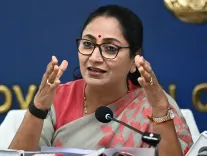
ASEAN climate-resilient agriculture: Cambodia lawmaker urges bloc to act

Synopsis
Cambodia's top legislator told an ASEAN parliamentary forum that the region is no longer facing 'climate change' — it is facing a 'climate crisis,' and its food systems are already feeling the strain. The call to redirect regional investment toward climate-resilient agriculture and early warning systems signals growing legislative pressure on ASEAN governments to move from framework adoption to measurable delivery.
Key Takeaways
Cheam Yeap , first vice-president of Cambodia's National Assembly , addressed an ASEAN parliamentary dialogue on 25 August in Phnom Penh .
He described the situation as an 'acute climate crisis,' warning that Southeast Asia is not immune to food insecurity risks.
Yeap called for increased investment in climate-resilient agriculture , water resource management, and smart early warning systems.
He highlighted the ASEAN RAI guidelines , adopted in 2018 , as a framework for directing responsible investment into food, agriculture, and forestry.
Parliamentarians were urged to actively oversee executive agencies to ensure national agricultural strategies deliver on food and climate security.
Cheam Yeap, first vice-president of Cambodia's National Assembly, on Tuesday, 25 August called on the Association of Southeast Asian Nations (ASEAN) to urgently strengthen agricultural resilience against climate threats, warning that food security across the bloc's fast-growing population is at serious risk. He was speaking at the opening of a parliamentary multi-stakeholder dialogue on responsible investment for food and climate security in ASEAN, held in Phnom Penh.
The Climate Crisis Framing
Yeap did not mince words, describing the current situation as something far beyond gradual change. 'Our Southeast Asian region is not immune from these risks. Indeed, it is no longer merely climate change but an acute climate crisis our global community needs to address together,' he said. He identified the convergence of the climate crisis and food insecurity as twin threats demanding coordinated regional action.
Agricultural Systems Under Pressure
Farmers across Southeast Asia are facing severe vulnerabilities from volatile weather patterns, including intensified droughts and devastating floods, according to Yeap. Climate unpredictability, extreme weather events, and environmental degradation are directly disrupting regional agricultural production and straining food systems, he said. The lawmaker stressed that climate resilience is fundamental to food security and demands a 'holistic and coherent legal, policy, and societal response.'
Call for Strategic Investment Shift
Yeap urged a strategic reorientation of regional funding priorities. 'It is necessary to invest more in developing climate-resilient agriculture, climate adaptation, water resource management, and smart early warning systems,' he said. He argued that strengthening agricultural and food systems is 'the only way we can ensure a stable food supply for our fast-growing populations, protect the livelihoods of our communities, and sustain our long-term economic and social development.'
ASEAN RAI Guidelines as a Foundation
The senior legislator pointed to the ASEAN Guidelines on Promoting Responsible Investment in Food, Agriculture, and Forestry (ASEAN RAI), adopted in 2018, as a 'visionary framework' already in place. He noted that the guidelines identify food security and climate change mitigation and adaptation as central pillars of responsible investment, directing capital flows into the region's food, agriculture, and forestry sectors. Crucially, Yeap emphasised that legislation alone is insufficient — he urged parliamentarians across the region to actively monitor executive branches and relevant agencies to ensure that national agricultural strategies and investment promotion policies actually deliver on food and climate security commitments.
What Comes Next
The dialogue represents a broader push within ASEAN to translate policy frameworks into enforceable, investment-backed action. With the bloc's population continuing to grow and climate pressures intensifying, regional observers will be watching whether Tuesday's parliamentary calls translate into concrete funding commitments and legislative follow-through at the national level.
Point of View
Designed to raise the urgency threshold for ASEAN lawmakers who have historically treated agricultural investment as a domestic rather than regional priority. The 2018 ASEAN RAI guidelines are a sound framework, but six years on, the gap between adoption and implementation remains wide. The real accountability question is whether ASEAN's parliamentary bodies have any enforcement mechanism over member governments' agricultural spending — and currently, they largely do not. Without binding investment targets or independent monitoring, this dialogue risks producing another well-worded communiqué that does not move the needle on regional food resilience.
NationPress
25 Aug 2026
Frequently Asked Questions
What did Cambodia's lawmaker urge ASEAN to do on climate and agriculture?
Cheam Yeap, first vice-president of Cambodia's National Assembly, urged ASEAN member states to significantly increase investment in climate-resilient agriculture, climate adaptation, water resource management, and early warning systems. He made the call at a parliamentary multi-stakeholder dialogue on responsible investment for food and climate security in ASEAN, held in Phnom Penh on 25 August.
What are the ASEAN RAI guidelines and why are they relevant?
The ASEAN Guidelines on Promoting Responsible Investment in Food, Agriculture, and Forestry (ASEAN RAI) were adopted in 2018 to direct investment flows into the region's food and agricultural sectors responsibly. Yeap cited them as a foundational framework that already identifies food security and climate change mitigation as central pillars, though he stressed that implementation must now be actively monitored by parliaments.
Why is Southeast Asia particularly vulnerable to climate-related food insecurity?
Farmers across Southeast Asia face severe exposure to volatile weather patterns, including intensified droughts and devastating floods, which directly disrupt agricultural production and strain food systems, according to Yeap. The region's fast-growing population compounds the risk, increasing demand on food systems already under climate pressure.
What role did Yeap say parliaments should play in food and climate security?
Yeap argued that passing laws is only the beginning. He urged parliamentarians across the ASEAN region to actively oversee executive branches and relevant agencies to ensure that national agricultural strategies and investment promotion policies actually deliver on food and climate security commitments, rather than remaining on paper.
What is the significance of describing the situation as a 'climate crisis' rather than 'climate change'?
Yeap explicitly stated that the situation has moved beyond 'merely climate change' to an 'acute climate crisis,' a framing intended to elevate urgency and push ASEAN governments toward faster, more coordinated action. The distinction signals a call for emergency-level policy responses rather than incremental adjustments.