US Shifts Focus to ASEAN and Africa Amidst China's Growing Influence
Synopsis
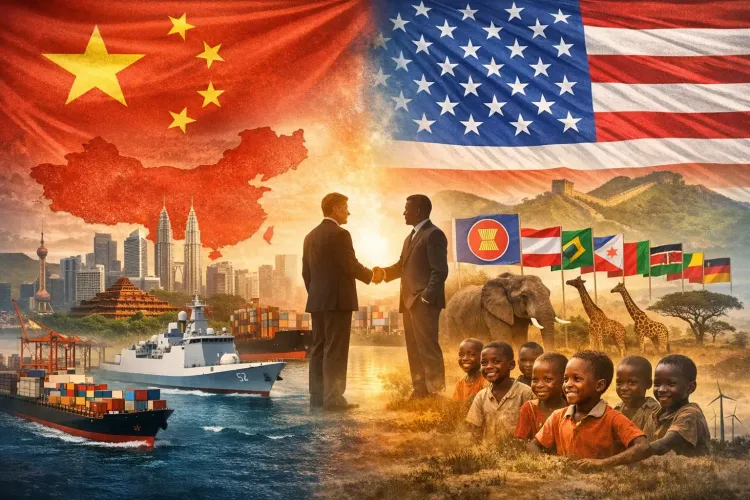
As China extends its influence, US nominees stress the importance of Southeast Asia and Africa in the country's global strategy. This critical shift aims to enhance trade relations, bolster economic ties, and counteract China's reach, marking a pivotal moment in international diplomacy.
Key Takeaways
Southeast Asia and Africa are key to US global strategy.
ASEAN nations represent a $4 trillion GDP market.
The US aims to maintain its status as a leading provider of foreign direct investment.
Stronger US engagement in Africa can yield economic benefits.
Soft power through cultural exchange is vital in foreign policy.
Washington, March 27 (NationPress) In response to China's expanding economic and diplomatic footprint, US nominees presented to senators that both Southeast Asia and Africa will be pivotal to shaping Washington's strategy for the upcoming phase of global rivalry.
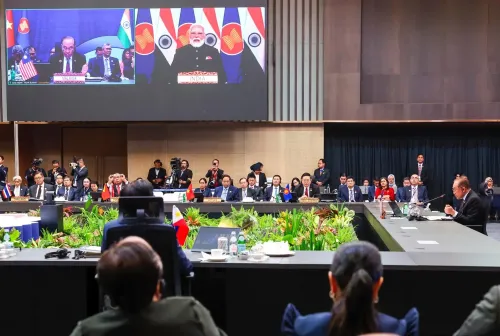
During a Senate Foreign Affairs Committee confirmation hearing on Thursday, nominees for prominent diplomatic roles laid out priorities that encompass the Association of Southeast Asian Nations, the African Development Bank, and initiatives aimed at global education and cultural engagement, highlighting a broader commitment to bolster American influence.
Kevin Kim, designated as the US ambassador to ASEAN, characterized Southeast Asia as a crucial junction for global trade and security. He remarked, “Southeast Asia is situated along the maritime routes through which one-third of the world's shipping flows annually,” stressing the importance of keeping the Indo-Pacific region “free and open.”
Kim pointed out that the ASEAN countries, with a collective GDP of $4 trillion, serve as a significant export market for US products. He expressed his goal to ensure that the United States remains “the partner of choice” for ASEAN nations by enhancing trade access, fortifying supply chains, and influencing regional regulations.
He asserted that the US maintains inherent advantages, particularly its status as a leading source of foreign direct investment. “We continue to be the largest FDI contributor to Southeast Asia,” he noted, emphasizing that this enables Washington to influence the region’s economic standards.
In Africa, Ademola Adewale-Sadik, nominated as the US executive director at the African Development Bank, stated that the US should more effectively utilize its position as a major stakeholder to promote both economic and strategic goals. “We are the second-largest shareholder… and that should carry weight,” he remarked, advocating for reforms to broaden opportunities for American firms in development initiatives.
He portrayed Africa as a long-term strategic frontier. “The development of Africa represents the most significant expansion opportunity for global GDP,” he remarked, arguing that enhanced US involvement could yield advantages for both American and African economies.
Adewale-Sadik also tackled the challenge posed by China, which has captured a considerable portion of infrastructure and development contracts throughout the continent. He claimed that US companies provide greater long-term value, even if they do not always compete effectively on price. “Our private sector may not always win on price, but we will consistently prevail on value,” he asserted to the senators.
Catherine Dillon, nominated as Assistant Secretary of State for Educational and Cultural Affairs, highlighted the importance of soft power in US foreign relations. She described exchange programs as “strategic assets” and “instruments of national power,” especially in a time of escalating competition. Initiatives like Fulbright, she noted, play a vital role in “connecting people and cultures” while reinforcing US global standing.
Dillon committed to aligning these programs more closely with national objectives while ensuring financial responsibility and measurable success.
However, lawmakers expressed concerns to the nominees regarding issues ranging from China’s economic influence to deficiencies in US diplomatic presence and queries about the management of exchange programs. Several senators underscored that continuous engagement—economically, diplomatically, and culturally—will be vital for upholding US influence.
Point of View
The US is recalibrating its foreign policy to address the growing influence of China. By prioritizing engagement with ASEAN and African nations, Washington is not only seeking to secure economic interests but also aiming to strengthen its geopolitical standing in a rapidly changing global landscape.
NationPress
26 Sept 2026
Frequently Asked Questions
Why is Southeast Asia important to the US?
Southeast Asia is crucial due to its strategic location for global trade, with significant shipping routes and a robust economy that represents a major export market for American goods.
What role does Africa play in US foreign policy?
Africa is viewed as a long-term strategic frontier, offering substantial opportunities for economic growth and development, which can benefit both the US and African nations.
How does the US plan to counter China's influence?
The US aims to enhance its engagement in Southeast Asia and Africa through economic partnerships, trade access, and cultural exchanges to provide a counterbalance to China's growing influence.
Who are the key nominees discussing these strategies?
Key nominees include Kevin Kim for ASEAN ambassador, Ademola Adewale-Sadik for the African Development Bank, and Catherine Dillon for Assistant Secretary of State for Educational and Cultural Affairs.
What is the significance of exchange programs in US diplomacy?
Exchange programs are seen as strategic tools that strengthen cultural ties and enhance the US's soft power, helping to build relationships and influence abroad.