Giriraj Singh Pushes Youth to Lead as Job Creators
Synopsis
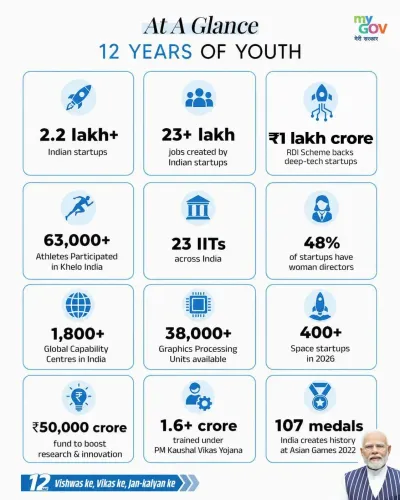
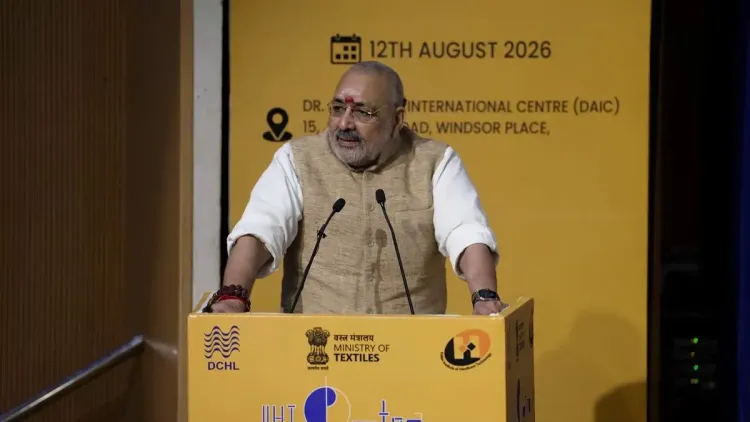
Union Textiles Minister Giriraj Singh called on Indian youth to become entrepreneurs rather than job-seekers, urging students to combine innovation with market awareness, industrial utility, and marketing to carry ideas from campus to global markets.
Key Takeaways
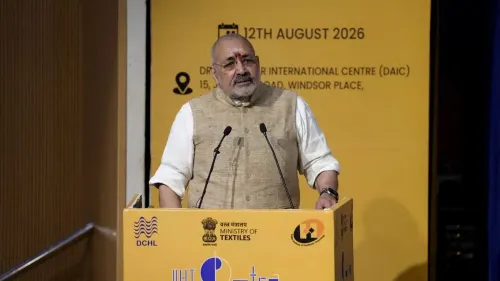
On 12 August 2026 , Union Textiles Minister Giriraj Singh urged Indian youth to aspire to be job creators, not just job-seekers.
He called on students to develop new products and technologies while also mastering market demand, industrial utility, and marketing.
Singh framed this mindset as the bridge that carries innovation 'from institution to market, and from market to the global stage.' The message aligns with the government's broader enterprise-promotion arc: Make in India (2014) , Skill India (2015) , and Startup India (2016) .
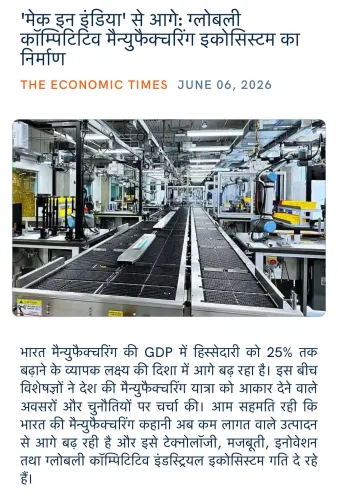
As Textiles Minister, Singh's push for entrepreneurship is particularly significant given the sector's scale as one of India's most labour-intensive industries.
India's next economic leap, Union Textiles Minister Giriraj Singh argued on Wednesday, 12 August 2026, will not be built by young people waiting for a payslip — it will be built by those who sign them.
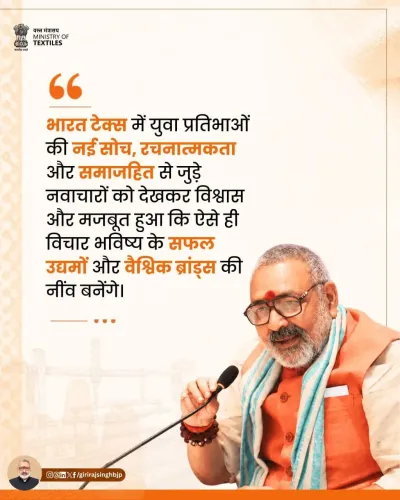
Posting in Hindi, Singh made the case plainly: 'देश के युवा केवल नौकरी पाने वाले नहीं, बल्कि रोजगार देने वाले उद्यमी भी बनें' — 'The youth of this country must become not just job-seekers, but job-creating entrepreneurs.' He pushed further, urging students to look beyond product development and master the full commercial chain: market demand, industrial utility, and marketing. That combination, he said, is what carries an innovation 'from institution to market, and from market to the global stage.'
From Lab to Global Value Chain
The call is not new, but the framing is pointed. Since 2014, successive central government programmes — Make in India, the Skill India mission launched in 2015, and the Startup India initiative of 2016 — have collectively tried to rewire the aspirations of millions of young Indians away from government employment and toward enterprise. Singh's post lands squarely in that lineage, but with a sharper commercial edge: knowing how to build something is no longer enough. Students must also know how to sell it, scale it, and take it global. For a minister who oversees textiles — one of India's most labour-intensive sectors, and a critical link in global supply chains — the message carries particular weight. Skilling and entrepreneurship in textiles directly translate to factory floors, export orders, and rural livelihoods.Why the Institution-to-Market Gap Still Stings
India's engineering and polytechnic graduates have long been criticised for strong theoretical grounding but weak market orientation. The gap between what campuses produce and what industry absorbs remains a live policy headache. Singh's emphasis on 'market needs, industrial utility, and marketing' reads as a direct prod at that disconnect — a signal that the government wants educational institutions to treat commercialisation as a core competency, not an afterthought. The textiles ministry has historically participated in skilling drives through polytechnics and Industrial Training Institutes linked to the sector. Whether this post signals a formal policy push — new entrepreneurship modules, incubator tie-ups, or budget allocations — remains to be seen in upcoming policy announcements. The ambition is clear: turn India's demographic dividend into a generation of founders, not just a workforce. Whether the ecosystem catches up with the rhetoric is the test that matters.Point of View
Skill India, and Startup India simultaneously. Coming from the Textiles Minister, the nudge toward market orientation and global scalability signals that the ministry may be preparing to deepen entrepreneurship integration in sector-specific skilling infrastructure such as textile polytechnics and ITIs. The emphasis on the full commercial chain — not just innovation but marketing and industrial utility — reflects a maturation in the government's messaging, acknowledging that product creation alone does not build an economy. If backed by concrete institutional changes, this framing could meaningfully connect campus-level innovation to export-ready enterprise; without them, it remains an important but familiar rallying call.
NationPress
27 Sept 2026
Frequently Asked Questions
What did Giriraj Singh say about Indian youth and entrepreneurship?
Singh urged Indian youth to become job-creating entrepreneurs rather than merely seeking employment, and called on students to develop products while also understanding market demand, industrial utility, and marketing.
What is Startup India and how does it relate to Singh's message?
Startup India is a 2016 government initiative to promote startups, innovation, and ease of doing business for new entrepreneurs. Singh's call for youth to create jobs directly echoes the programme's core objective of building an enterprise-driven economy.
What is Skill India?
Skill India is a programme launched in 2015 to equip India's youth with industry-relevant skills and promote entrepreneurship, forming part of the broader policy push that also includes Make in India.
Why is the Textiles Minister talking about entrepreneurship and innovation?
Textiles is one of India's most labour-intensive sectors, making skilling and entrepreneurship directly relevant to the ministry's mandate. Encouraging young entrepreneurs in this space can boost domestic manufacturing and exports.
What does 'institution to market to global stage' mean in Singh's post?
Singh used this phrase to describe the full journey an innovation must make — from being developed inside a college or institution, to finding commercial buyers in the domestic market, and ultimately competing on the global stage.