Giriraj Singh Pushes Textile Entrepreneurship in Begusarai
Synopsis
Union Textiles Minister Giriraj Singh called on textile trainees in Begusarai to become job creators rather than job seekers, framing stitching skills and tailoring enterprises as engines of local entrepreneurship and employment generation.
Key Takeaways
Giriraj Singh posted on 25 September 2026 urging an entrepreneurship-first approach to textile skill training in Begusarai, Bihar .
He called for youth and women trainees to link their craft to commerce, aiming for a 'skill that gives employment, not seeks it.' Tailoring houses and stitching skills were cited as concrete vehicles for self-employment and local job creation.
The push aligns with the Skill India Mission (launched 2015 ) and the Textiles Ministry's emphasis on converting training into entrepreneurship outcomes.
Textiles is one of India's most labour-intensive sectors and a priority for MSME growth at the constituency level.
Begusarai , Singh's own Lok Sabha constituency, is positioned as the model for this textile entrepreneurship push.
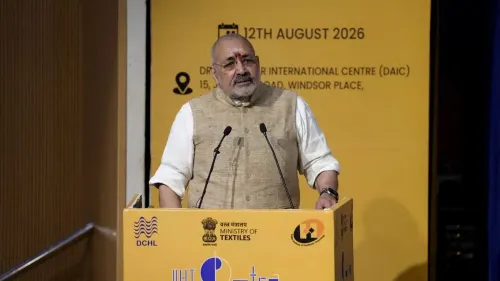
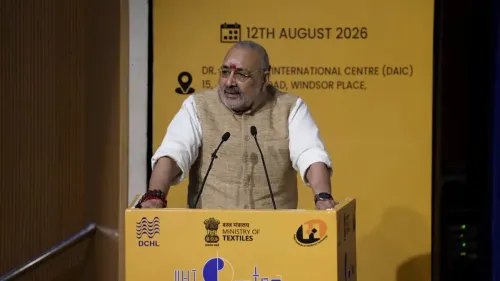
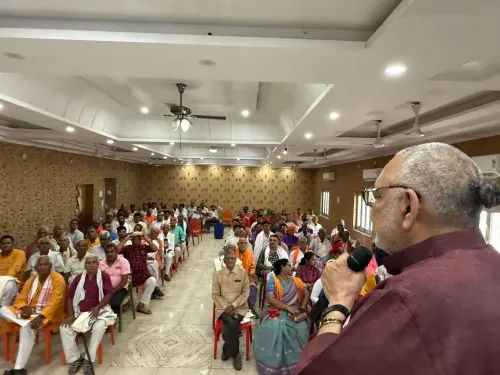
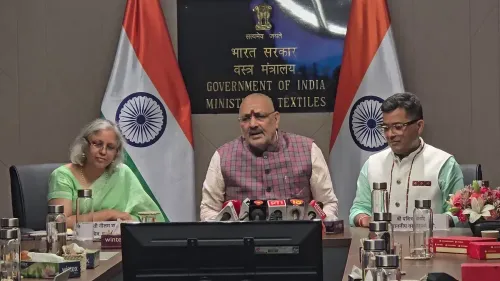
The goal, Union Textiles Minister Giriraj Singh made clear on Friday, 25 September 2026, is not to train young people to look for jobs — it is to train them to create jobs. In a pointed post on X, the senior BJP leader and Lok Sabha MP from Begusarai, Bihar, laid out an entrepreneurship-first vision for textile skill development in his own constituency.
Singh wrote: 'सिलाई का कौशल हो या टेलरिंग हाउस, लक्ष्य है कि हुनर रोजगार मांगने वाला नहीं, रोजगार देने वाला बने' — 'Whether it is stitching skills or a tailoring house, the goal is that skill should not seek employment, but create it.' The message signals a deliberate pivot from treating textile training as a pathway to wage labour toward building a class of micro-entrepreneurs and small business owners, with Begusarai as the test bed.
Turning Begusarai's Textile Potential into a Business Ecosystem
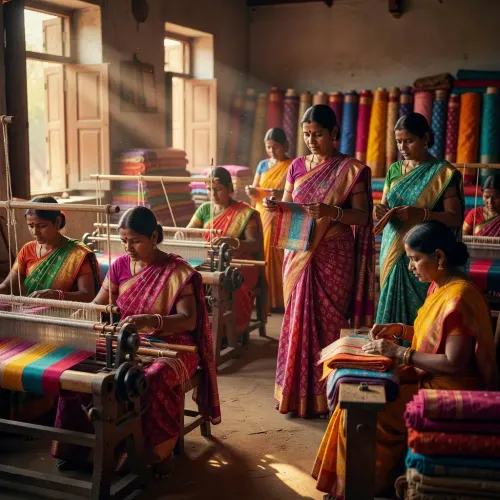
Singh specifically called out the need to build a 'strong textile environment' in Begusarai, directing trainees — youth and women in particular — to link their craft to commerce and enterprise. The aspiration goes beyond individual livelihoods: a tailor who sets up a tailoring house employs others. A woman who masters stitching and opens a unit pulls her neighbours into the economy. Scale that across a constituency, and the arithmetic of job creation changes.
Textiles is one of India's most labour-intensive sectors and a declared priority for MSME growth under central policy. The Skill India Mission, launched in 2015, already provides the architecture for vocational training-to-self-employment pipelines. What Singh is articulating is the last mile of that architecture: ensuring trained hands do not merely fill existing payrolls but build new ones.
Why the Minister's Home Turf Is the Message
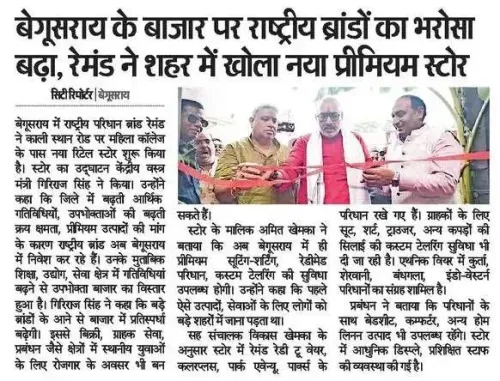
That Singh is making this pitch specifically for Begusarai — the constituency he represents — carries its own significance. Ministers who anchor flagship ministry ambitions to their home districts are making a political commitment as much as a policy one. The constituency becomes a visible proof-of-concept: if the textile entrepreneurship model works in Begusarai, it is replicable across Bihar and beyond.
The Textiles Ministry's broader strategy has consistently emphasised converting skill programmes into entrepreneurship outcomes, not just employment numbers. A trained weaver who starts a unit is counted differently — and more ambitiously — than one who takes a factory floor job. Singh's framing aligns squarely with that institutional direction.
The next indicator to watch: whether formal training infrastructure, entrepreneurship linkages, or state-central coordination announcements follow for Begusarai. The vision is clear. The rollout will tell the story.
Point of View
Named-place commitment. The framing, skill that creates jobs rather than seeks them, is politically savvy: it upgrades the government's narrative from job-giver to ecosystem-builder. Anchoring it in Begusarai turns an abstraction into a testable claim, raising the political stakes if delivery falls short. For the broader Skill India architecture, it signals that ministerial accountability is being pushed closer to the ground.
NationPress
25 Sept 2026
Frequently Asked Questions
What did Giriraj Singh say about textiles in Begusarai?
Singh called for building a strong textile environment in Begusarai, urging trained youth and women to turn their stitching and tailoring skills into businesses and employment opportunities rather than seeking wage jobs.
What is Giriraj Singh's role as Textiles Minister?
Giriraj Singh is India's Union Minister of Textiles and a senior BJP leader. He is also the Lok Sabha MP from Begusarai, Bihar.
How does Skill India relate to textile entrepreneurship in Bihar?
The Skill India Mission, launched in 2015, promotes vocational training and self-employment across sectors including textiles. Singh's push in Begusarai builds on this framework by aiming to convert trained workers into micro-entrepreneurs.
Why is Begusarai important for textile skill development?
Begusarai is Singh's own Lok Sabha constituency and is being positioned as a model for localising the Textiles Ministry's entrepreneurship-driven skill agenda at the grassroots level.
What is the government's goal for textile trainees in India?
The Textiles Ministry's stated goal is to ensure that skilled workers — especially youth and women — become job creators through tailoring houses and small textile enterprises, rather than merely joining existing payrolls.