Giriraj Singh calls for IIT-IIM mentorship to power textile youth
Synopsis
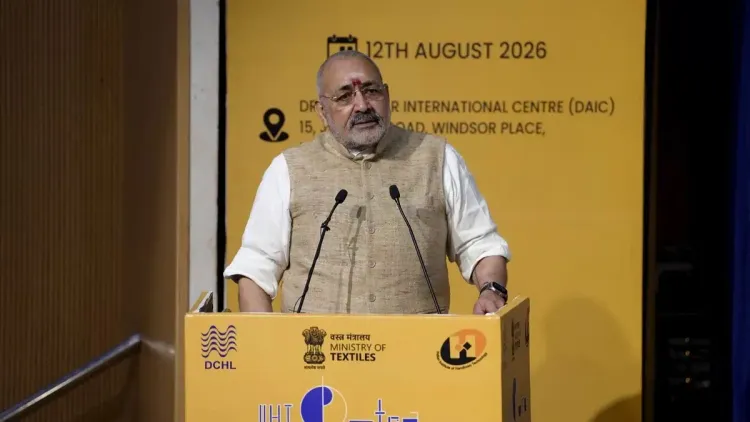
Union Textiles Minister Giriraj Singh called on 12 August 2026 for structured early mentorship of Indian youth through IITs, IIMs, bankers, and industry, framing the move as essential to realising the Viksit Bharat 2047 vision through entrepreneurship and innovation in the textile sector.
Key Takeaways
Giriraj Singh , Union Textiles Minister, called for connecting youth with IITs, IIMs , entrepreneurs, and bankers from an early stage.
He posted in Hindi on 12 August 2026 , framing youth as a force capable of turning challenges into opportunities.
The call is explicitly tied to Viksit Bharat 2047 , the government's developed-nation vision for India's centenary of independence.
The Startup India initiative (launched 2016 ) and the Production Linked Incentive scheme for textiles ( 2021 ) form the policy backbone behind the push.
Textiles is one of India's largest employment sectors and has been a recurring test case for Make in India and youth skilling frameworks.
Analysts are watching for possible mentorship or incubation components in the next Union Budget or an updated National Textile Policy .
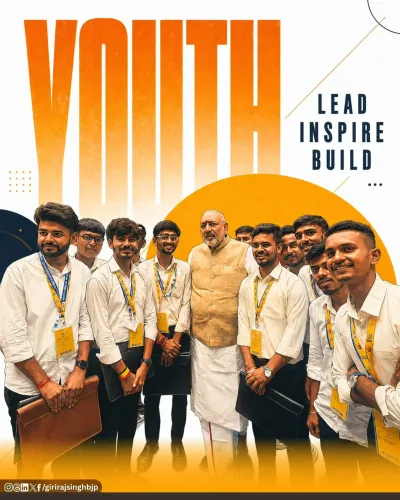
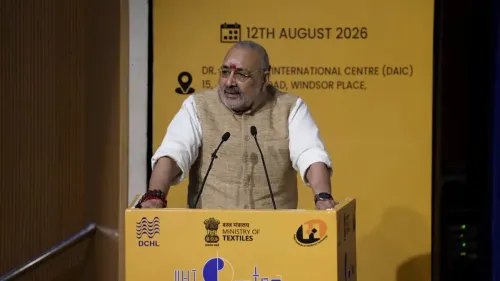
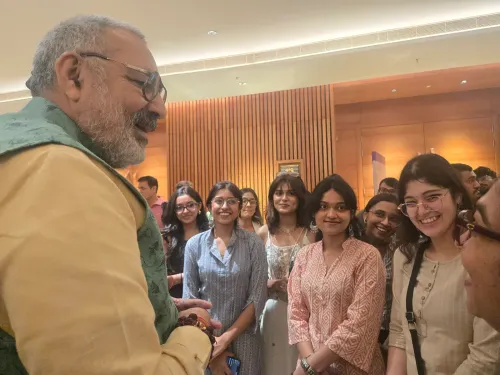
India's demographic dividend sits at a crossroads — and Union Textiles Minister Giriraj Singh wants the country's finest institutions to help it cross. On Wednesday, 12 August 2026, the senior BJP leader and Lok Sabha MP from Begusarai, Bihar, posted a pointed call to action on X, urging that young Indians be connected — from the very start — with entrepreneurs, bankers, IITs, IIMs, and industry to turn raw talent into economic momentum.
Posting in Hindi, Singh wrote: 'हमारे युवा प्रतिभा और नवाचार की ऐसी शक्ति हैं, जो किसी भी चुनौती को अवसर में बदलने का सामर्थ्य रखते हैं' — 'Our youth are such a force of talent and innovation that they have the capacity to turn any challenge into an opportunity.' The solution, he argued, lies not in waiting but in structured early mentorship: link young people with the right guides before they hit a wall, not after.
Skill, direction, enterprise — the three-part formula
Singh framed his vision around a precise sequence: hunar ko avsar (skill meeting opportunity), navachar ko disha (innovation getting direction), and yuva shakti ko udyamita ka saath (youth energy paired with entrepreneurship). Only when all three align, he said, does the new story of Viksit Bharat 2047 — the government's flagship goal of achieving developed-nation status by India's centenary of independence — actually get written. The post carried the hashtags #Entrepreneurship, #Innovation, #Textiles, and #ViksitBharat2047, signalling that the minister sees his own portfolio as a proving ground for this ambition. Textiles is one of India's largest employment sectors, absorbing millions of workers — many of them young, first-generation earners — and has been repeatedly positioned as a test case for the Make in India and Startup India frameworks since the latter's launch in 2016.Why textiles is the minister's chosen canvas
The sector's logic is hard to argue with. The Production Linked Incentive scheme for textiles, announced in 2021, was designed precisely to scale manufacturing and exports — but raw investment without a trained, entrepreneurially minded workforce only goes so far. Singh's push for IIT-IIM linkages suggests a next step: not just factory capacity, but founders and innovators who can build supply chains, design labels, and compete globally. Successive governments have tried to bridge the gap between premier institutions and industry. The gap persists. Singh's post, tagged directly to Viksit Bharat 2047, is a public signal that the Textiles Ministry intends to keep pressure on that bridge — and that the next Union Budget or an updated National Textile Policy could carry concrete mentorship or incubation components. Talent without a map wanders. The minister's message is simple: give it one early enough to matter.Point of View
He is signalling a preference for elite-institution-led mentorship pipelines rather than purely grassroots skilling schemes. The explicit textile hashtag suggests the ministry may be preparing a sector-specific entrepreneurship push, possibly ahead of a budget cycle. Whether the rhetoric translates into funded programmes with measurable targets will determine whether this is policy momentum or aspirational messaging.
NationPress
27 Sept 2026
Frequently Asked Questions
What did Giriraj Singh say about youth and entrepreneurship?
On 12 August 2026, Union Textiles Minister Giriraj Singh called for Indian youth to be connected early with IITs, IIMs, entrepreneurs, bankers, and industry so that talent and innovation receive the mentorship needed to drive the Viksit Bharat 2047 vision.
What is Viksit Bharat 2047?
Viksit Bharat 2047 is the Government of India's official vision to achieve developed-nation status by 2047, the centenary of India's independence, spanning economic growth, infrastructure, and human development goals.
How does the textile sector connect to Startup India?
The Startup India initiative, launched in 2016, aimed to promote entrepreneurship across sectors including textiles, which is one of India's largest employment industries and has been a recurring focus under Make in India and youth skilling frameworks.
What is the Production Linked Incentive scheme for textiles?
Announced in 2021, the PLI scheme for textiles was designed to boost manufacturing capacity and exports by offering financial incentives to eligible producers, positioning the sector for global competitiveness.
Could the Textiles Ministry announce a mentorship programme for youth?
Analysts are watching for possible incubation or mentorship components in the next Union Budget or an updated National Textile Policy, following Singh's public call for structured IIT-IIM and industry linkages for young entrepreneurs.