Giriraj Singh Pushes Textile Exports via Embassies, New Markets
Synopsis
Union Textiles Minister Giriraj Singh on 11 June 2026 called for sustained embassy-led outreach to connect Indian textile exporters with new and emerging markets, saying the push would accelerate industry growth, exports, and employment generation under the Make in India and Atmanirbhar Bharat frameworks.
Key Takeaways
Giriraj Singh on 11 June 2026 publicly backed using Indian embassies as active trade-facilitation channels for textile exporters.
The initiative targets emerging markets in regions such as Africa, ASEAN, and Latin America to reduce dependence on the US and EU.
It aligns with the Make in India (2014) and Atmanirbhar Bharat (2020) policy frameworks, as well as the PLI scheme for textiles notified in 2021.
India concluded FTAs with the UAE and Australia in 2022 ; talks with the UK and EU are ongoing and will be key to the next phase of export growth.
MSME garment manufacturers and textile-sector workers are the primary potential beneficiaries of expanded market access.
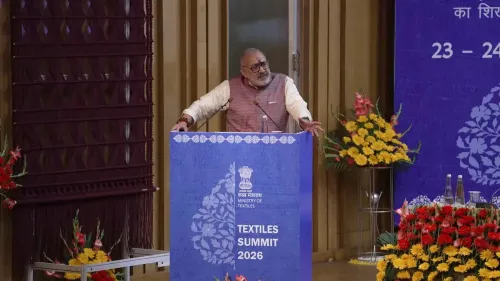
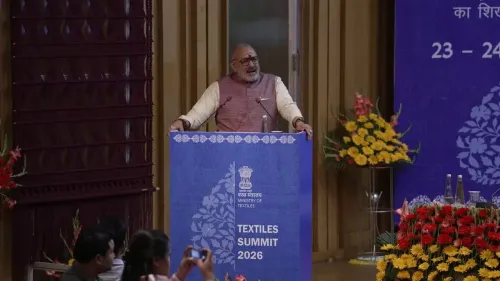
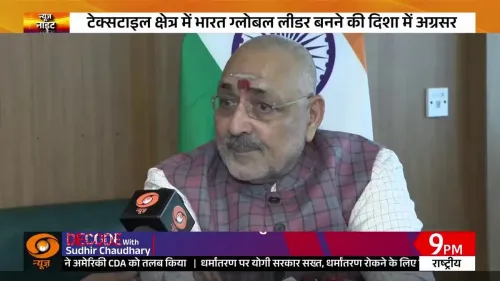
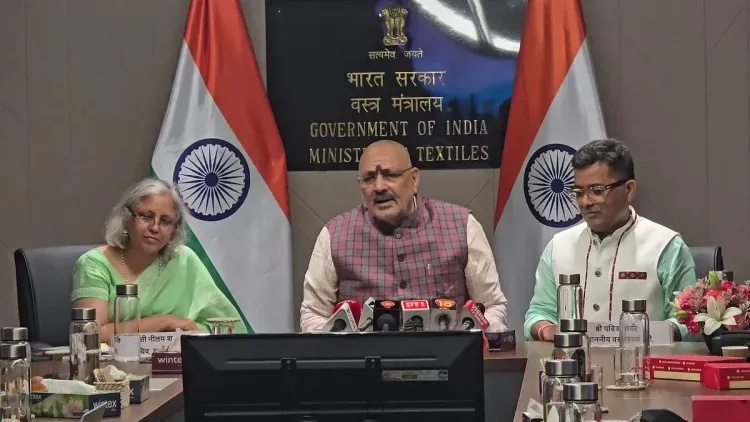
Union Textiles Minister Giriraj Singh on Thursday, 11 June 2026 called for sustained efforts to connect Indian exporters with new countries, deepen trade contacts through embassies, and unlock opportunities in emerging markets — framing the push as a catalyst for industry growth, exports, and job creation.
Posting on X, the minister wrote: 'निर्यातकों को नए देशों से जोड़ने, दूतावासों के माध्यम से व्यापारिक संपर्क बढ़ाने और उभरते बाजारों में अवसर उपलब्ध कराने की दिशा में निरंतर कार्य किया जा रहा है।' ['Continuous work is being done to connect exporters with new countries, increase trade contacts through embassies, and provide opportunities in emerging markets.'] He added that the initiative would give 'new momentum to Indian industry, exports, and employment generation.'
Context
The post arrives at a moment when India is actively diversifying its textile export base beyond traditional destinations in the United States and the European Union. Giriraj Singh, who holds the Textiles portfolio and represents Begusarai in Bihar as a BJP Lok Sabha MP, has consistently championed diplomatic channels as a vehicle for trade expansion. The emphasis on embassies signals a whole-of-government approach that brings the Ministry of External Affairs into the export promotion framework.
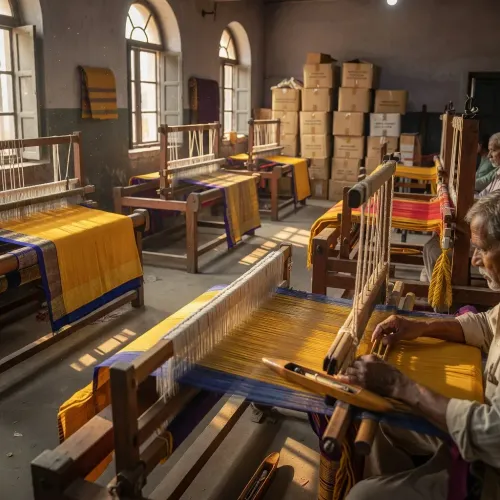
India's textile sector is among the country's largest employers, supporting millions of workers — from weavers and spinners to garment stitchers — many of them concentrated in states such as Gujarat, Tamil Nadu, Maharashtra, and Uttar Pradesh. Any sustained push into emerging markets in Africa, ASEAN, and Latin America could meaningfully broaden the demand base for Indian fabrics and apparel.
Policy Backdrop
The minister's statement sits within a layered policy architecture built over the past decade. The Make in India campaign, launched in September 2014, positioned India as a global manufacturing hub with textiles as a priority sector. The Atmanirbhar Bharat Abhiyan, announced in May 2020, added a self-reliance dimension — emphasising export promotion alongside supply-chain resilience.
The Production Linked Incentive (PLI) scheme for textiles, notified in 2021, targeted man-made fibres and technical textiles to move India up the value chain. On the trade-pact front, the India-UAE Comprehensive Economic Partnership Agreement (CEPA) and the India-Australia Economic Cooperation and Trade Agreement (ECTA), both concluded in 2022, lowered tariffs on Indian textile products in those markets. Talks with the UK and the EU on similar agreements remain in progress and are closely watched by the industry.
Stakeholders and Impact
The primary beneficiaries of an embassy-led market outreach would be textile exporters — including MSME garment manufacturers who often lack the resources to independently scout and establish footholds in unfamiliar markets. Diplomatic facilitation can lower the entry cost for smaller players by providing verified buyer contacts, regulatory guidance, and government-to-government credibility.
Workers in the textile value chain stand to gain if export volumes rise, since the sector's labour intensity means incremental demand translates relatively quickly into new jobs. Industry bodies representing spinning mills, power-loom clusters, and apparel exporters have long sought greater government support in penetrating non-traditional markets where competition from Bangladesh, Vietnam, and Cambodia is less entrenched than in the West.
What's Next
Attention will now turn to concrete outcomes: whether the Ministry of Textiles formalises a structured embassy-outreach programme, and how monthly textile export figures — released by the Commerce Ministry — respond over coming quarters. Progress on the pending India-UK and India-EU free trade agreements will be an equally important barometer. A successful FTA with either partner could dramatically expand the duty-free window for Indian apparel and home textiles, complementing the diplomatic market-access push Giriraj Singh has signalled.
Point of View
The minister is stitching together two distinct political narratives — manufacturing ambition and self-reliance — into one export-promotion message. The focus on emerging markets is strategically significant: India's textile exporters face stiff tariff and cost disadvantages in mature Western markets, making Africa and ASEAN relatively more accessible frontiers. Whether this translates into a formal, funded programme or remains aspirational signalling will determine its real-world impact on the sector.
NationPress
26 Oct 2026
Frequently Asked Questions
What did Giriraj Singh say about textile exports on 11 June 2026?
Giriraj Singh said the government is continuously working to connect exporters with new countries, increase trade contacts through Indian embassies, and create opportunities in emerging markets, adding that this initiative will give new momentum to Indian industry, exports, and employment.
How are Indian embassies involved in textile export promotion?
The minister indicated that Indian embassies are being used as channels to establish and deepen business contacts between Indian textile exporters and buyers or governments in new and emerging markets, effectively making diplomatic missions part of the trade-facilitation network.
Which free trade agreements benefit Indian textile exporters?
India concluded the UAE Comprehensive Economic Partnership Agreement and the Australia Economic Cooperation and Trade Agreement in 2022, both of which reduced tariffs on Indian textile products. Talks with the UK and EU are ongoing and could further expand duty-free access.
What is the PLI scheme for textiles?
The Production Linked Incentive scheme for textiles was notified in 2021 to incentivise domestic manufacturing of man-made fibres and technical textiles, aiming to move India up the global textile value chain and boost exports.
Which emerging markets is India targeting for textile exports?
India's broader export-diversification strategy focuses on regions including Africa, ASEAN, and Latin America, where competition from rival textile exporters is less intense than in traditional Western markets, though specific countries targeted under the June 2026 initiative have not been officially detailed.