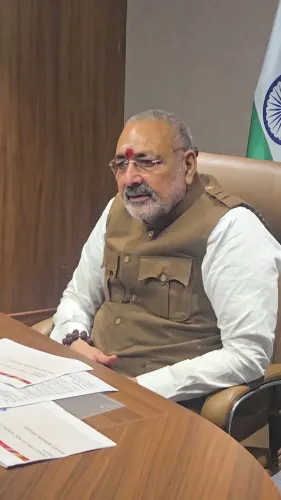
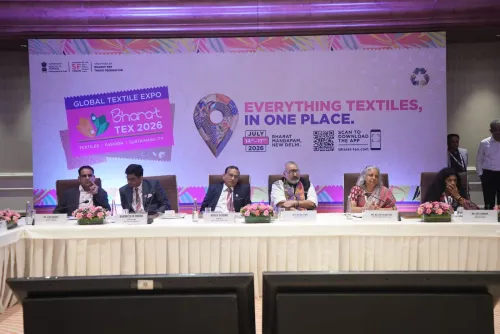
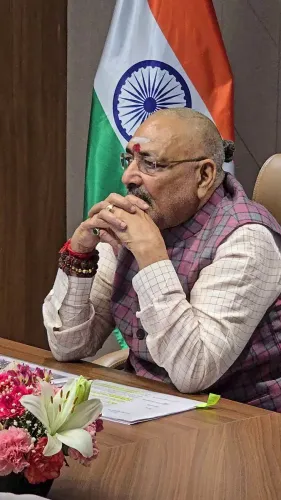
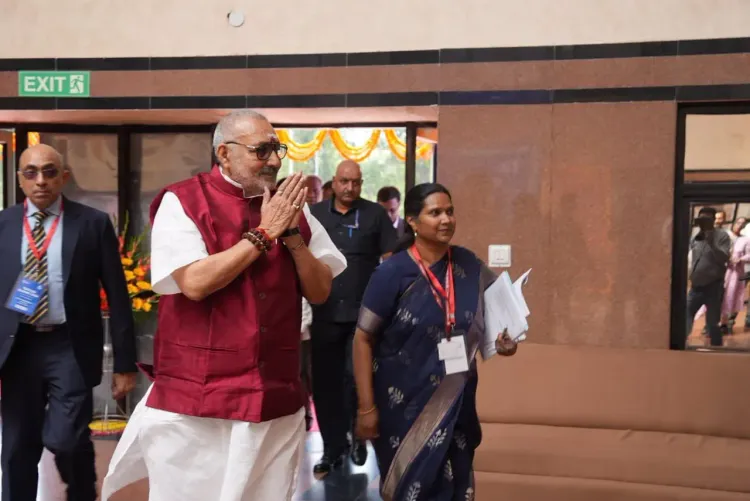
Giriraj Singh addresses Textile Summit 2026 in New Delhi
Synopsis
Union Textiles Minister Giriraj Singh addressed Textile Summit 2026 — 'Textiles for Global Markets' — at Pusa Institute in New Delhi on 23 June 2026, calling the gathering of industry representatives and experts from across India a significant step toward boosting the country's global textile trade presence.
Key Takeaways
Giriraj Singh , Union Minister of Textiles, addressed delegates at Textile Summit 2026 in New Delhi on 23 June 2026 .
The summit's theme was 'Textiles for Global Markets' , focused on expanding India's international textile trade footprint.
The event was held at Pusa Institute , the New Delhi campus of the Indian Agricultural Research Institute.
Participants included industry representatives, domain experts, and stakeholders from multiple Indian states .
The summit aligns with existing schemes including the PLI Scheme for Textiles (Rs 10,683 crore outlay, 2021) and ATUFS (2016).
Potential follow-on announcements on export targets, FTA linkages, or scheme updates will be closely tracked.
Union Textiles Minister Giriraj Singh addressed delegates at Textile Summit 2026, themed 'Textiles for Global Markets' (वैश्विक बाजारों के लिए वस्त्र), held at the Pusa Institute in New Delhi on Tuesday, 23 June 2026. The summit brought together industry representatives, domain experts, and other stakeholders from across India to chart a course for elevating the country's textile sector in international markets.
Context
Posting on X, Singh wrote that he 'participated in and addressed the delegates present at Textile Summit 2026 — Textiles for Global Markets, held at Pusa Institute, New Delhi.' He noted that the presence of industry representatives, experts, and stakeholders from various states made the summit 'ek mahatvapurn pahal' — 'an important initiative' — towards taking India's textile sector to new heights in global markets.
The venue, Pusa Institute — the New Delhi campus of the Indian Agricultural Research Institute (IARI) — has occasionally served as a convening ground for sector-specific policy and trade summits of national significance.
Policy Backdrop
The summit sits within a long arc of central government efforts to grow India's share of global textile trade. The Production Linked Incentive (PLI) Scheme for Textiles, approved in 2021 with an outlay of Rs 10,683 crore, was designed specifically to promote man-made fibre apparel and technical textiles — segments where India has historically lagged behind dominant producers.
Earlier, the Amended Technology Upgradation Fund Scheme (ATUFS), launched in 2016, aimed at modernising textile manufacturing units across the country. Together, these schemes form the policy scaffolding within which events like Textile Summit 2026 are positioned — as platforms to translate scheme intent into industry action and export momentum.
Stakeholders and Impact
The summit's cross-sectional attendance — drawing textile exporters, MSME manufacturers, and technical experts from multiple states — signals an effort to build a unified industry position ahead of potential trade negotiations and export target-setting. India's textile and apparel sector is one of the country's largest employment generators, with millions of workers, particularly women, engaged across the value chain.
For MSME manufacturers, such summits often serve as an early indicator of upcoming scheme modifications, credit-linked incentives, or export facilitation measures. Industry bodies representing man-made fibre and technical textile producers are among the stakeholders with the most direct interest in the summit's outcomes.
What's Next
Observers will watch for any fresh export targets, extensions of existing schemes, or announcements linked to ongoing Free Trade Agreement (FTA) negotiations that may be attributed to the summit's deliberations. Quarterly textile export data and parliamentary questions on PLI scheme utilisation will serve as the clearest indicators of whether the summit's stated ambitions translate into measurable trade outcomes.
With global supply chains continuing to shift and major economies seeking alternatives to dominant textile producers, India's ability to convert domestic convenings like this into sustained export growth will be the key test for the Ministry of Textiles in the months ahead.
Point of View
The summit may be as much about demonstrating scheme momentum as about generating new policy. Whether the gathering produces concrete, trackable commitments — export targets, FTA-linked concessions, or scheme expansions — will determine its lasting significance beyond the optics of a well-attended ministerial address.
NationPress
22 Sept 2026
Frequently Asked Questions
What is Textile Summit 2026?
Textile Summit 2026 is a national-level industry conclave themed 'Textiles for Global Markets', held at Pusa Institute in New Delhi, aimed at aligning Indian textile industry stakeholders with international trade opportunities.
Why did Giriraj Singh attend Textile Summit 2026?
As Union Minister of Textiles, Giriraj Singh addressed the summit to engage with industry representatives, experts, and stakeholders from across India on strategies to expand the country's presence in global textile markets.
What is the PLI Scheme for Textiles?
The Production Linked Incentive (PLI) Scheme for Textiles was approved in 2021 with an outlay of Rs 10,683 crore to promote man-made fibre apparel and technical textiles manufacturing in India.
Where is Pusa Institute located?
Pusa Institute refers to the New Delhi campus of the Indian Agricultural Research Institute (IARI), located in New Delhi, which is also used as a venue for national-level policy and trade summits.
What should we watch for after Textile Summit 2026?
Key things to track include any fresh textile export targets, extensions or modifications to existing schemes like PLI or ATUFS, and announcements related to ongoing Free Trade Agreement negotiations that may emerge from the summit's deliberations.