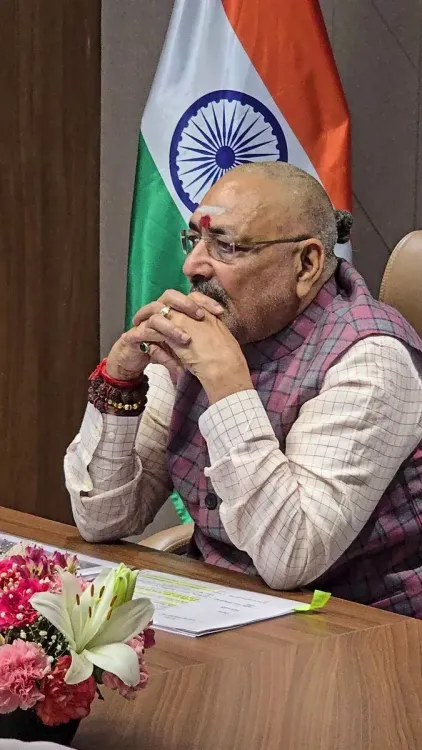
Giriraj Singh chairs textiles trade and export meeting
Synopsis
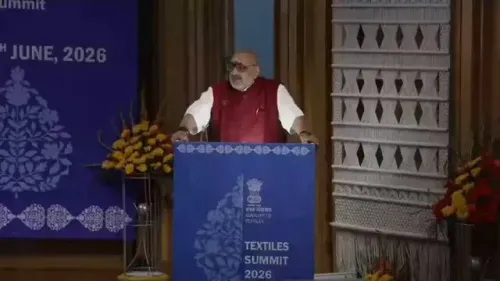
Union Textiles Minister Giriraj Singh chaired a meeting on 11 June 2026 to discuss expanding the global reach of Indian textile products, accelerating exports, and strengthening industry competitiveness, reaffirming India's goal of becoming a global textiles and apparel hub.
Key Takeaways
Union Textiles Minister Giriraj Singh chaired a meeting on 11 June 2026 on trade and export issues in the textiles and apparel sector.
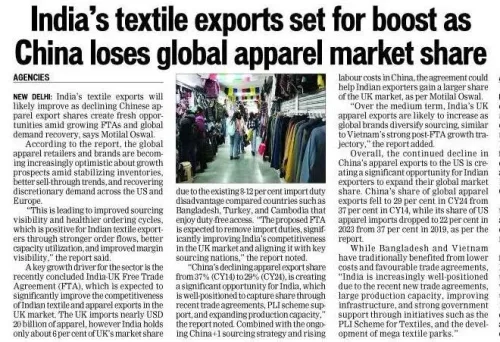
Discussions covered expanding global reach of Indian textile products, accelerating exports, and strengthening sector competitiveness.
The government's stated goal of making India a global textiles and apparel hub was reaffirmed.
The PLI scheme (2021) and RoSCTL scheme (revised 2020-21) form the core policy framework supporting this objective.
Key stakeholders include textile exporters, apparel manufacturers, and MSME units across the supply chain.
Formal outcomes and any new policy directives from the meeting are yet to be announced by the Ministry of Textiles .
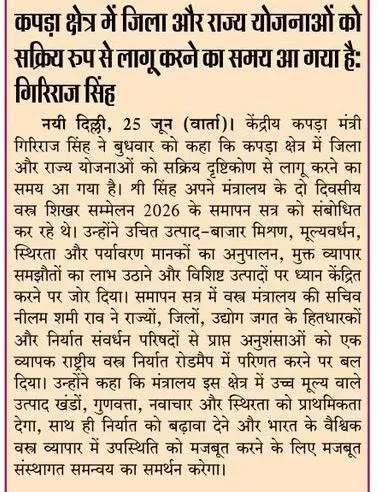
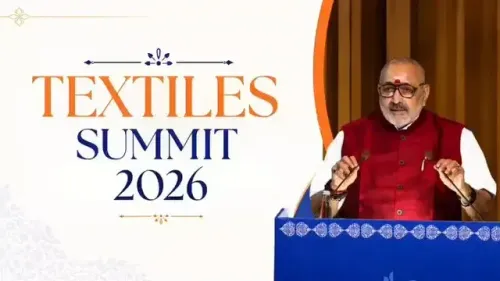
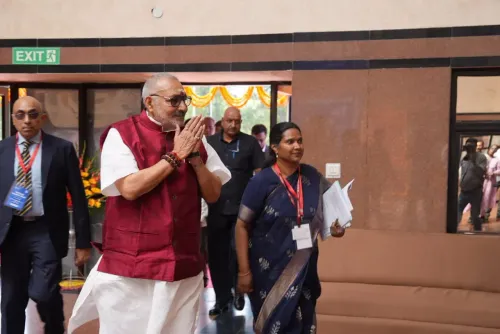
Union Textiles Minister Giriraj Singh on Thursday, 11 June 2026 chaired a high-level meeting focused on trade and export issues in India's textiles and apparel sector, signalling continued government attention to scaling the industry's global footprint.
Context
Posting on X, Minister Singh said the meeting covered 'वैश्विक पहुंच बढ़ाने' ('expanding global reach') of Indian textile products, accelerating exports, capitalising on new trade opportunities, and strengthening the sector's competitiveness. He reaffirmed the government's stated goal of making India a global textiles and apparel hub. The post was accompanied by a video, suggesting the meeting involved substantive stakeholder engagement.
Policy Backdrop
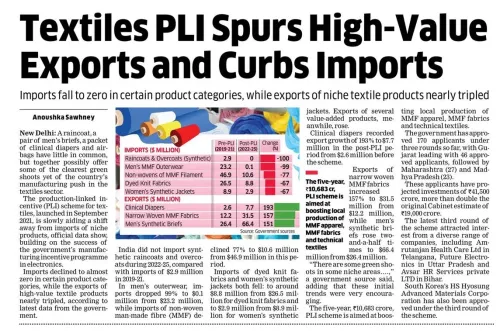
The meeting sits within a well-established policy framework. The Production Linked Incentive (PLI) scheme for man-made fibre apparel and fabrics, notified in 2021, was designed to attract large-scale investment and lift export volumes. Alongside it, the Rebate of State and Central Taxes and Levies (RoSCTL) scheme — extended and revised in 2020-21 — continues to provide fiscal relief to textile and apparel exporters, improving their price competitiveness in overseas markets.
Both instruments sit under the broader Make in India framework, which has sought to position the country as an alternative manufacturing destination as global supply chains reorganise. The Ministry of Textiles has been the nodal body coordinating these efforts across spinning, weaving, processing and garmenting segments.
Stakeholder and Industry Impact
India's textiles and apparel sector is one of the country's largest employers and a significant source of foreign exchange. Textile exporters, apparel manufacturers, and MSME units — which form the backbone of the supply chain — stand to be most directly affected by any policy adjustments or new market-access arrangements that emerge from such deliberations.
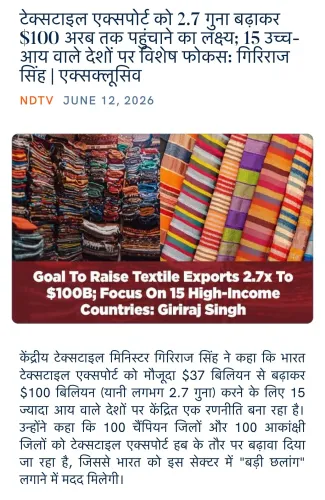
Industry bodies have consistently sought diversification away from traditional export destinations, greater infrastructure support, and faster resolution of duty and tax refund backlogs. The minister's emphasis on 'new trade opportunities' suggests the government is actively looking at emerging markets and ongoing or concluded free-trade agreements as levers for growth.
What's Next
Concrete outcomes of the 11 June 2026 meeting — including any new directives, scheme modifications, or market-access provisions — are yet to be formally announced by the Ministry of Textiles. Analysts and exporters will watch closely for the release of monthly and quarterly textile export data from the Ministry of Commerce, which will indicate whether the policy push is translating into measurable gains on the ground. Any fresh provisions linked to ongoing free-trade agreement negotiations could provide the next significant catalyst for the sector.
Point of View
Complete with a video, reflects a pattern of using social media to project policy activism and stakeholder engagement. The repeated invocation of the 'global hub' aspiration ties the ministry's work directly to the Make in India narrative, giving the government a politically legible benchmark against which progress can be measured. Whether the ambition translates into export-data outcomes will be the real test of the policy coherence on display.
NationPress
28 Oct 2026
Frequently Asked Questions
What did Giriraj Singh's textiles meeting on 11 June 2026 discuss?
The meeting chaired by Union Textiles Minister Giriraj Singh on 11 June 2026 discussed expanding the global reach of Indian textile products, accelerating exports, identifying new trade opportunities, and strengthening the competitiveness of the industry.
What is India's goal in the textiles and apparel sector?
India's stated goal is to become a global textiles and apparel manufacturing and export hub, pursued through schemes like the PLI for man-made fibre apparel and the RoSCTL rebate scheme for exporters.
What is the PLI scheme for textiles?
The Production Linked Incentive (PLI) scheme for man-made fibre apparel and fabrics was notified in 2021 to attract large-scale investment into the sector and boost India's textile export volumes.
What is the RoSCTL scheme?
The Rebate of State and Central Taxes and Levies (RoSCTL) scheme, extended and revised in 2020-21, provides fiscal relief to textile and apparel exporters by rebating embedded state and central taxes, improving their competitiveness in global markets.
Who are the key stakeholders in India's textile export sector?
The key stakeholders include textile exporters, apparel manufacturers, and MSME units that form the backbone of India's textile supply chain, all of whom are directly affected by export policy decisions.