Lalan Singh pays tribute to Sister Nivedita on her birth anniversary
Synopsis
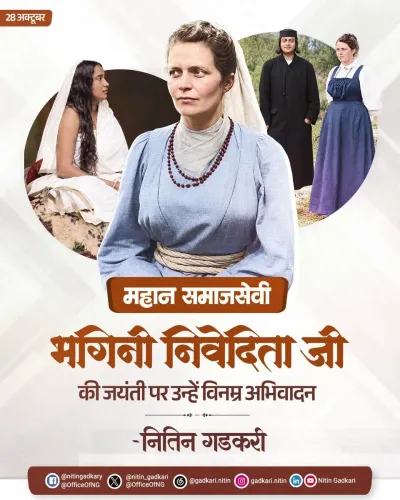
Union Minister Rajiv Ranjan Singh (Lalan Singh) honoured Sister Nivedita on her birth anniversary, saluting the Irish-born disciple of Swami Vivekananda for her lifelong dedication to Indian culture, women's education, social reform, and the national independence movement.
Key Takeaways
Union Minister Lalan Singh posted a tribute to Sister Nivedita on her birth anniversary on October 28, 2026 .
Sister Nivedita, born Margaret Elizabeth Noble in Ireland, arrived in India in 1898 as a disciple of Swami Vivekananda .
She dedicated her life to women's education, social reform, and India's independence movement.
Lalan Singh called her sacrifice and service 'a timeless beacon of inspiration for future generations.' The tribute reflects a recurring pattern of Indian political leaders publicly honouring figures linked to cultural and nationalist awakening.
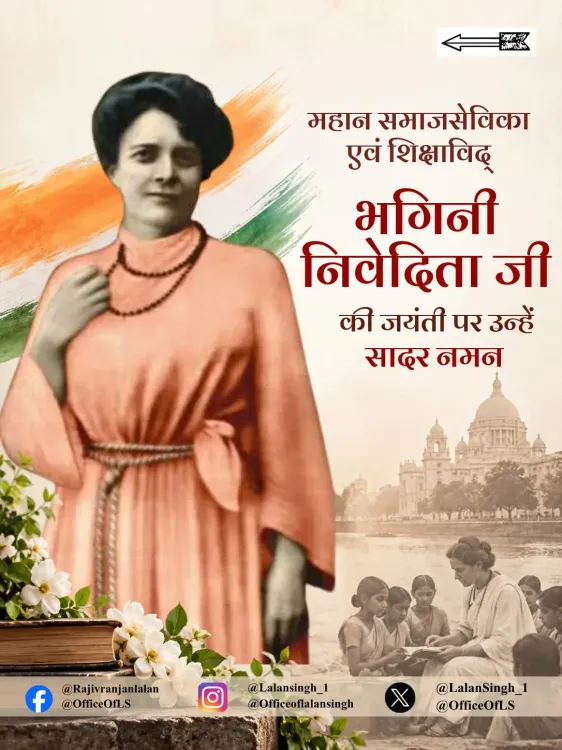
A life spent entirely in service of Indian culture, education, and national awakening — Union Panchayati Raj and Fisheries Minister Rajiv Ranjan Singh, popularly known as Lalan Singh, marked the birth anniversary of Sister Nivedita on Wednesday, October 28, 2026, with a heartfelt tribute on X, calling her a timeless source of inspiration for generations to come.
In his post, the senior Janata Dal (United) leader wrote: 'भारतीय संस्कृति, शिक्षा एवं राष्ट्रजागरण के लिए अपना संपूर्ण जीवन समर्पित करने वाली महान विभूति भगिनी निवेदिता जी की जयंती पर उन्हें कोटि-कोटि नमन।' ('Countless salutations to the great soul Sister Nivedita on her birth anniversary — she who dedicated her entire life to Indian culture, education, and national awakening.')
An Irish woman who made India her mission
Sister Nivedita, born Margaret Elizabeth Noble in Ireland, arrived in India in 1898 as a devoted disciple of Swami Vivekananda. She immersed herself in the cause of women's education and social reform, channelling the philosophical energy of the Ramakrishna Mission into on-the-ground work among ordinary Indians. She also lent her voice to India's independence movement, making her an unusual and towering figure — a foreigner who embraced India's struggle as her own.
Lalan Singh's tribute noted her 'sacrifice, spirit of service, and unbroken dedication to the nation,' and expressed confidence that these qualities would 'forever remain a beacon of inspiration for future generations.' The tribute aligns with a broader tradition among Indian political leaders of publicly honouring figures whose lives bridged cultural revival and nationalist consciousness.
Why Nivedita endures in India's national memory
Sister Nivedita's legacy sits at the crossroads of education, spiritual reform, and early nationalism — a combination that gives her anniversary a perennial resonance in public life. Her work in Kolkata, particularly among women and during the devastating plague of 1899, cemented her place not just in Bengal's memory but in the wider national imagination. She is remembered equally by educationists, social reformers, and those who trace India's freedom movement to its intellectual and cultural roots.
For a minister whose portfolio spans grassroots governance through Panchayati Raj, the invocation of Nivedita's dedication to education and community service carries a natural resonance — her belief that genuine national awakening begins at the level of the common person remains as pointed today as it was a century ago.
Point of View
Invoking Nivedita's grassroots work aligns with the party's Bihar-rooted emphasis on social service and community uplift. The tribute also signals a broader political consensus that figures who bridged spiritual reform and nationalism deserve periodic, prominent commemoration. As anniversary cycles intensify around independence-era icons, such posts increasingly function as soft cultural positioning as much as genuine homage.
NationPress
28 Oct 2026
Frequently Asked Questions
Who was Sister Nivedita?
Sister Nivedita was an Irish-born disciple of Swami Vivekananda, born Margaret Elizabeth Noble, who arrived in India in 1898 and dedicated her life to women's education, social reform, and India's independence movement.
When is Sister Nivedita's birth anniversary?
Sister Nivedita's birth anniversary falls on October 28, which is observed annually to honour her contributions to Indian culture, education, and national awakening.
Why did Lalan Singh pay tribute to Sister Nivedita?
Union Minister Lalan Singh paid tribute to mark Sister Nivedita's birth anniversary, highlighting her sacrifice, spirit of service, and dedication to Indian culture and education as an enduring inspiration.
What is Lalan Singh's connection to Sister Nivedita's legacy?
As Union Minister for Panchayati Raj — a portfolio rooted in grassroots governance — Lalan Singh's tribute to Nivedita's community-level educational and social work reflects a natural alignment with her belief in uplift at the common-people level.
What did Sister Nivedita do for Indian independence?
Sister Nivedita actively supported India's independence movement alongside her work in women's education and social reform, making her one of the few foreigners closely associated with both India's cultural revival and its early nationalist struggle.