Giriraj Singh Flags PLI, FTAs Powering Textile Sector
Synopsis
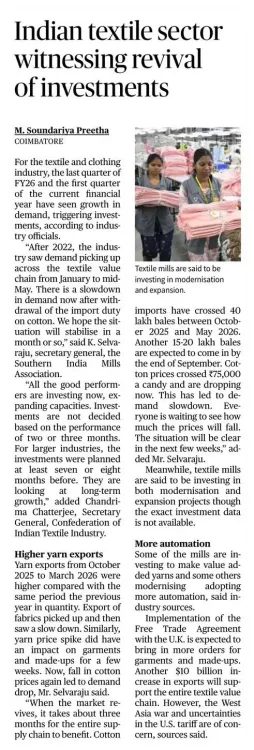
Union Textiles Minister Giriraj Singh credited the PLI scheme, FTAs with the UAE and Australia, and export incentives for spurring demand recovery, export growth, and fresh investment in India's textile sector, linking the momentum to the Viksit Bharat 2047 goal.
Key Takeaways
Union Textiles Minister Giriraj Singh posted on June 12, 2026 highlighting improving demand, rising exports, and new investment in the Indian textile sector.
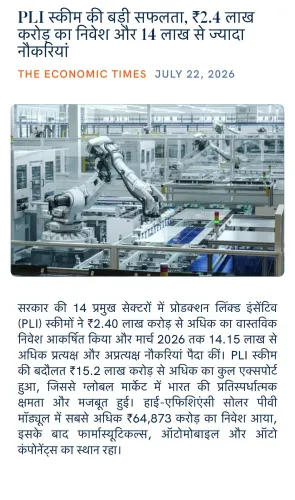
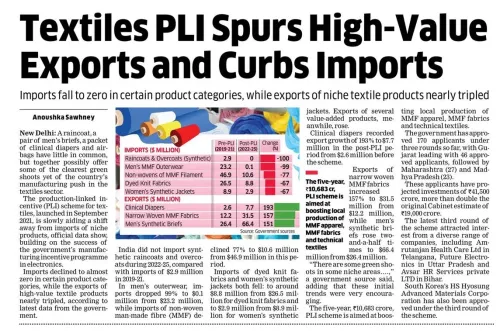
The PLI scheme for textiles , approved in 2021 with an outlay exceeding Rs 10,000 crore , targets man-made fibre and technical textiles.
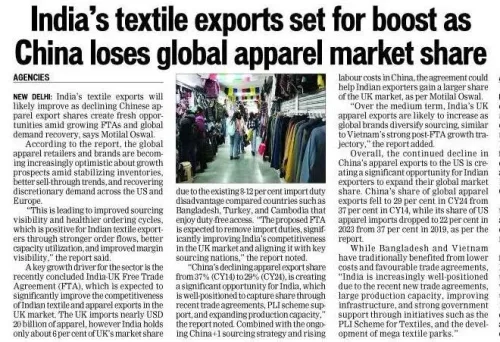
FTAs with the UAE and Australia , concluded in 2022 , include dedicated textile market-access provisions that open new export corridors.
The minister linked sectoral investment in modernisation and automation to India's goal of becoming a global textile hub .
The policy push sits within the broader Atmanirbhar Bharat and Make in India frameworks and the long-term Viksit Bharat 2047 vision.
Upcoming Union Budget decisions on PLI extensions and fresh FTA negotiations will be key indicators of the sector's next phase.
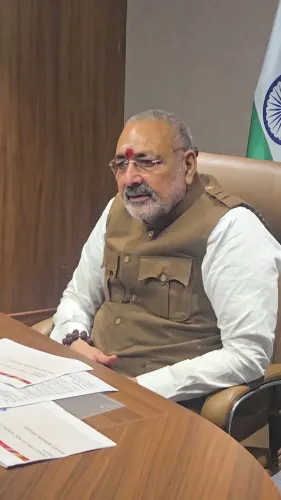
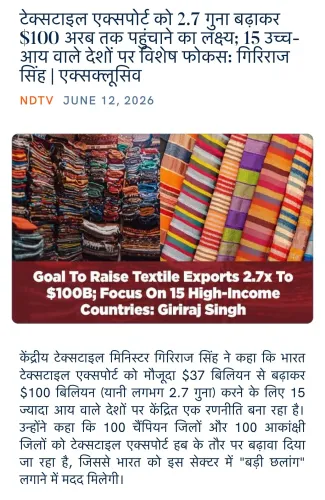
Union Textiles Minister Giriraj Singh on Friday, June 12, 2026, highlighted improving demand, rising exports, and fresh investment flows in India's textile sector, attributing the momentum to targeted government policies including the Production Linked Incentive (PLI) scheme, free trade agreements, and export promotion measures.
Context
Posting on X, Singh wrote — 'भारतीय वस्त्र उद्योग में मांग में सुधार, निर्यात में वृद्धि और निवेश की नई लहर' ('Improvement in demand, growth in exports, and a new wave of investment in the Indian textile industry') — signalling official confidence in the sector's trajectory. He credited policy tools such as the PLI scheme, FTAs, and export incentives for strengthening the textile value chain. The minister also pointed to rising investment in modernisation, automation, and capacity expansion as forces that will advance India's goal of becoming a global textile hub.
Policy Backdrop
The PLI scheme for textiles received Cabinet approval in 2021 with a financial outlay exceeding Rs 10,000 crore, specifically targeting man-made fibre and technical textiles segments that had historically lagged in domestic production. India subsequently concluded free trade agreements with the UAE and Australia in 2022, both containing dedicated provisions for textile market access that opened new export corridors for Indian manufacturers. These steps form part of the broader Atmanirbhar Bharat framework — announced in 2020 — and the Make in India initiative launched in 2014, both aimed at deepening domestic value chains and reducing import dependence.
Singh's post, tagged with #PLI, #MakeInIndia, #AtmanirbharBharat, and #ViksitBharat2047, explicitly links near-term sectoral activity to the government's long-horizon target of achieving developed-economy status by 2047.
Stakeholders and Impact
Textile exporters and domestic manufacturers stand to benefit most directly from the policy mix Singh described. The PLI scheme's focus on man-made fibres and technical textiles addresses segments where India has traditionally ceded ground to competitors such as China, Vietnam, and Bangladesh. Preferential market access secured through FTAs with the UAE and Australia provides Indian exporters with a tariff advantage that can translate into order diversification and higher capacity utilisation.
Investment in modernisation and automation is also expected to improve productivity across the textile value chain — from spinning and weaving to garmenting — making Indian manufacturers more competitive in global procurement decisions.
What's Next
Analysts and industry bodies will watch quarterly textile export and investment data closely to assess whether the trends Singh cited translate into sustained numbers. The upcoming Union Budget cycle will be a key marker: any extension or enhancement of PLI incentives, or the conclusion of fresh FTA negotiations, could further accelerate the sector's growth trajectory. Singh's post signals that the ministry intends to keep textiles at the centre of India's industrial and trade policy agenda as the country works toward its Viksit Bharat 2047 ambitions.
Point of View
FTAs, and Viksit Bharat 2047 in a single communication, Singh is reinforcing the government's narrative that industrial policy, trade diplomacy, and long-term vision are working in concert. The framing also serves as a pre-budget message, potentially setting the stage for further incentives or scheme extensions in the next budget cycle. Neutral observers will, however, note that the ministry has not released independently verified 2026 data to substantiate claims of demand recovery and fresh investment waves, making the post more a statement of policy intent than a confirmed economic report.
NationPress
26 Oct 2026
Frequently Asked Questions
What is the PLI scheme for textiles in India?
The Production Linked Incentive scheme for textiles was approved by the Cabinet in 2021 with an outlay exceeding Rs 10,000 crore. It targets man-made fibre and technical textiles segments to boost domestic manufacturing and exports.
What did Giriraj Singh say about Indian textiles?
On June 12, 2026, Union Textiles Minister Giriraj Singh posted that demand improvement, export growth, and a new wave of investment in India's textile sector reflect the positive impact of government policies including PLI, FTAs, and export incentives.
How do India's FTAs help the textile sector?
India's free trade agreements with the UAE and Australia, concluded in 2022, include specific provisions for textile market access, giving Indian exporters a tariff advantage in those markets and helping diversify the export base.
What is Viksit Bharat 2047 and how does it relate to textiles?
Viksit Bharat 2047 is India's goal of achieving developed-economy status by the centenary of independence. The government has positioned the textile sector — through PLI, Make in India, and Atmanirbhar Bharat — as a key contributor to that long-term vision.
Who is Giriraj Singh?
Giriraj Singh is a senior BJP leader and Lok Sabha MP from Begusarai, Bihar, currently serving as Union Minister of Textiles in the Government of India.