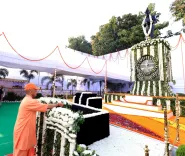
Giriraj Singh Pushes for Global Manufacturing Competitiveness
Synopsis
Union Textiles Minister Giriraj Singh on 6 June 2026 amplified a call to move beyond the Make in India framework toward building a globally competitive manufacturing ecosystem, spotlighting the deeper structural reforms India needs to capture relocating global supply chains.
Key Takeaways
Union Textiles Minister Giriraj Singh shared commentary on building a globally competitive manufacturing ecosystem on 6 June 2026 .
The post signals a shift in discourse from the original Make in India campaign (launched September 2014 ) toward deeper ecosystem reforms.
The Production Linked Incentive (PLI) Scheme , active since 2020 , remains the primary financial instrument targeting sectors including textiles.
India faces competition from Bangladesh, Vietnam , and China in labour-intensive textile exports, making ecosystem upgrades critical.
Upcoming Union Budget consultations and revised textile policy measures are the key forums to watch for follow-through.
MSME exporters and large textile manufacturers are the most directly affected stakeholders.
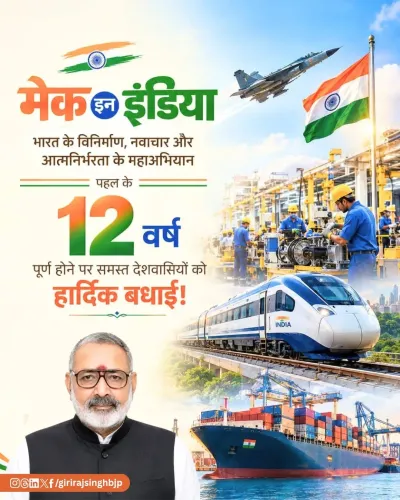
Union Textiles Minister Giriraj Singh on Saturday, 6 June 2026, shared a piece on building a globally competitive manufacturing ecosystem, signalling his ministry's focus on taking India's industrial ambitions beyond the foundational Make in India framework. The post, shared via the NaMo App, links to a commentary on constructing the deeper structural conditions needed for India to compete on the world stage.
Context
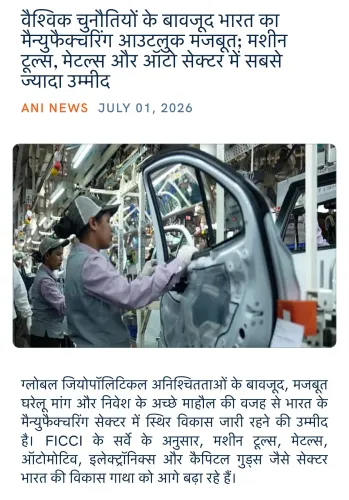
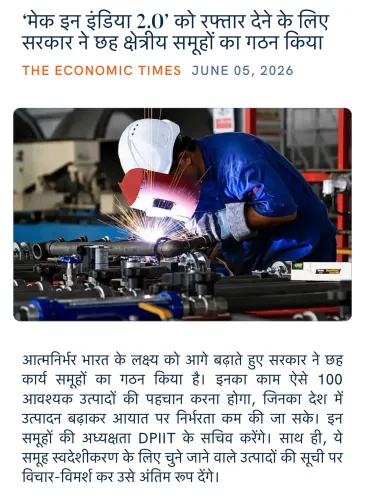
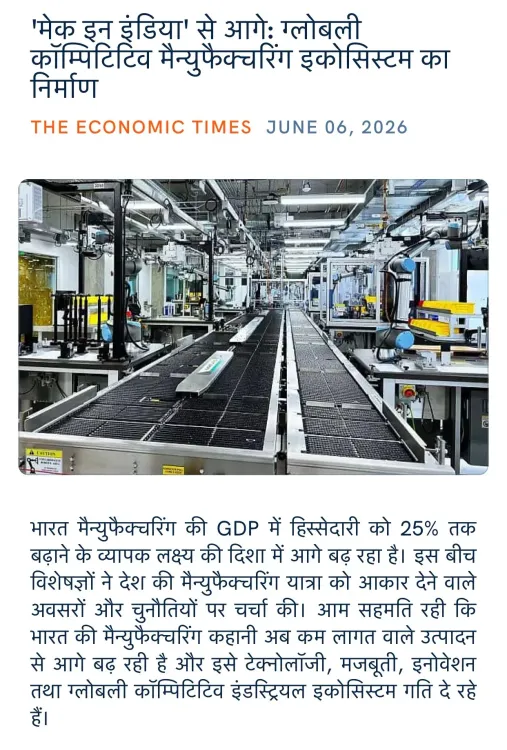
The post's headline — 'Make in India' se aage: Globally competitive manufacturing ecosystem ka nirman ('Beyond Make in India: Building a globally competitive manufacturing ecosystem') — captures a shift in official discourse. Where the original Make in India campaign, launched in September 2014, focused on attracting investment and promoting domestic production, the current conversation has moved toward productivity, technology adoption, and supply-chain depth.
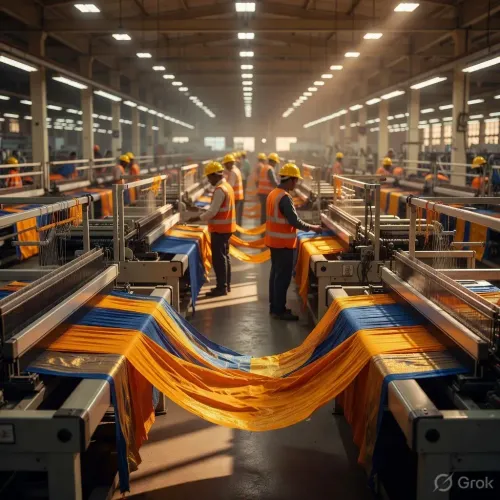
Minister Singh's decision to amplify this framing is notable given his role overseeing the textiles sector, one of India's largest employers and a key target for export-led growth. The textile industry sits at the intersection of MSME competitiveness and large-scale manufacturing ambition.
Policy Backdrop
India's manufacturing policy has evolved through several layers since 2014. The Atmanirbhar Bharat campaign, announced in May 2020, added a self-reliance dimension, emphasising resilient domestic supply chains. The Production Linked Incentive (PLI) Scheme, rolled out from 2020 across multiple sectors including textiles, has been the primary financial instrument to incentivise scale and competitiveness.
Despite these interventions, manufacturing's share of India's GDP has remained below the government's stated targets, prompting calls — including from within the ruling establishment — for deeper ecosystem reforms. These include skill development, logistics infrastructure, technology upgrades, and easing of compliance burdens for MSME exporters.
The PLI scheme for textiles specifically targeted man-made fibres and technical textiles, sectors where India had historically lagged behind competitors such as Bangladesh, Vietnam, and China. Utilisation of PLI allocations and the pace of capacity addition remain closely watched metrics.
Stakeholders and Impact
Textile manufacturers and MSME exporters are the most directly affected constituencies. For them, the 'beyond Make in India' framing signals a potential policy pivot toward addressing structural bottlenecks — raw material access, labour flexibility, and technology adoption — rather than purely demand-side incentives.
Global supply chains have been in flux since the COVID-19 pandemic and subsequent geopolitical realignments. India has positioned itself as an alternative sourcing destination, but converting that opportunity into sustained export growth requires the kind of ecosystem-level thinking Minister Singh's post highlights.
Investors and industry bodies are likely to read this as an indication that upcoming policy consultations or Union Budget discussions may include fresh measures for manufacturing competitiveness, particularly in labour-intensive sectors like textiles.
What's Next
Watchers of industrial policy will track whether this public framing translates into concrete announcements — revised textile policy measures, new manufacturing clusters, or enhanced PLI utilisation targets. The upcoming Union Budget cycle and industry consultations are the natural forums for such moves.
If India is to raise manufacturing's contribution to GDP meaningfully, the shift from promotion to ecosystem-building that Minister Singh's post gestures toward will need to be backed by coordinated action across ministries, states, and industry. The minister's public signalling suggests that conversation is already under way at the highest levels of the government.
Point of View
' a senior cabinet member is publicly acknowledging that a decade of investment promotion has not yet delivered the ecosystem depth India needs. This signals a possible internal policy consensus that the next phase must address structural bottlenecks rather than just incentives. For the textiles sector specifically, where PLI uptake has been uneven, this framing could presage a recalibration of scheme design or compliance architecture. Watched alongside Budget-cycle consultations, it suggests the government is preparing to shift the manufacturing narrative from aspiration to execution.
NationPress
21 Oct 2026
Frequently Asked Questions
What did Giriraj Singh post about manufacturing on 6 June 2026?
Union Textiles Minister Giriraj Singh shared a commentary calling for India to move beyond the Make in India framework and build a globally competitive manufacturing ecosystem, highlighting the need for deeper structural reforms.
What is the Make in India scheme?
Make in India is a flagship government initiative launched in September 2014 to promote domestic manufacturing, attract foreign direct investment, and position India as a global production hub.
What is the PLI scheme for textiles?
The Production Linked Incentive scheme for textiles, launched in 2020, provides financial incentives to manufacturers in man-made fibres and technical textiles to boost scale, exports, and global competitiveness.
Why is India's manufacturing ecosystem important for textiles?
Textiles is one of India's largest employment sectors and a key export category. Building a competitive ecosystem helps India capture supply chains relocating from China and Vietnam and increases manufacturing's share of GDP.
What should we watch for after Giriraj Singh's post?
Key things to watch include revised textile policy measures, PLI scheme utilisation data, announcements of new manufacturing clusters, and any related proposals in the upcoming Union Budget.