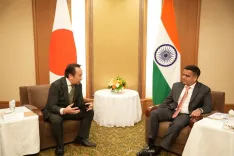
Giriraj Singh: Govt forms 6 sector groups for Make in India 2.0
Synopsis
The central government has constituted six sectoral working groups to fast-track Make in India 2.0, Union Textiles Minister Giriraj Singh announced on 5 June 2026. The move builds on a decade-long manufacturing push that includes PLI schemes across 14 sectors and signals renewed institutional focus on raising India's manufacturing GDP share.
Key Takeaways
The central government has formed six sectoral working groups specifically to accelerate Make in India 2.0 .
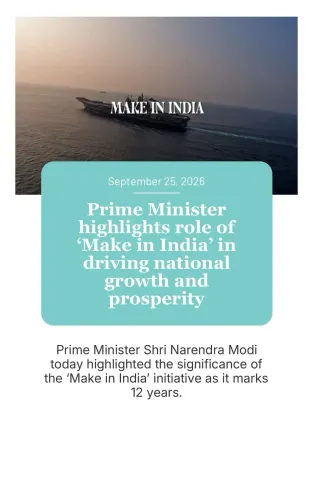
Make in India was originally launched on 25 September 2014 by Prime Minister Narendra Modi .
Production Linked Incentive (PLI) schemes covering 14 sectors were introduced from 2020 under the Atmanirbhar Bharat framework as a complementary measure.
The exact composition, mandates and timelines of the six groups are pending official gazette notification.
Key beneficiaries are expected to include manufacturing firms, MSME exporters and the textile industry .
Upcoming Union Budget allocations and cabinet notes will be watched for follow-through on the initiative.
Union Textiles Minister Giriraj Singh on Friday, 5 June 2026 shared that the central government has constituted six sectoral working groups to accelerate the Make in India 2.0 initiative, signalling a renewed push to raise India's manufacturing output and attract investment across key industries.
Context
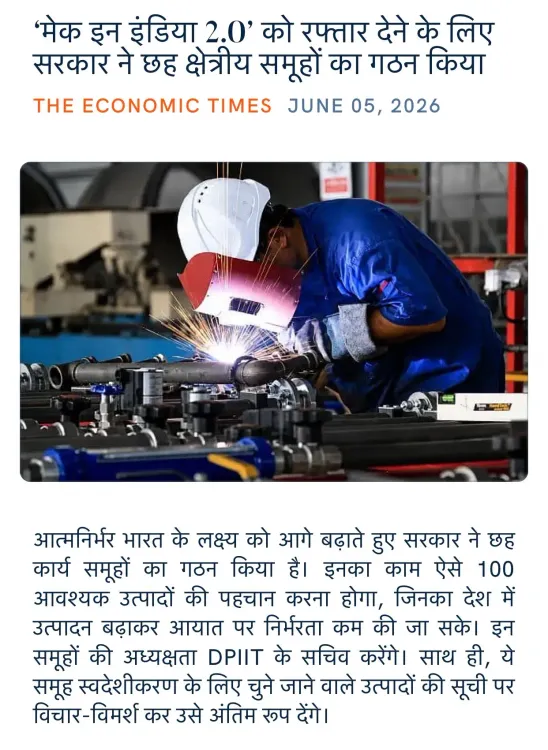
Singh shared the development via the NaMo App, noting in Hindi: 'Make in India 2.0' ko raftaar dene ke liye sarkar ne chhah kshetriya samoohon ka gathan kiya ['To accelerate Make in India 2.0, the government has formed six sectoral groups']. The post underscores the ruling dispensation's intent to move beyond the first phase of the programme and institutionalise faster decision-making through dedicated working structures.
The formation of sector-specific groups is a recurring administrative mechanism the central government has deployed to translate broad manufacturing targets into actionable, industry-level roadmaps. Their precise composition, terms of reference and timelines for recommendations are yet to be confirmed through official gazette notifications.
Policy Backdrop
Make in India was launched on 25 September 2014 by Prime Minister Narendra Modi with the stated goal of positioning India as a global manufacturing hub and increasing manufacturing's share of GDP. The initiative was reinforced from 2020 onward through Production Linked Incentive (PLI) schemes across 14 sectors, rolled out under the Atmanirbhar Bharat framework to deepen domestic value addition and reduce import dependence.
The latest move fits into a decade-long policy arc that has also included FDI liberalisation, ease-of-doing-business reforms and deliberate supply-chain diversification. Sectoral working groups allow ministries to engage directly with industry stakeholders, identify regulatory bottlenecks and fast-track investment clearances in a structured manner.
Stakeholders and Impact
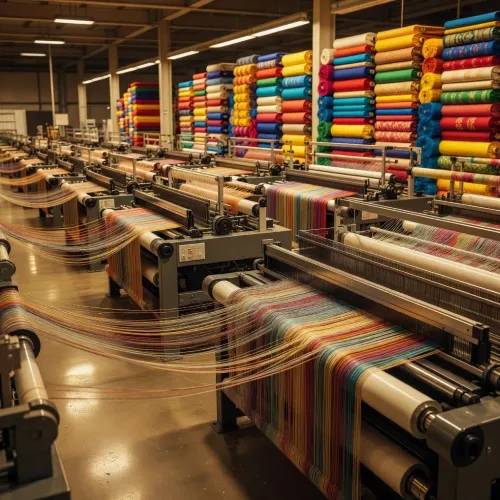
The groups are expected to be of direct relevance to manufacturing firms, MSME exporters and the textile industry — a sector that Giriraj Singh oversees as Union Minister. Textiles is among the labour-intensive industries that the government has consistently targeted for export-led growth, and any acceleration of Make in India 2.0 would have outsized employment implications for states such as Gujarat, Tamil Nadu, Maharashtra and Uttar Pradesh.
For MSMEs, which form the backbone of India's manufacturing ecosystem, dedicated sectoral groups could mean faster resolution of compliance issues and more targeted incentive structures, provided the groups are empowered to make binding recommendations.
What's Next
Observers will watch for the official gazette notifications detailing the mandate, membership and reporting timelines of each of the six groups. Any follow-up allocations in the next Union Budget or fresh cabinet notes on sector-specific PLI enhancements will be key indicators of how seriously the government intends to operationalise Make in India 2.0. Singh's post signals that the political momentum behind the initiative remains strong heading into the second half of 2026.
Point of View
Over a decade, evolved from a branding exercise into a multi-layered incentive architecture. By institutionalising sector-specific coordination bodies, the government is signalling that the next phase requires granular, industry-level problem-solving rather than top-down mandates alone. For Giriraj Singh, amplifying this announcement reinforces his ministry's centrality to the manufacturing agenda at a time when textiles and labour-intensive exports face stiff global competition. The real test will be whether these groups are empowered to cut through inter-ministerial friction and deliver actionable recommendations within defined timelines.
NationPress
21 Oct 2026
Frequently Asked Questions
What is Make in India 2.0?
Make in India 2.0 is the evolved phase of the flagship central government programme, originally launched in 2014, aimed at boosting domestic manufacturing, attracting foreign investment and increasing manufacturing's share of India's GDP. The 2.0 phase builds on earlier PLI schemes and seeks more targeted sectoral interventions.
Why has the government formed six sectoral groups for Make in India 2.0?
The government constituted six sectoral working groups to fast-track the Make in India 2.0 push by enabling focused, industry-specific coordination, identifying bottlenecks and translating high-level manufacturing goals into actionable roadmaps for each sector.
Who announced the six sectoral groups for Make in India 2.0?
Union Textiles Minister Giriraj Singh shared the announcement on 5 June 2026 via the NaMo App, highlighting the government's intent to accelerate the Make in India 2.0 initiative.
Which sectors will the six Make in India 2.0 groups cover?
The exact sectors covered by each of the six groups are yet to be confirmed through official gazette notifications. Stakeholders in manufacturing, MSME exports and textiles are among those expected to be directly impacted.
What is the connection between Make in India and PLI schemes?
Production Linked Incentive schemes, introduced from 2020 across 14 sectors under the Atmanirbhar Bharat framework, serve as a key financial instrument supporting Make in India's goals by providing output-linked incentives to domestic manufacturers to scale production and attract investment.