ASEAN signals openness to Quad at Manila EAS meet, sends message to China
Synopsis
ASEAN's quiet but consequential move at Manila's EAS Foreign Ministers' Meeting — accepting a dedicated Quad joint statement and the grouping's self-description as 'ASEAN Comprehensive Strategic Partners' — signals that the bloc is no longer keeping the Quad at arm's length. Beijing, a full EAS participant that has branded the Quad an 'Asian NATO', will have noticed.
Key Takeaways
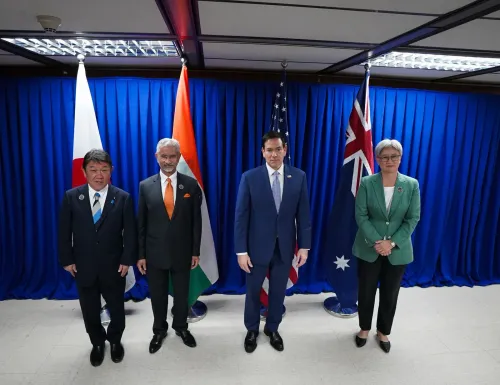
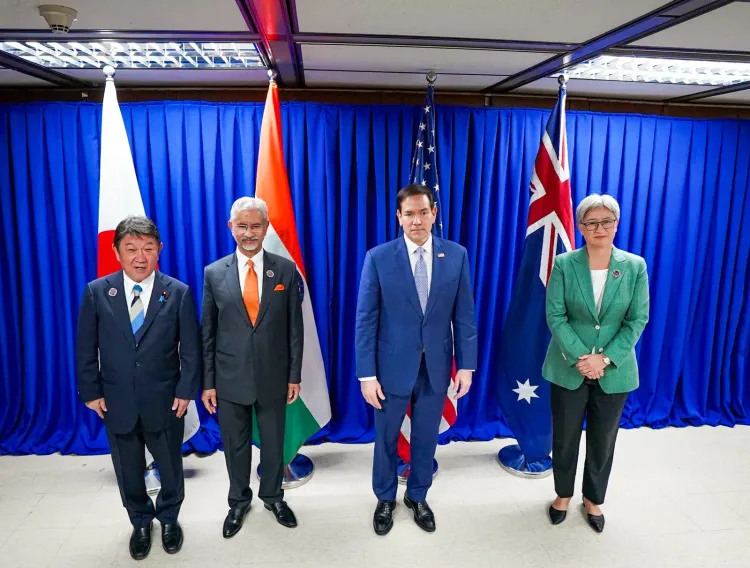
Quad Foreign Ministers met on the sidelines of the 16th EAS Foreign Ministers' Meeting in Manila and issued a dedicated joint statement on ASEAN cooperation.
ASEAN accepted the Quad's self-description as 'ASEAN Comprehensive Strategic Partners' — a significant diplomatic signal.
China , a full participant in the EAS and ASEAN Regional Forum, has repeatedly called the Quad an 'Asian NATO' .
The report by The Diplomat described the development as ASEAN communicating it is 'not afraid to engage the Quad' .
Proposed cooperation areas include disaster response and expansion of the IPMDA maritime tracking framework, launched in 2022 .
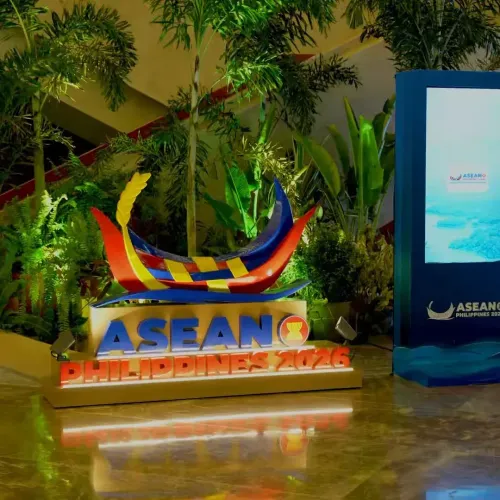
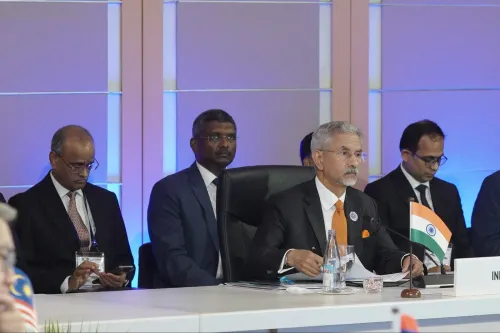
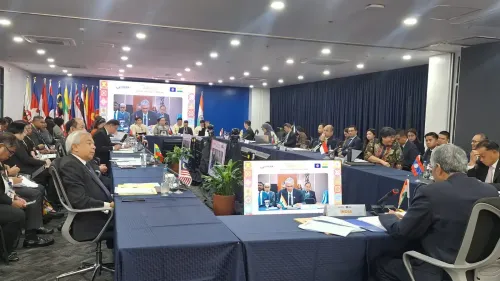
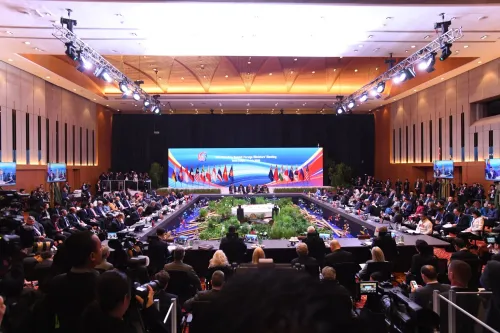
The Association of Southeast Asian Nations (ASEAN) has signalled a notable shift in its posture toward the Quad, sending what analysts describe as a pointed message to China through developments at the 16th Foreign Ministers' Meeting of the East Asia Summit (EAS) held in Manila. The forum, comprising 19 countries, served as the backdrop for a meeting of Quad Foreign Ministers on its sidelines — an engagement that, according to a report by The Diplomat, marks a meaningful loosening of ASEAN's historically cautious distance from the grouping.
What Happened in Manila
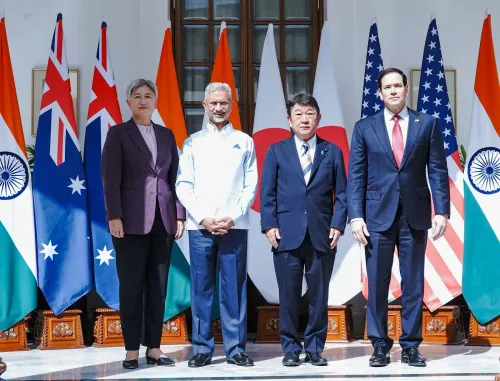
On the sidelines of the EAS Foreign Ministers' Meeting, the Quad Foreign Ministers convened and issued a dedicated joint statement on cooperation with ASEAN. The statement reiterated commitments first unveiled at the 11th Quad Foreign Ministers' Meeting in New Delhi. In it, the Quad nations described themselves as 'ASEAN Comprehensive Strategic Partners' and explicitly noted 'the practical implementation of the ASEAN Outlook on the Indo-Pacific' as part of their shared agenda.
According to the report, this opened the door to a more substantive relationship between the two groupings — an achievement the report argues should not be underestimated, given that ASEAN has spent much of the past year navigating internal questions about drift and division.
The Signal to Beijing
China is a full participant in both the East Asia Summit and the ASEAN Regional Forum, and has repeatedly characterised the Quad as an 'Asian NATO', making its discomfort with the grouping publicly known. Against that backdrop, ASEAN's willingness to accept the Quad's effort to insert itself as a stakeholder with a collective regional interest carries considerable weight.
The Diplomat report stated: 'The signal emerging from ASEAN is just as important, and arguably braver. The bloc communicated to Beijing that it is not afraid to engage the Quad, and that it might like to do more of that. The visible loosening of ASEAN's reflex to keep the Quad at arm's length will not be lost on Beijing.'
Notably, the report also observed that the Manila meeting appeared to shed the Quad's longstanding hesitation about being seen as openly confronting Beijing — a posture it had maintained to avoid the perception of enraging China despite being widely understood as a strategic counterweight.
Areas of Potential Cooperation
The report identified disaster response and maritime domain awareness as natural starting points for deeper Quad-ASEAN cooperation — areas that sidestep the more politically sensitive questions around great-power rivalry.
Specifically, it suggested that the Quad and ASEAN could establish a regional rapid-response protocol covering coordination, logistics, and emergency communications. On the maritime front, the report pointed to the Indo-Pacific Partnership for Maritime Domain Awareness (IPMDA), launched in 2022, through which the Quad already provides maritime tracking data to select ASEAN states. The report proposed this could be formalised into a regular, bloc-wide information-sharing arrangement.
Broader Context
ASEAN has historically prioritised centrality and avoided becoming an arena for great-power competition. The bloc's engagement at Manila, therefore, represents a calibrated but consequential step. The report acknowledged that ASEAN will continue to face dilemmas regarding China and its regional actions, and that the framing of the Quad as 'not an anti-China grouping' remains strategically useful — even as the grouping's regional footprint expands.
How Beijing responds to this visible shift in ASEAN's calculus is likely to shape the next phase of Indo-Pacific diplomacy.
Point of View
Historically its biggest constraint, will determine which way this goes.
NationPress
17 Sept 2026
Frequently Asked Questions
What happened at the ASEAN-Quad meeting in Manila?
On the sidelines of the 16th EAS Foreign Ministers' Meeting in Manila, Quad Foreign Ministers met and issued a joint statement on cooperation with ASEAN, describing themselves as 'ASEAN Comprehensive Strategic Partners.' The statement also referenced the practical implementation of the ASEAN Outlook on the Indo-Pacific.
Why is ASEAN's engagement with the Quad significant?
ASEAN has historically kept the Quad at a distance to avoid being drawn into great-power rivalry. Its acceptance of a dedicated Quad joint statement signals a loosening of that reflex, which analysts say sends a pointed message to China — a full participant in the EAS that has branded the Quad an 'Asian NATO.'
How has China reacted to the Quad's presence in the region?
China has repeatedly described the Quad as an 'Asian NATO' and has made its discomfort with the grouping publicly known. Beijing participates fully in the East Asia Summit and the ASEAN Regional Forum, forums where ASEAN's engagement with the Quad is now becoming more visible.
What areas of cooperation are being proposed between the Quad and ASEAN?
The report by The Diplomat identified disaster response and maritime domain awareness as the most viable starting points. It specifically proposed expanding the Indo-Pacific Partnership for Maritime Domain Awareness (IPMDA), launched in 2022, into a formal, bloc-wide information-sharing arrangement.
What is the Indo-Pacific Partnership for Maritime Domain Awareness (IPMDA)?
The IPMDA is a Quad initiative launched in 2022 that provides maritime tracking data to select ASEAN states. Analysts have proposed formalising it into a regular, comprehensive information-sharing arrangement across the full ASEAN bloc.