Quad Foreign Ministers meet in Manila, back free Indo-Pacific and ASEAN centrality
Synopsis
The Quad met in Manila on the sidelines of the ASEAN Foreign Ministers Meeting — a deliberate choice that sent its own message. By explicitly backing ASEAN centrality and the AOIP framework, the four powers signalled that their Indo-Pacific vision is designed to work with regional architecture, not around it. Rubio's confirmation of another Quad meeting before year-end keeps the diplomatic momentum alive.
Key Takeaways
Quad Foreign Ministers met in Manila on 22 July on the sidelines of the ASEAN Foreign Ministers Meeting.
A joint statement reaffirmed commitment to a free and open Indo-Pacific and 'unwavering support' for ASEAN unity and centrality .
Four priority areas identified: maritime security, economic prosperity, critical technologies, and humanitarian response under the AOIP framework.
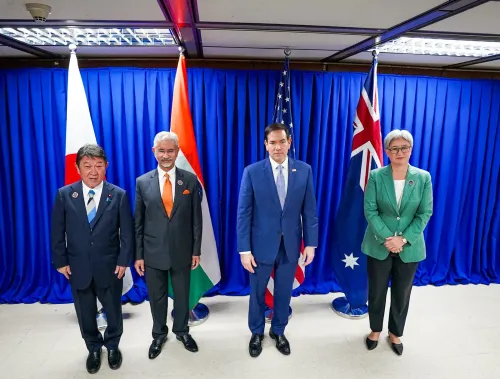
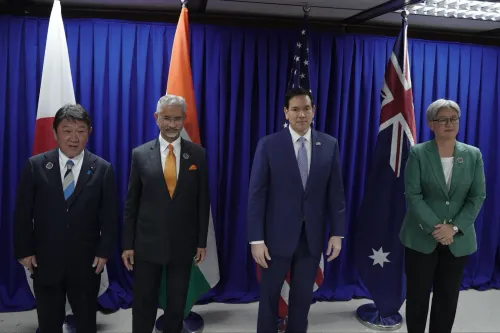
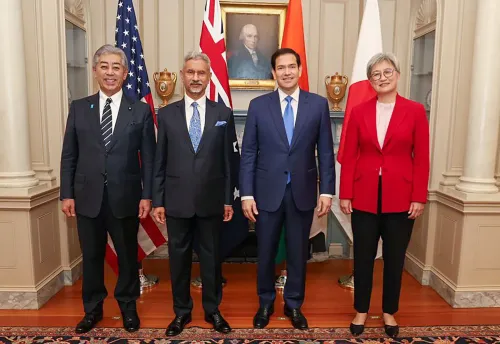
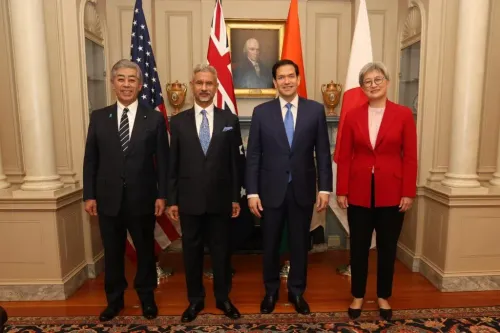
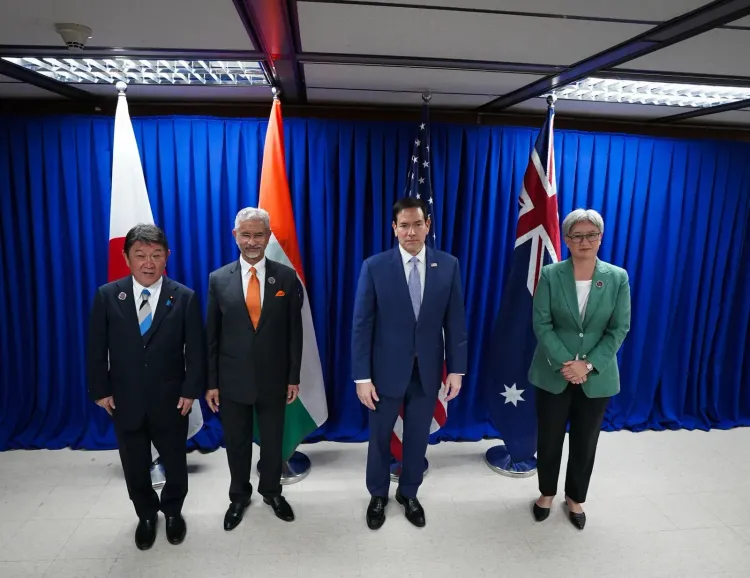
EAM Jaishankar , Penny Wong , Toshimitsu Motegi , and Marco Rubio participated; US Ambassador Sergio Gor also attended.
Secretary Rubio confirmed the Quad will convene again later in 2025 .
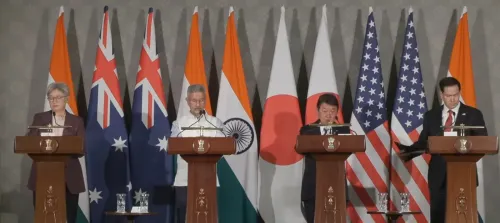
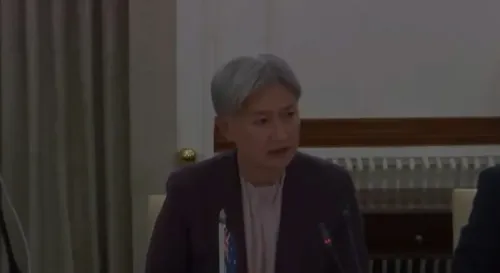
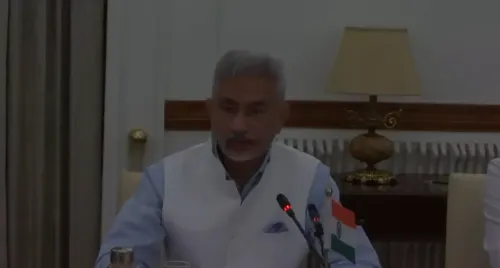
The Quad Foreign Ministers convened in Manila on Wednesday, 22 July to reaffirm their collective commitment to a free and open Indo-Pacific, issuing a joint statement that underscored unwavering support for ASEAN's unity and centrality in the region. The meeting brought together External Affairs Minister S. Jaishankar, Australian Foreign Minister Penny Wong, Japanese Foreign Minister Toshimitsu Motegi, and US Secretary of State Marco Rubio on the sidelines of the ASEAN Foreign Ministers Meeting.
What the Joint Statement Said
In their joint statement, the four ministers described themselves as ASEAN Comprehensive Strategic Partners who gathered in Manila to 'reaffirm our commitment to strengthening a free and open Indo-Pacific and our unwavering support for ASEAN unity and centrality.' The statement emphasised that the Quad remains 'deeply invested in the region's success and in cooperating with ASEAN and its member states.'
The ministers identified four shared priority areas for practical implementation of the ASEAN Outlook on the Indo-Pacific (AOIP): maritime and transnational security, economic prosperity and security, critical and emerging technologies, and humanitarian assistance and emergency response. The statement further noted that 'peace and stability in the Indo-Pacific maritime domain underpin the security and prosperity of the region.'
Key Statements from Ministers
EAM Jaishankar, in a post on X, said the ministers 'reviewed the Indo-Pacific landscape and discussed recent developments' and followed up on outcomes from a previous Quad meeting held in New Delhi. He described the session as a reaffirmation of commitment to a 'free and open Indo-Pacific with a recognition of ASEAN centrality.'
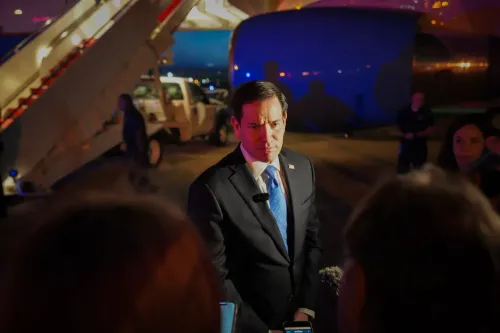
Secretary of State Rubio said the four nations 'share a vision of a free and open Indo-Pacific that is grounded in the rule of law, sovereignty, and territorial integrity,' adding that 'the Quad remains a priority, and we will meet again later this year.' US Ambassador to India Sergio Gor, who also attended, called it 'a very productive discussion on delivering results relating to a free and open Indo-Pacific.'
Context and Regional Significance
The Manila meeting follows an earlier Quad Foreign Ministers gathering in New Delhi, signalling an uptick in the grouping's diplomatic tempo. Holding the session on the margins of the ASEAN Foreign Ministers Meeting was itself a deliberate signal — the Quad sought to position itself as a complement to, rather than a competitor of, ASEAN-led regional architecture.
This comes amid ongoing tensions over freedom of navigation in the South China Sea and broader concerns about the balance of power in the Indo-Pacific. The explicit invocation of 'sovereignty and territorial integrity' by Rubio is widely read by analysts as a reference to contested maritime claims in the region, though the joint statement did not name any country directly.
What Comes Next
Rubio's confirmation that the Quad will 'meet again later this year' points to continued high-level engagement. Observers will watch whether the AOIP practical implementation framework translates into concrete project announcements, particularly in critical technologies and maritime domain awareness — areas where the Quad has previously pledged but unevenly delivered cooperation.
Point of View
Sovereignty, and territorial integrity' language raises the temperature without naming China — a calibration that reflects Washington's current diplomatic posture but may frustrate partners seeking clearer commitments. The follow-up meeting before year-end will be the real test of whether this is diplomatic rhythm or genuine strategic acceleration.
NationPress
21 Oct 2026
Frequently Asked Questions
What was decided at the Quad Foreign Ministers Meeting in Manila?
The Quad Foreign Ministers issued a joint statement on 22 July reaffirming commitment to a free and open Indo-Pacific and strong support for ASEAN unity and centrality. They also agreed to advance practical implementation of the ASEAN Outlook on the Indo-Pacific across four priority areas: maritime security, economic prosperity, critical technologies, and humanitarian assistance.
Who attended the Quad Foreign Ministers Meeting in Manila?
The meeting was attended by India's External Affairs Minister S. Jaishankar, Australian Foreign Minister Penny Wong, Japanese Foreign Minister Toshimitsu Motegi, and US Secretary of State Marco Rubio. US Ambassador to India Sergio Gor also participated.
What is the ASEAN Outlook on the Indo-Pacific (AOIP)?
The AOIP is ASEAN's own framework for engagement in the Indo-Pacific, emphasising inclusivity, transparency, and ASEAN centrality. The Quad ministers committed to supporting its 'practical implementation' across shared priorities including maritime security and critical technologies.
Why did the Quad meet in Manila at the ASEAN Foreign Ministers Meeting?
Convening on the sidelines of the ASEAN Foreign Ministers Meeting was a deliberate signal that the Quad views itself as complementary to ASEAN-led regional architecture rather than a rival grouping. It reinforced the joint statement's emphasis on ASEAN centrality.
Will there be another Quad Foreign Ministers Meeting this year?
Yes. US Secretary of State Marco Rubio confirmed in a post on X that 'the Quad remains a priority, and we will meet again later this year,' indicating continued high-level diplomatic engagement among the four nations.