Marco Rubio heads to Philippines for ASEAN and Quad ministerial talks
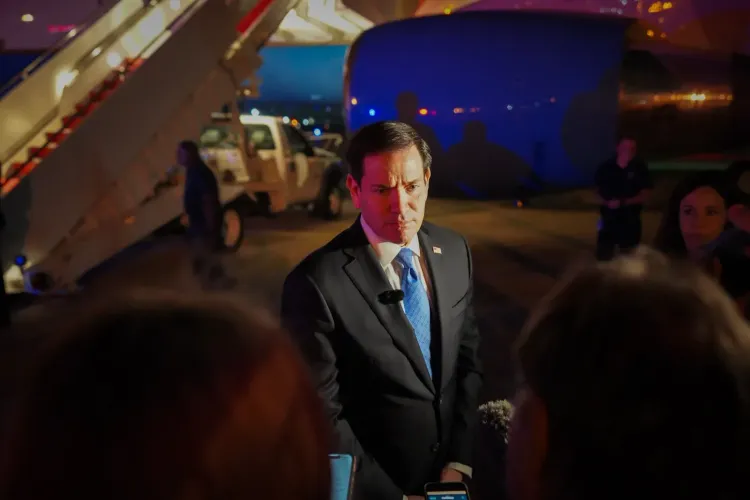
Synopsis
Marco Rubio's Philippines trip is Washington's most visible Indo-Pacific diplomatic push of the mid-year — combining ASEAN multilateral forums with a second Quad ministerial in a single visit. With South China Sea tensions unresolved and US-ASEAN partnerships under scrutiny, the outcomes of these back-to-back meetings could set the tone for the region's security architecture through year-end.
Key Takeaways
US Secretary of State Marco Rubio has departed for the Philippines to attend the ASEAN Post-Ministerial Conference , the East Asia Summit Foreign Ministers' Meeting , and the ASEAN Regional Forum Foreign Ministers' Meeting .
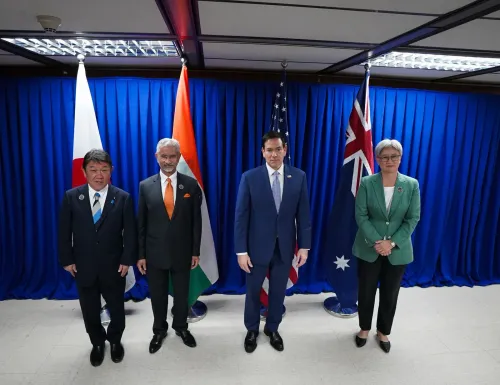
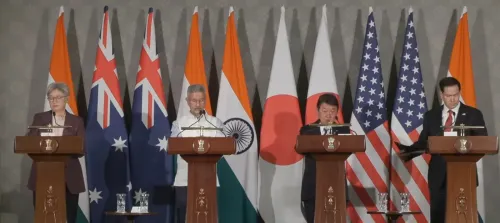
The visit includes the second Quad ministerial meeting of 2025, bringing together foreign ministers of India , Australia , Japan , and the United States .
US Ambassador to India Sergio Gor confirmed his participation via a post on X , reaffirming Washington's commitment to a free and open Indo-Pacific .
The first Quad ministerial in May 2025 produced a joint statement expressing serious concern over the South China Sea and East China Sea situations.
US State Department spokesperson Tommy Pigott said the trip aims to deepen the US comprehensive partnership with the Philippines .
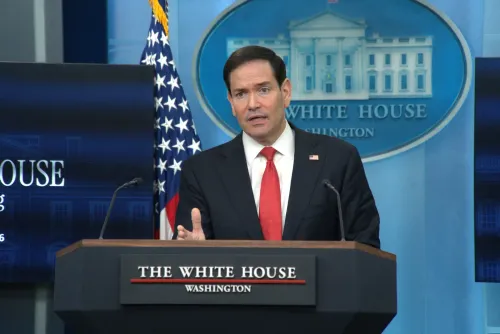
US Secretary of State Marco Rubio has departed for the Philippines to attend a series of high-level diplomatic engagements, including the ASEAN Post-Ministerial Conference, the East Asia Summit Foreign Ministers' Meeting, and the ASEAN Regional Forum Foreign Ministers' Meeting. The visit, confirmed by the US Department of State, also includes a second Quad ministerial meeting of the year with foreign ministers from India, Australia, and Japan.
What Rubio's Philippines Visit Covers
According to a statement by US Department of State spokesperson Tommy Pigott, Rubio is scheduled to meet senior government officials from across the Indo-Pacific region. Pigott said the visit “advances a clear US priority: a free and open Indo-Pacific that delivers safety, security, and prosperity for the region and for the American people.”
The trip is also intended to “demonstrate the tangible results of US-ASEAN partnership and to deepen the United States’ comprehensive partnership with the Philippines,” Pigott added.
Quad's Second Ministerial of 2025
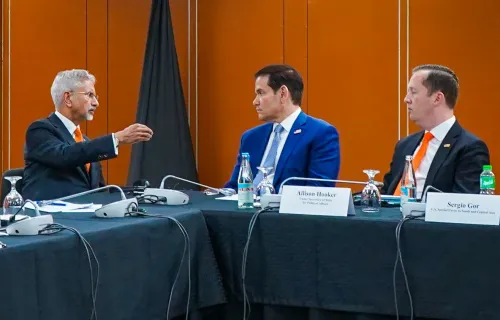
US Ambassador to India Sergio Gor confirmed he would be joining Rubio in the Philippines for what he described as the second Quad ministerial meeting of the year. “Looking forward to joining Marco Rubio this week in the Philippines for our second Ministerial Quad meeting of the year. The United States is committed to a free and open Indo-Pacific, our Quad partners are essential,” Gor posted on X.
The Quad grouping — comprising India, Australia, Japan, and the United States — is anchored around a shared commitment to a free, open, inclusive, and resilient Indo-Pacific. The bloc has increasingly positioned itself as a counterweight to unilateral destabilising actions in the region.
Background: The First Quad Ministerial of 2025
In May, External Affairs Minister S. Jaishankar, Australian Foreign Minister Penny Wong, Secretary Rubio, and Japanese Foreign Minister Toshimitsu Motegi participated in the first Quad Foreign Ministers' Meeting of the year. The four ministers reaffirmed support for a free and open Indo-Pacific and agreed to advance concrete initiatives delivering tangible benefits to the region.
The joint statement from that meeting expressed “serious concern” about the situation in the East China Sea and the South China Sea, with ministers reiterating “strong opposition to any destabilising or unilateral actions, including by force or coercion, that threaten peace and stability in the region.”
South China Sea Tensions in Focus
The earlier joint statement also flagged “dangerous and coercive actions” in the South China Sea, including interference with offshore resource development, obstruction of freedom of navigation and overflight, and “dangerous manoeuvres by military aircraft and coast guard and maritime militia vessels.” The ministers specifically cited “unsafe use of water cannons and flares, and ramming or blocking actions” as matters of serious concern, along with the “militarisation of disputed features.”
With Rubio's Philippines visit coming amid sustained regional tensions, the diplomatic signalling from both the ASEAN and Quad forums is expected to reinforce Washington's Indo-Pacific posture heading into the second half of 2025.
Point of View
A frontline state in the maritime dispute, is itself a message. The real question is whether these meetings produce operationally meaningful outcomes — joint patrols, infrastructure pledges, supply-chain commitments — or remain confined to the language of joint statements that Beijing has learned to wait out.
NationPress
20 Oct 2026
Frequently Asked Questions
Why is Marco Rubio visiting the Philippines?
Rubio is in the Philippines to attend the ASEAN Post-Ministerial Conference, the East Asia Summit Foreign Ministers' Meeting, and the ASEAN Regional Forum Foreign Ministers' Meeting, as well as the second Quad ministerial gathering of 2025. The visit is aimed at reinforcing US commitment to a free and open Indo-Pacific and deepening the bilateral partnership with Manila.
What is the Quad and who are its members?
The Quad is a strategic grouping comprising India, Australia, Japan, and the United States, committed to supporting a free, open, inclusive, and resilient Indo-Pacific. It holds regular ministerial and leaders-level meetings to coordinate on security, technology, and regional stability.
What happened at the first Quad ministerial meeting of 2025?
In May 2025, External Affairs Minister S. Jaishankar, Australian Foreign Minister Penny Wong, Secretary Rubio, and Japanese Foreign Minister Toshimitsu Motegi met for the first Quad Foreign Ministers' Meeting of the year. The joint statement expressed serious concern over the East China Sea and South China Sea situations and opposed destabilising or coercive unilateral actions.
What concerns did the Quad raise about the South China Sea?
The Quad's May 2025 joint statement flagged dangerous and coercive actions in the South China Sea, including interference with offshore resource development, obstruction of freedom of navigation and overflight, unsafe use of water cannons and flares, and ramming or blocking actions by coast guard and maritime militia vessels, as well as the militarisation of disputed features.
Who confirmed Rubio's Quad participation from the US side?
US Ambassador to India Sergio Gor confirmed his own participation alongside Rubio in a post on X, calling the Quad partners 'essential' and reaffirming Washington's commitment to a free and open Indo-Pacific. US State Department spokesperson Tommy Pigott separately outlined the broader agenda for Rubio's Philippines visit.