Jaishankar Co-Chairs ASEAN PMC in Manila, Flags Maritime Year
Synopsis
EAM Dr. S. Jaishankar co-chaired the ASEAN Post-Ministerial Conference in Manila alongside Secretary Lazaro on 22 July 2026, flagging 2026 as the ASEAN-India Year of Maritime Cooperation and stressing deeper cooperation to de-risk a turbulent global order.
Key Takeaways
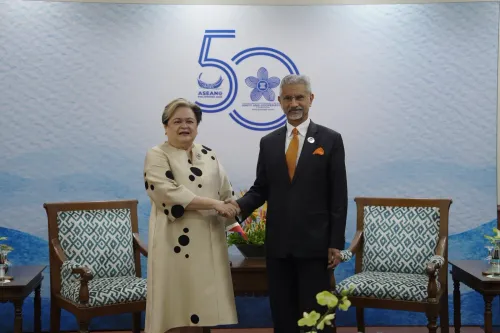
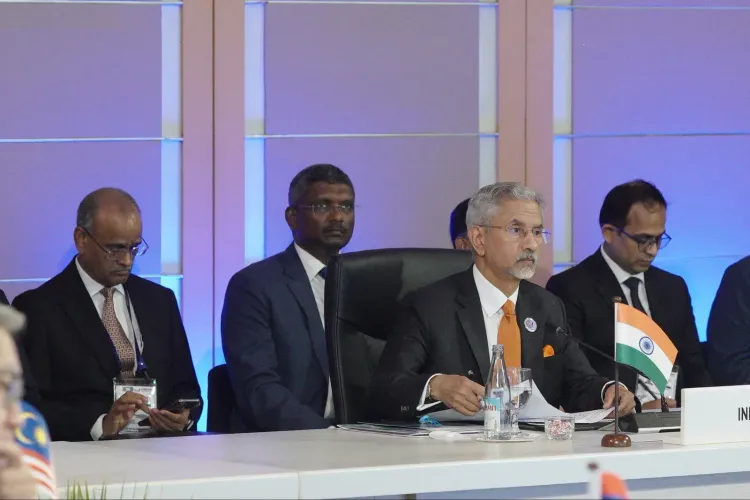
Jaishankar co-chaired the ASEAN Post-Ministerial Conference with India in Manila on 22 July 2026 alongside Philippine Secretary Lazaro .
India appreciated the Philippines for its role as country coordinator for the ASEAN-India Comprehensive Strategic Partnership .
2026 has been designated the ASEAN-India Year of Maritime Cooperation , anchoring the bilateral agenda for the year.
The minister stressed that no single nation can manage global turbulence alone and called for deeper cooperation to 'de-risk and diversify' supply chains, energy, food, health, and maritime security.
India's Indo-Pacific Oceans Initiative (IPOI) was underscored as aligning with the ASEAN Outlook on the Indo-Pacific (AOIP) , reinforcing ASEAN centrality as a core Indian foreign-policy principle.
The India-ASEAN agenda spans trade and investment, mobility, technology, digital and AI, green transition, sustainability, and connectivity.
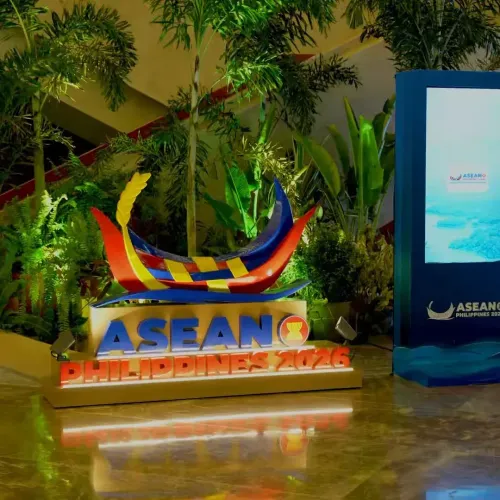
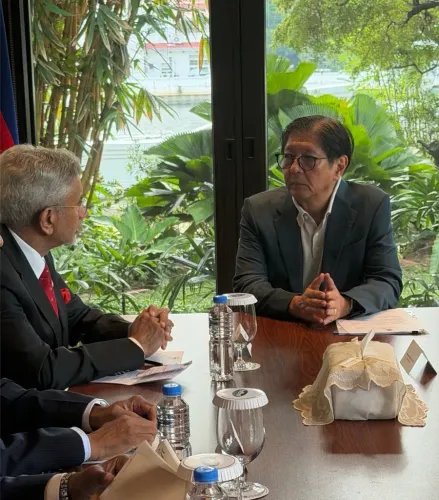
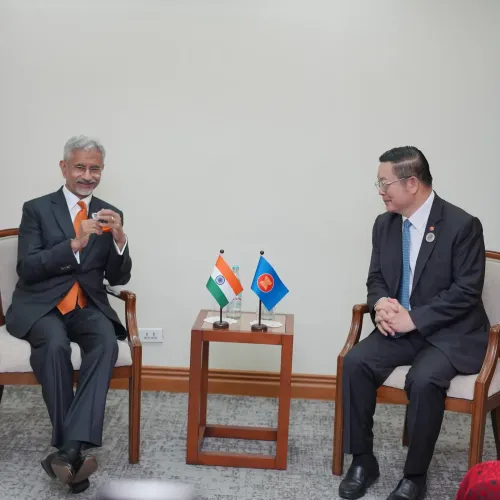
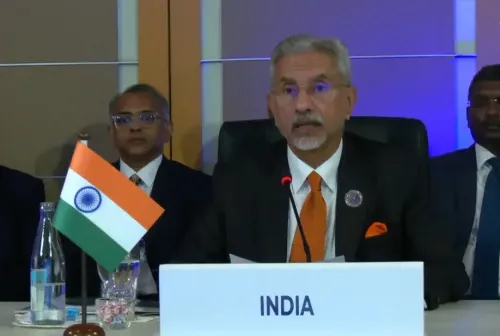
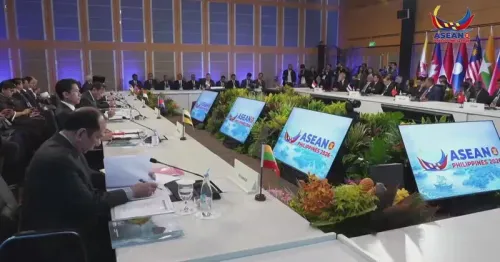
Union External Affairs Minister Dr. S. Jaishankar co-chaired the ASEAN Post-Ministerial Conference (PMC) with India in Manila, Philippines on Wednesday, 22 July 2026, alongside Philippine counterpart Secretary Lazaro, reaffirming the depth of India's engagement with the ten-member Southeast Asian bloc and underscoring the centrality of the Indo-Pacific to shared regional ambitions.
Context
Posting on X after the session, Dr. Jaishankar conveyed India's appreciation for the Philippines in its role as country coordinator for strengthening the ASEAN-India Comprehensive Strategic Partnership — the upgraded framework formalised at the 2022 ASEAN-India Summit in Phnom Penh. The minister noted that the conference theme — 'Navigating Our Future, Together' — 'aptly captures our shared values anchored firmly in mutual trust and cooperation for the development, peace, and stability across the Indo-Pacific region.'
The PMC format brings together ASEAN foreign ministers and their dialogue partners, making it one of the most consequential multilateral diplomatic engagements in the regional calendar. India has been an ASEAN dialogue partner since 1992 and elevated the relationship to a Comprehensive Strategic Partnership in 2022.
Policy Backdrop
Dr. Jaishankar stressed that 'the world is increasingly turbulent,' with supply chains, energy, food and health security, and maritime cooperation all under stress, and underlined that 'no single nation or grouping can deal with the volatility and disruption on its own.' The minister highlighted that deeper cooperation is the path to 'de-risk and diversify' — language that echoes India's broader strategic posture of building resilient, multi-partner regional architecture without exclusive alliances.
A centrepiece of the minister's remarks was the declaration that 2026 is the 'ASEAN-India Year of Maritime Cooperation', which he called 'a timely reminder of what we can do for a more stable and secure future.' India's Indo-Pacific Oceans Initiative (IPOI), launched in 2019, operates across seven pillars including maritime security and sustainability, and Dr. Jaishankar underscored that it 'measures with' the ASEAN Outlook on the Indo-Pacific (AOIP) — the bloc's own 2019 framework stressing ASEAN centrality and a rules-based regional order.
India's Act East Policy, announced in 2014 and building on the 1992 Look East Policy, has progressively deepened ties with Southeast Asia through annual summits, the ASEAN-India Trade in Goods Agreement (in force since 2010), and expanding security dialogues.
Stakeholders and Impact
The minister outlined a 'rich India-ASEAN agenda' spanning trade and investment, mobility and talent, technology, digital and artificial intelligence, green transition and sustainability, and connectivity — a breadth that reflects the ambitions of all 10 ASEAN member states and their combined population of over 670 million. For the Philippines specifically, co-chairing the PMC with India signals Manila's active role in shaping the bilateral agenda during its coordinator tenure.
The emphasis on ASEAN centrality — described by Dr. Jaishankar as 'a key principle' for India — is significant for regional economies wary of great-power competition reshaping the Indo-Pacific. India's alignment of the IPOI with the AOIP offers a framework for cooperation that keeps ASEAN at the centre of regional architecture rather than on the periphery.
What's Next
With 2026 designated the ASEAN-India Year of Maritime Cooperation, joint activities including potential naval dialogues, port connectivity projects, and blue-economy initiatives are expected to roll out across the year. Negotiations on trade in services and digital economy cooperation are also anticipated to feature prominently at the next ASEAN-India Summit. India's sustained push to align the IPOI with AOIP suggests that maritime governance and Indo-Pacific stability will remain the defining pillars of the partnership in the near term.
Point of View
With maritime cooperation now the centrepiece rather than a footnote. By explicitly aligning the Indo-Pacific Oceans Initiative with the ASEAN Outlook on the Indo-Pacific, New Delhi is making a structural argument: that India and ASEAN share not just interests but an architectural vision for the region. The 'de-risk and diversify' framing — borrowed from the global supply-chain conversation — positions India as a systemic stabiliser rather than merely a bilateral partner. The designation of 2026 as the Year of Maritime Cooperation gives this diplomacy a deliverable-driven calendar that will be watched closely by both ASEAN capitals and rival Indo-Pacific powers.
NationPress
21 Oct 2026
Frequently Asked Questions
What is the ASEAN Post-Ministerial Conference with India?
The ASEAN Post-Ministerial Conference (PMC) with India is an annual diplomatic meeting held after the main ASEAN Foreign Ministers' Meeting, where ASEAN foreign ministers engage with dialogue partners like India to review and advance bilateral and regional cooperation.
What is the ASEAN-India Year of Maritime Cooperation 2026?
The ASEAN-India Year of Maritime Cooperation 2026 is a thematic designation for the year, announced to focus joint activities between India and the 10 ASEAN member states on maritime security, blue economy, and Indo-Pacific stability throughout 2026.
What is India's ASEAN-India Comprehensive Strategic Partnership?
The ASEAN-India Comprehensive Strategic Partnership is the highest level of diplomatic relationship between India and ASEAN, formalised at the 2022 ASEAN-India Summit in Phnom Penh, covering trade, security, connectivity, and people-to-people ties.
What is India's Indo-Pacific Oceans Initiative (IPOI)?
India's Indo-Pacific Oceans Initiative (IPOI) is a framework launched in 2019 to promote maritime cooperation across seven pillars — including maritime security, ecology, resources, trade and connectivity, disaster risk reduction, science and technology, and people-to-people ties.
Why is the Philippines important to India-ASEAN relations?
The Philippines is currently serving as the country coordinator for ASEAN-India dialogue relations, a rotating role that makes Manila the primary interlocutor between India and the ASEAN bloc for advancing the Comprehensive Strategic Partnership agenda.