Jaishankar at ASEAN 2026: India pushes deeper ties amid global volatility
Synopsis
At the ASEAN Post-Ministerial Conference in Manila, EAM Jaishankar warned that no nation or bloc can handle today's volatility alone — and made the case that India and ASEAN's combined weight of 2 billion people demands deeper, structured cooperation on maritime security, supply chains, and digital trade. The message was clear: de-risk and diversify, together.
Key Takeaways
Jaishankar addressed the ASEAN Post-Ministerial Conference with India 2026 in Manila on 22 July 2026 .
He warned that no single nation or grouping can manage today's global turbulence independently.
2026 has been designated the ASEAN-India Year of Maritime Cooperation , with emphasis on maritime law observance.
Jaishankar identified supply chains, energy, food, and health security as the most acute stress points in the current global order.
India and ASEAN together represent a population of 2 billion ; Jaishankar called on both sides to navigate global transition jointly.
ASEAN centrality was reaffirmed as a core principle of India's foreign policy, with the Indo-Pacific Oceans Initiative cited as a point of convergence.
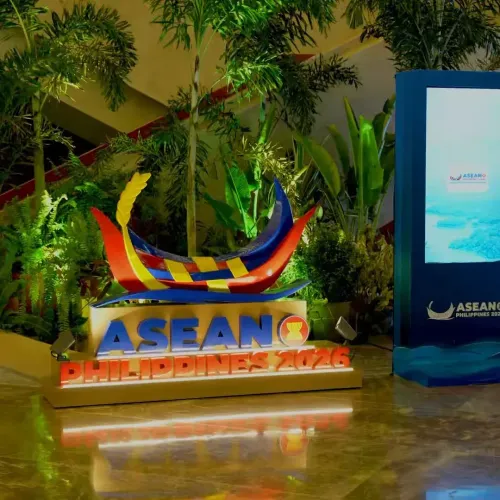
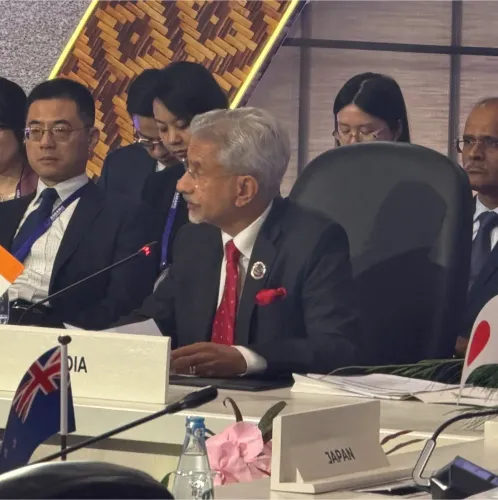
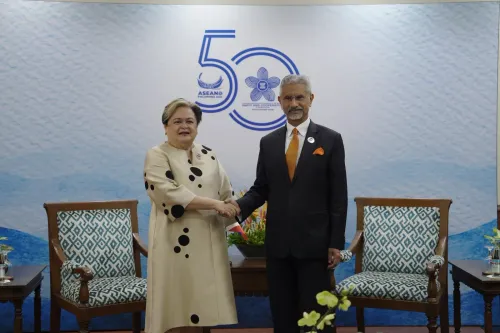
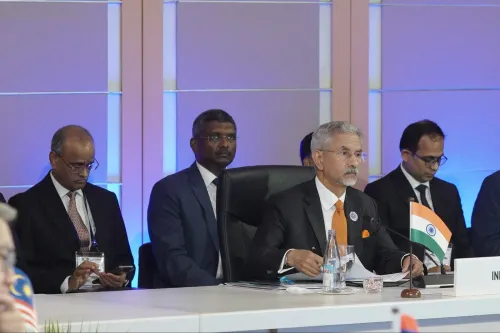
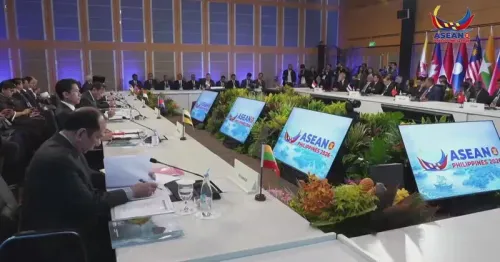
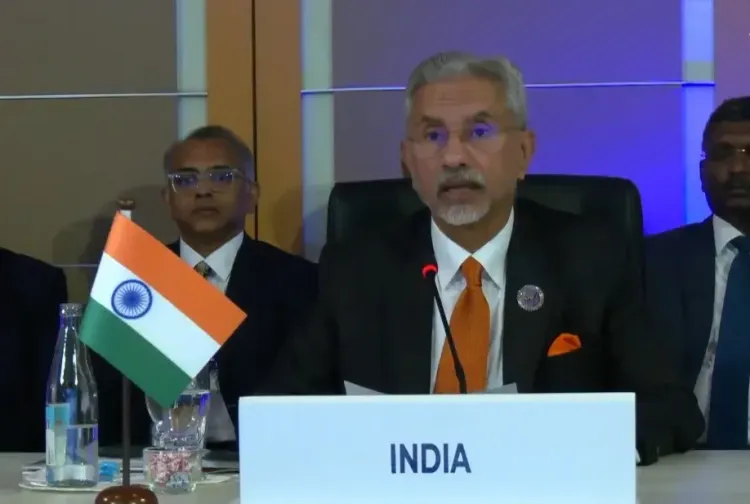
External Affairs Minister S. Jaishankar on Wednesday, 22 July 2026 called for significantly deeper cooperation between India and ASEAN member states, warning that no single nation or regional grouping can navigate today's turbulent global environment alone. Speaking at the ASEAN Post-Ministerial Conference with India 2026 in Manila, Jaishankar framed the gathering as a pivotal moment for the India-ASEAN Comprehensive Strategic Partnership.
Key Remarks from Manila
Opening his address, Jaishankar acknowledged the Philippines for its hospitality and its role as country coordinator in advancing the bilateral partnership. He drew directly from the conference theme to set the tone: 'The chairship team navigating our future together captures the sentiment which many of us feel today. The world is extremely turbulent, and it is increasingly evident that no single nation or even grouping can deal with it on its own,' he said.
He urged member states to reflect collectively on how greater cooperation could better serve shared interests in a rapidly shifting global order.
Supply Chains, Maritime Trade, and Security
Jaishankar highlighted the cascading pressures facing the international community, pointing to supply chain stress as the most visible symptom of global volatility. 'Energy, food, and health security can no longer be taken for granted. Because we are all so dependent on maritime trade, that too could become a source of anxiety. Observing international law in that regard is therefore vital,' he stated.
This comes amid ongoing tensions in global shipping lanes and continued uncertainty over energy markets. The emphasis on maritime law carries particular resonance in the South China Sea context, a region where several ASEAN members have active territorial disputes.
ASEAN-India Year of Maritime Cooperation
The minister noted that 2026 has been designated the ASEAN-India Year of Maritime Cooperation, calling it a 'timely reminder of what we can do for a more stable and secure future.' The designation signals a deliberate effort to deepen coordination on blue economy initiatives, port connectivity, and maritime security frameworks between the two blocs.
The India-ASEAN Agenda: Trade, Tech, and Connectivity
Jaishankar outlined a broad and expanding bilateral agenda spanning trade and investment, mobility and talent, technology, digital infrastructure, aviation, green transition, and connectivity. He was direct about the strategic logic: 'It is only through deeper cooperation that we can de-risk and diversify,' he said — a clear reference to supply chain realignment away from single-source dependencies, a theme that has gained urgency across Asia since the pandemic.
Notably, he reaffirmed ASEAN centrality as a foundational principle of India's foreign policy, citing the alignment between the ASEAN Outlook on the Indo-Pacific and India's own Indo-Pacific Oceans Initiative (IORA) as a working example of convergence.
India and ASEAN: A Combined Weight of 2 Billion
Closing his remarks, Jaishankar underscored the demographic and strategic heft that India and ASEAN collectively bring to global affairs. 'This is a world in transition, and India and ASEAN, who account for 2 billion, must navigate it together if it is to remain safe and steady,' he said.
The statement reflects India's broader Act East Policy calculus — that its strategic relevance in the Indo-Pacific is inseparable from the depth of its ASEAN engagement. With multilateralism under strain globally, the Manila conference is expected to produce renewed commitments on connectivity corridors and digital trade facilitation in the months ahead.
Point of View
Sitting at the heart of those chains, is the natural partner. What is worth watching is whether the India-ASEAN Comprehensive Strategic Partnership produces binding commitments this cycle or remains, as critics have argued, a framework heavy on nomenclature and light on deliverables. The maritime cooperation designation is a positive signal, but India's connectivity projects in Southeast Asia have historically lagged behind China's infrastructure footprint. The 2-billion-people framing is compelling on paper; the test is whether it translates into trade architecture that actually moves goods, people, and capital faster between the two blocs.
NationPress
20 Oct 2026
Frequently Asked Questions
What did EAM Jaishankar say at the ASEAN Post-Ministerial Conference 2026?
Jaishankar called for deeper India-ASEAN cooperation on trade, maritime security, supply chains, and digital infrastructure, arguing that no single nation or grouping can manage today's global volatility alone. He spoke at the ASEAN Post-Ministerial Conference with India 2026 in Manila on 22 July 2026.
What is the ASEAN-India Year of Maritime Cooperation?
2026 has been designated the ASEAN-India Year of Maritime Cooperation, a bilateral initiative aimed at strengthening coordination on maritime security, blue economy projects, and the observance of international maritime law. Jaishankar described it as a timely reminder of what the two sides can achieve for regional stability.
Why did Jaishankar emphasise supply chain resilience at the Manila conference?
Jaishankar highlighted supply chains as the most visible stress point in the current era of global volatility, alongside energy, food, and health security. His remarks reflect India's broader strategy of diversifying supply chain dependencies — a priority that has intensified across Asia since the Covid-19 pandemic.
What is India's position on ASEAN centrality?
India regards ASEAN centrality as a key principle of its foreign policy. Jaishankar cited the alignment between the ASEAN Outlook on the Indo-Pacific and India's Indo-Pacific Oceans Initiative as a concrete example of how the two sides' strategic visions converge.
What is the India-ASEAN Comprehensive Strategic Partnership?
It is the highest tier of the formal partnership between India and the ten-member ASEAN bloc, covering trade and investment, connectivity, technology, digital infrastructure, aviation, and green transition. The Philippines is currently serving as country coordinator for advancing the partnership.