Jaishankar meets NZ FM Peters at ASEAN Manila on Indo-Pacific
Synopsis
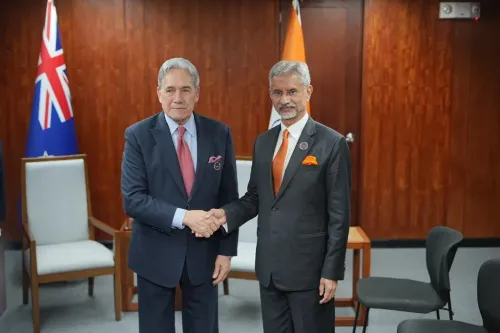
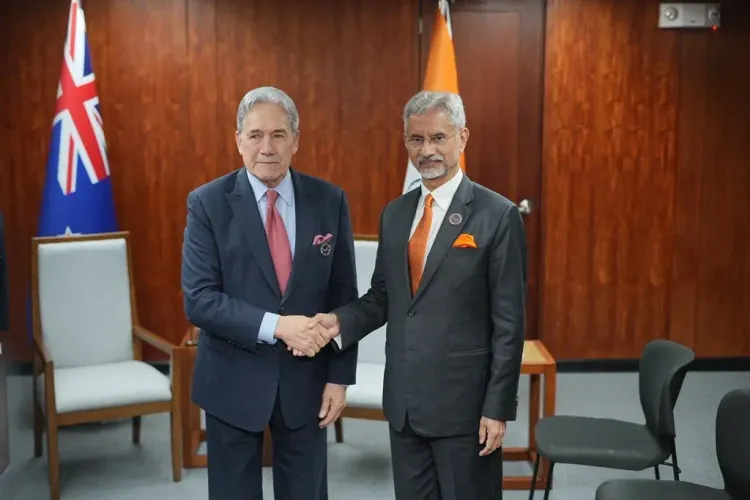
EAM Dr. S. Jaishankar met New Zealand FM Winston Peters on the sidelines of ASEAN Manila on 22 July 2026, sharing perspectives on Indo-Pacific security and discussing steps to enhance bilateral maritime cooperation between India and New Zealand.
Key Takeaways
Jaishankar and New Zealand FM Winston Peters held a bilateral meeting on the sidelines of ASEAN Manila on 22 July 2026 .
The two ministers exchanged perspectives on the Indo-Pacific security situation .
Discussions covered enhancing India-New Zealand maritime cooperation .
The meeting aligns with India's Act East Policy of deepening engagement with ASEAN dialogue partners.
India has been steadily expanding bilateral maritime dialogues with extra-regional partners on the margins of ASEAN meetings as part of its Indo-Pacific Oceans Initiative .
Follow-up bilateral maritime working group meetings and outcomes at the next ASEAN-India Summit will be closely watched.
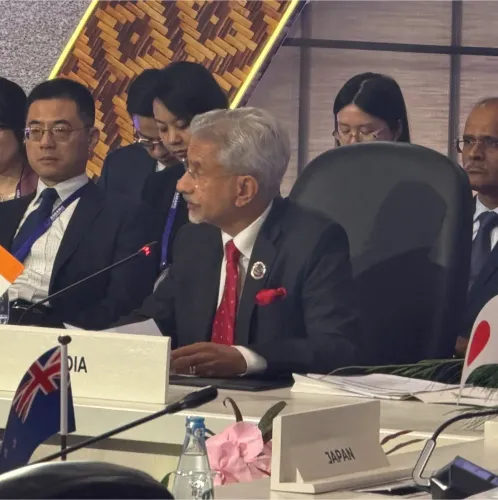
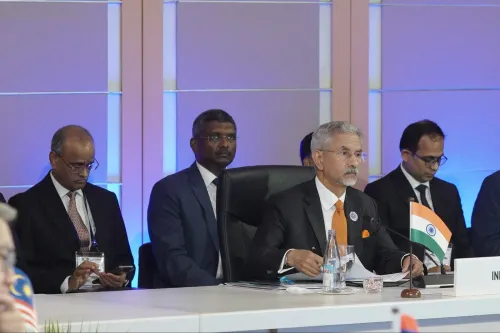
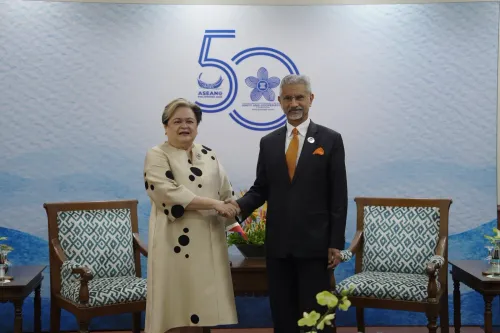
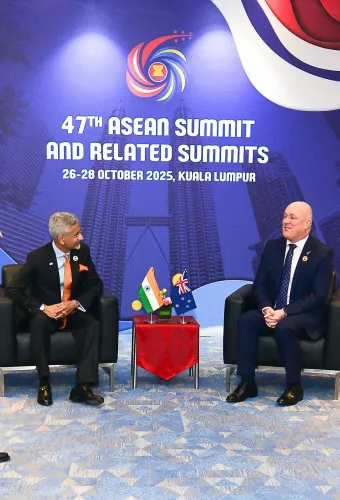
Union External Affairs Minister Dr. S. Jaishankar held a bilateral meeting with New Zealand Foreign Minister Winston Peters on the sidelines of the ASEAN ministerial gathering in Manila on Wednesday, 22 July 2026, exchanging views on Indo-Pacific security and ways to deepen maritime cooperation between the two countries.
Context
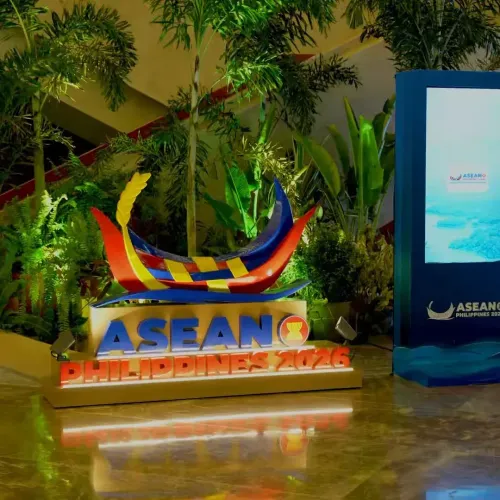
Posting on X, Dr. Jaishankar described the exchange as 'a useful conversation,' noting that the two ministers 'shared perspectives on the Indo-Pacific security situation and discussed enhancing our maritime cooperation.' The meeting was held on the margins of the ASEAN summit process in the Philippine capital, a venue that has become a regular forum for India to conduct parallel bilateral diplomacy with dialogue partners.
Winston Peters, a veteran of New Zealand's foreign-policy establishment, has in multiple governments championed Pacific and Indo-Pacific engagement, making him a natural interlocutor for India on regional security architecture.
Policy Backdrop
India's Act East Policy, upgraded in 2014, placed deeper institutional and security engagement with ASEAN and its dialogue partners at the centre of New Delhi's strategic outreach. Maritime security has since become one of the policy's most active strands, expressed through mechanisms such as the ASEAN-India Maritime Exercise and the Indo-Pacific Oceans Initiative.
New Zealand, as a like-minded Pacific democracy, has increasingly been drawn into India's expanding web of bilateral maritime dialogues. These conversations are part of a broader Indian effort to build a coalition of partners committed to a rules-based order in the Indo-Pacific, particularly as competition for influence over sea lanes and strategic chokepoints intensifies.
Stakeholders and Impact
The most immediate stakeholders are the naval and coast-guard establishments of both countries, along with ASEAN dialogue partners that monitor India's bilateral security outreach for signals about the region's evolving security architecture. A strengthened India-New Zealand maritime partnership could complement existing minilateral frameworks and add depth to collective efforts at maritime domain awareness.
For New Zealand, closer maritime ties with India offer strategic diversification at a time when Pacific nations are navigating competing pressures from major powers. For India, the engagement reinforces its positioning as a net security provider in the broader Indo-Pacific, extending its reach beyond the immediate neighbourhood.
What's Next
Analysts will watch for any announcement of a bilateral maritime working group or follow-up technical dialogue stemming from the Manila conversation. The next ASEAN-India Summit is also expected to provide a further platform to institutionalise the cooperation discussed between Dr. Jaishankar and Peters. Whether the two sides move from consultations to concrete joint exercises or information-sharing arrangements will be the key metric of progress.
Point of View
New Delhi signals that its maritime diplomacy is both multilateral in setting and bilateral in depth. This approach allows India to advance the rules-based order agenda without the friction of formal alliance commitments. The real test will be whether the conversation in Manila translates into structured mechanisms such as joint patrols, information-sharing protocols, or coordinated positions at multilateral forums.
NationPress
21 Oct 2026
Frequently Asked Questions
Why did Jaishankar meet New Zealand FM Winston Peters in Manila?
Dr. Jaishankar met Winston Peters on the sidelines of the ASEAN ministerial in Manila on 22 July 2026 to share perspectives on Indo-Pacific security and discuss ways to enhance maritime cooperation between India and New Zealand.
What is India's maritime cooperation with New Zealand about?
India and New Zealand share an interest in a rules-based Indo-Pacific order. Their maritime cooperation discussions focus on areas such as maritime domain awareness, sea-lane security, and coordination within broader frameworks like India's Indo-Pacific Oceans Initiative .
What is ASEAN's role in India's foreign policy?
ASEAN is central to India's Act East Policy , upgraded in 2014 , which prioritises deeper institutional, economic, and security engagement with Southeast Asia and its dialogue partners. ASEAN summits also serve as a hub for India's bilateral diplomatic meetings.
Who is Winston Peters and why does he matter for India?
Winston Peters is New Zealand's Foreign Minister, a veteran diplomat who has served in multiple governments with a focus on Pacific and Indo-Pacific engagement. His alignment with a rules-based regional order makes New Zealand a like-minded partner for India's maritime security agenda.
What could come next after the Jaishankar-Peters meeting in Manila?
Analysts are watching for the announcement of a bilateral maritime working group, follow-up technical dialogues, or references to India-New Zealand cooperation at the next ASEAN-India Summit .