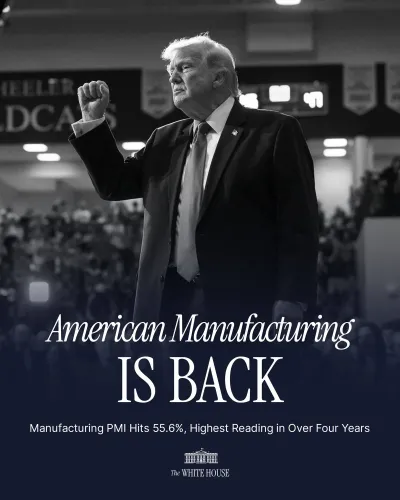
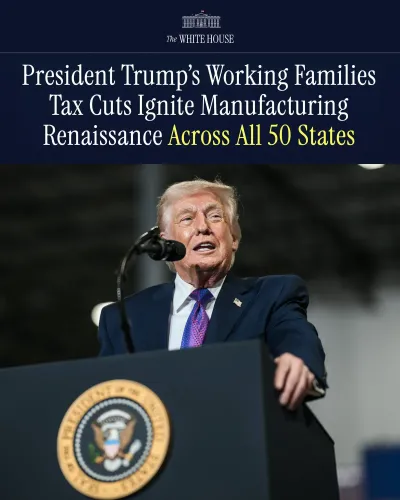
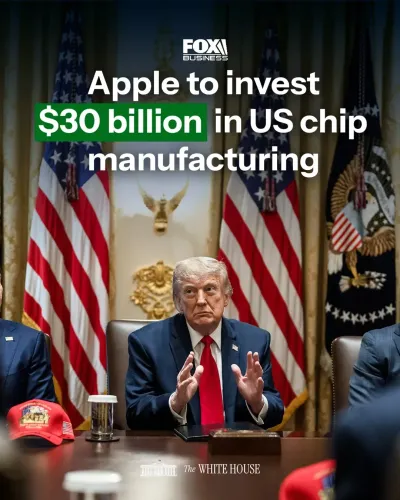
White House Touts Trump's NC Gains: Safety, Wages, Manufacturing

Synopsis
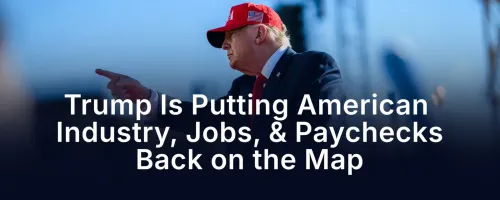
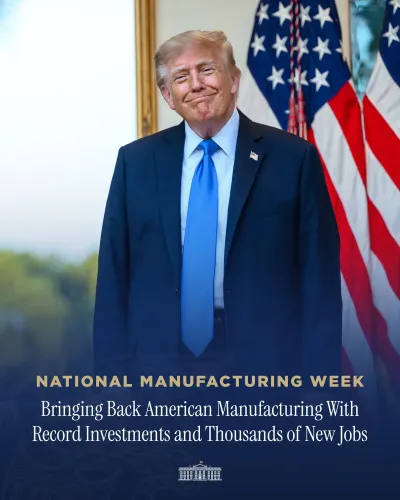
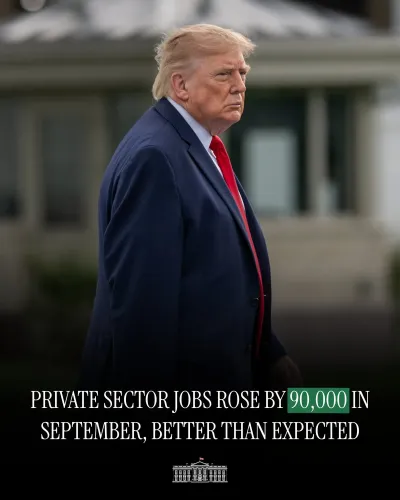
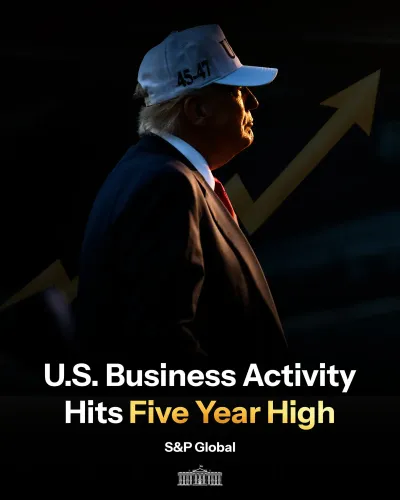
The White House highlighted President Trump's economic record in North Carolina, citing safer streets, rising wages, and a manufacturing revival. The message builds on the administration's economic-nationalism playbook of tariffs and corporate tax cuts, with BLS state data expected to test the claims soon.
Key Takeaways
The White House posted on October 21, 2026 claiming progress on safety, wages, and manufacturing in North Carolina under President Trump .
North Carolina has established manufacturing clusters in furniture, textiles, automotive parts, and pharmaceuticals — key sectors in the administration's reshoring push.
The Tax Cuts and Jobs Act of 2017 cut the US corporate tax rate from 35% to 21% , the central tax instrument behind the manufacturing-revival argument.
The administration's second-term messaging echoes first-term strategy: tariffs on China plus domestic tax incentives to encourage US-based production.
Specific 2026 claims on crime, wages, and factory jobs in North Carolina await verification from upcoming Bureau of Labor Statistics data releases.
North Carolina is a competitive battleground state, giving this economic narrative clear electoral significance.
The White House is making a pointed case for President Donald Trump's economic record in North Carolina, framing the southeastern state as a showcase for what the administration calls a trifecta of safer streets, rising paychecks, and a resurgent manufacturing sector — all on Wednesday, October 21, 2026.
North Carolina as the Template for Trump's Economic Nationalism
North Carolina is not a random backdrop. The state carries decades of industrial history — furniture factories in the Piedmont, textile mills, automotive-parts suppliers, and a growing pharmaceutical manufacturing base — making it a natural testing ground for federal reshoring ambitions. The Trump administration's second-term economic messaging has consistently leaned on states with legacy manufacturing clusters to demonstrate that tariff pressure on overseas competitors and domestic tax incentives can reverse decades of deindustrialisation.
The policy lineage traces directly to the Tax Cuts and Jobs Act of 2017, which slashed the corporate tax rate from 35% to 21% with the explicit goal of pulling investment and jobs back onto American soil. That first-term instrument has been central to the second administration's pitch: that lower corporate costs, combined with tariffs on Chinese goods, create conditions for companies to build — or rebuild — in places like North Carolina rather than Shenzhen or Hanoi.
The Three-Plank Message: Crime, Wages, and Factory Jobs
The White House post bundles three distinct voter concerns into a single frame — public safety, economic security, and industrial revival. Each plank speaks to a different slice of North Carolina's electorate: working-class manufacturing communities anxious about plant closures, suburban families worried about crime, and mid-career workers watching their wage purchasing power. Packaging all three under one banner is a deliberate strategy: it widens the coalition that can claim a stake in the administration's record.
The administration's broader pattern of economic nationalism — anchored in tariffs against China and tax policy tilted toward domestic producers — has been a defining theme of both Trump terms. Whether the gains in safety, wages, and factory employment materialise in hard state-level data will come into sharper focus when the Bureau of Labor Statistics releases updated manufacturing employment and wage figures for North Carolina in the coming months.
What the Numbers Will Have to Show
The White House's claim is assertive, not yet fully verifiable at the state level. North Carolina's manufacturing workforce and wage trajectory will be the real scorecard — and independent BLS data will either validate or complicate the administration's headline. The political stakes are high: North Carolina has been a competitive battleground, and locking in a credible economic-performance narrative there carries significant electoral weight heading into the mid-term cycle.
For now, the administration is firmly in campaign-communications mode — staking out the territory before the data lands.
Point of View
Wage growth, and industrial revival into a single state-level proof point, then amplify before independent data can complicate the story. The framing mirrors first-term playbook — tariffs plus tax cuts equals reshoring — but the credibility of the claim now rests on forthcoming BLS figures that the administration does not control. For a swing state with a large manufacturing base, the political calculus is clear: if the data holds up, North Carolina becomes a replicable template; if it doesn't, the headline becomes a liability.
NationPress
21 Oct 2026
Frequently Asked Questions
What is the White House claiming about North Carolina under Trump?
The White House claims that under President Trump, North Carolina has seen safer streets, bigger paychecks for workers, and a significant expansion in manufacturing activity, framing the state as a success story for the administration's economic agenda.
What policies has Trump used to boost US manufacturing?
The Trump administration has relied primarily on two instruments: tariffs on Chinese imports to make overseas production more expensive, and the Tax Cuts and Jobs Act of 2017, which lowered the corporate tax rate from 35% to 21% to incentivise domestic investment.
Why is North Carolina important for Trump's economic message?
North Carolina has long-established manufacturing clusters in furniture, textiles, automotive parts, and pharmaceuticals, making it a credible showcase for reshoring arguments. It is also a competitive swing state, giving the economic narrative direct electoral relevance.
Have the manufacturing and wage claims for North Carolina been verified?
Not yet independently. The White House's specific claims about 2026 crime rates, wage growth, and manufacturing expansion in North Carolina are yet to be fully corroborated by Bureau of Labor Statistics state-level data, which is expected in the coming months.
What is economic nationalism as pursued by the Trump administration?
Economic nationalism, as practised by the Trump administration, involves using tariffs to protect domestic industries from cheaper foreign competition, combined with tax cuts and deregulation to make the United States a more attractive destination for manufacturing investment.