Jaishankar meets Philippines FM Lazaro in Manila, reviews Indo-Pacific tensions
Synopsis
With China’s confrontation at Second Thomas Shoal just 48 hours old, Jaishankar’s Manila talks with Philippines FM Lazaro were never just a diplomatic courtesy call. Defence, maritime security, and critical infrastructure are now formally on the bilateral agenda — a quiet but significant expansion of India’s strategic footprint in Southeast Asia.
Key Takeaways
Jaishankar met Philippines FM Ma.
Lazaro in Manila on 22 July 2026 to advance the bilateral Strategic Partnership .
Talks covered trade, defence, maritime security, financial technology, pharmaceuticals , and critical infrastructure .
The meeting followed China’s reported ‘dangerous and aggressive actions’ against Philippines navy personnel at Second Thomas Shoal on 20 July .
India reiterated support for UNCLOS and freedom of navigation in the South China Sea .
12 nations , including the Philippines, marked the 10th anniversary of the 2016 arbitral ruling rejecting China’s maritime claims.
Jaishankar also addressed the ASEAN Post-Ministerial Conference 2026 , emphasising ASEAN centrality and the Indo-Pacific Oceans Initiative .
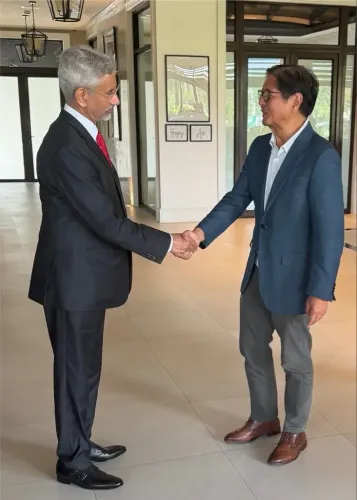
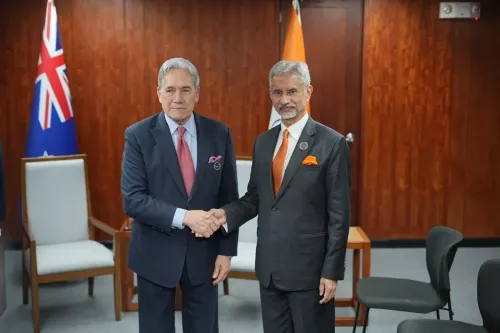
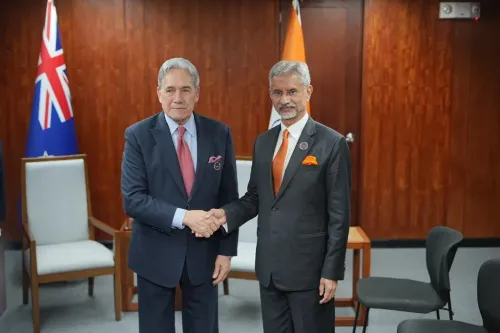
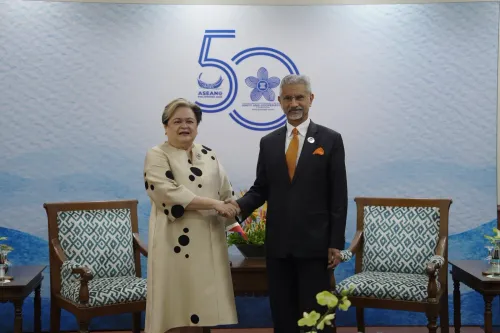
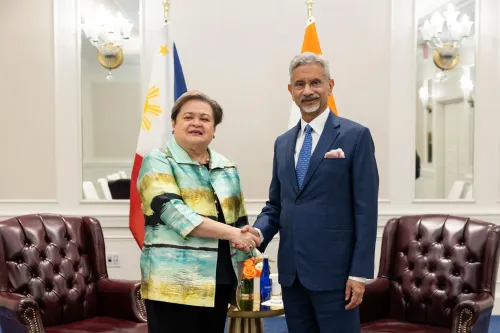
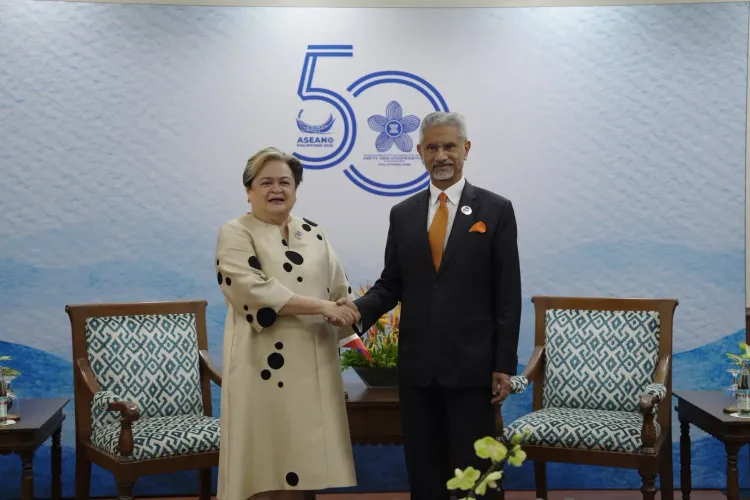
External Affairs Minister S. Jaishankar on Wednesday, 22 July held talks with Philippines Foreign Minister Ma. Theresa P. Lazaro in Manila, with both sides pledging to deepen their bilateral Strategic Partnership and exchanging assessments on fast-moving developments across the Indo-Pacific. The meeting took place amid heightened maritime tensions in the South China Sea, lending the bilateral engagement added strategic weight.
What the Two Ministers Discussed
Jaishankar described the talks as a productive exchange focused on broadening cooperation across several domains. “A good discussion on further strengthening our Strategic Partnership, focusing on trade & investment, education, defence & security, maritime cooperation, capacity building, and development cooperation,” he said in a post on X. He added that the two ministers “also discussed recent developments in the Indo-Pacific.”
Lazaro, in her own post on X, confirmed that the meeting was a “productive discussion” on the Philippines-India Strategic Partnership, reaffirming commitment to “continued strengthening of various areas of cooperation, including financial technology, trade and investment, higher education, pharmaceuticals, defence, maritime security, and critical infrastructure.”
South China Sea Flashpoint in the Background
The bilateral meeting came just two days after the Philippines accused China of resorting to “dangerous and aggressive actions” against its navy personnel at Second Thomas Shoal in the South China Sea on 20 July. The incident has sharpened Manila’s focus on securing partnerships with like-minded nations across the region.
For India, the South China Sea is not a peripheral concern. A significant share of India’s trade transits the broader Indo-Pacific sea lanes, and New Delhi has consistently called for freedom of navigation, unimpeded commerce, and the peaceful resolution of maritime disputes in line with international law. India has reiterated that disputes in the South China Sea must be settled peacefully under the UN Convention on the Law of the Sea (UNCLOS).
Multilateral Reaffirmation of Indo-Pacific Rules
The Jaishankar-Lazaro meeting also coincides with a broader multilateral moment: twelve countries, led by the United States and including Australia, Canada, Japan, New Zealand, the Philippines, the United Kingdom, and several European states, have jointly reaffirmed their commitment to a “free and open Indo-Pacific” in a joint statement marking the 10th anniversary of the landmark 2016 arbitral tribunal ruling that rejected China’s sweeping maritime claims. The statement declared their “unwavering commitment to maintaining a free and open Indo-Pacific that is peaceful, stable, and rules-based, anchored in international law.”
Jaishankar at the ASEAN Post-Ministerial Conference
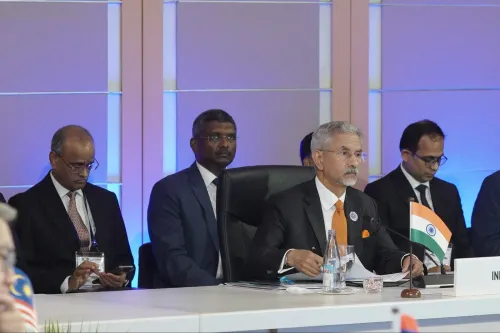
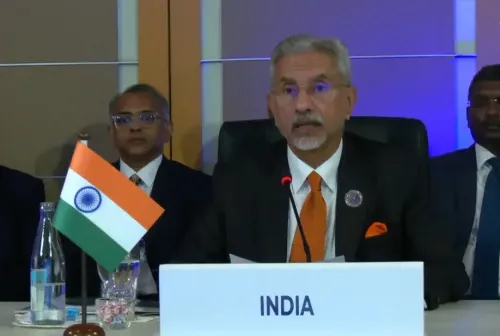
Earlier on the same day, Jaishankar delivered opening remarks at the ASEAN Post-Ministerial Conference with India 2026 in Manila, reaffirming India’s commitment to the Indo-Pacific and ASEAN centrality as a guiding principle of its foreign policy. “For India, ASEAN centrality is a key principle,” he said, pointing to the alignment between the ASEAN Outlook on the Indo-Pacific and India’s own Indo-Pacific Oceans Initiative.
“This is a world in transition, and India and ASEAN, who account for 2 billion people, must navigate it together if it is to remain safe and steady,” Jaishankar noted. The remarks signal that India views its engagement with Southeast Asia as structural, not episodic — particularly as China’s maritime assertiveness intensifies pressure on ASEAN members.
What This Signals Going Forward
The Manila visit underscores India’s accelerating diplomatic outreach to Southeast Asian partners, especially those directly exposed to Chinese pressure in the South China Sea. With the Philippines-India Strategic Partnership now covering defence, maritime security, and critical infrastructure, the relationship is evolving well beyond its traditional trade and diaspora dimensions. Further institutional follow-through — including possible defence cooperation frameworks and fintech agreements — is expected in the months ahead.
Point of View
And the Philippines, now the most exposed front-line state in the South China Sea dispute, is a natural anchor. What is notable is the explicit inclusion of critical infrastructure and financial technology in the bilateral agenda: these are domains where India is positioning itself as an alternative to Chinese investment. The harder question is whether strategic convergence translates into operational defence cooperation, which neither side has yet publicly committed to.
NationPress
21 Oct 2026
Frequently Asked Questions
What did Jaishankar and Philippines FM Lazaro discuss in Manila?
The two ministers discussed advancing the Philippines-India Strategic Partnership across trade and investment, defence, maritime security, financial technology, pharmaceuticals, higher education, and critical infrastructure. They also reviewed recent developments in the Indo-Pacific, particularly in the South China Sea.
Why is the South China Sea relevant to India?
A significant share of India’s trade transits Indo-Pacific sea lanes, making freedom of navigation a direct economic and strategic interest. India has consistently called for maritime disputes to be resolved peacefully under UNCLOS and has opposed unilateral actions that threaten the rules-based order.
What happened at Second Thomas Shoal before the meeting?
On 20 July 2026, the Philippines accused China of carrying out ‘dangerous and aggressive actions’ against its navy personnel at Second Thomas Shoal in the South China Sea. The incident heightened regional tensions and formed a key backdrop for the Manila bilateral talks.
What is the significance of the 2016 arbitral tribunal ruling mentioned in the article?
The 2016 ruling by an international arbitral tribunal rejected China’s sweeping maritime claims in the South China Sea under UNCLOS. Twelve nations, including the Philippines and the United States, marked its 10th anniversary by jointly reaffirming their commitment to a free, open, and rules-based Indo-Pacific.
What did Jaishankar say at the ASEAN Post-Ministerial Conference 2026?
Jaishankar reaffirmed India’s commitment to ASEAN centrality and noted the alignment between the ASEAN Outlook on the Indo-Pacific and India’s Indo-Pacific Oceans Initiative. He said India and ASEAN, representing 2 billion people, must navigate a world in transition together to keep it ‘safe and steady.’