Jaishankar Calls on Philippines President Marcos Jr.
Synopsis
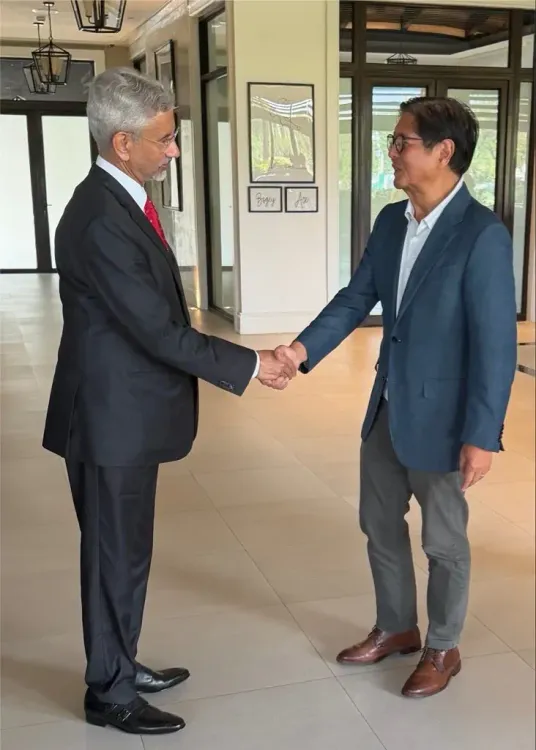
External Affairs Minister Dr. S. Jaishankar called on Philippine President Ferdinand R. Marcos Jr. on 23 July 2026, conveying PM Modi's greetings, backing Manila's ASEAN chairship, and reaffirming the India-Philippines Strategic Partnership under the Plan of Action 2025–2029.
Key Takeaways
Jaishankar called on Philippine President Ferdinand R.
Marcos Jr. on 23 July 2026 .
He conveyed the greetings of Prime Minister Narendra Modi to the Philippine leadership.
India expressed support for the Philippines ' chairship of ASEAN .
Bilateral cooperation is being implemented through the India-Philippines Plan of Action 2025–2029 .
The India-Philippines Strategic Partnership was originally established in 2015 during PM Modi's visit to Manila .
The engagement aligns with India 's Act East Policy of deepening ties with Southeast Asian nations.
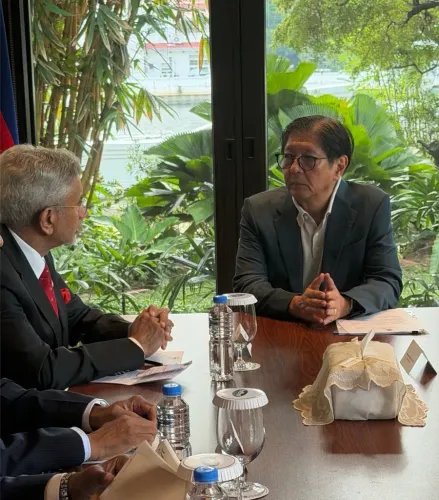
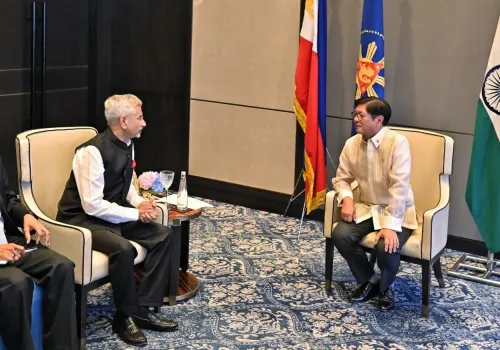
Union External Affairs Minister Dr. S. Jaishankar called on Philippine President Ferdinand R. Marcos Jr. on Thursday, 23 July 2026, conveying the greetings of Prime Minister Narendra Modi and reaffirming India's support for Manila's chairship of the Association of Southeast Asian Nations (ASEAN). The meeting underscored the deepening of the India-Philippines Strategic Partnership through the ongoing implementation of the India-Philippines Plan of Action 2025–2029.
Context
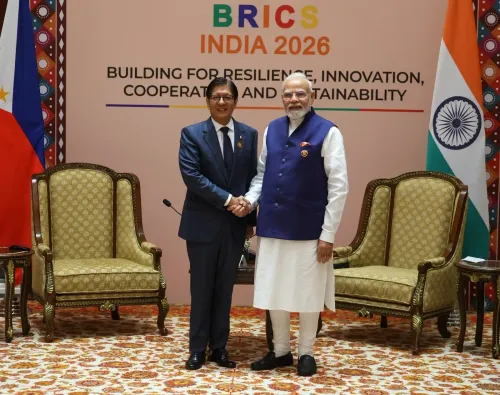
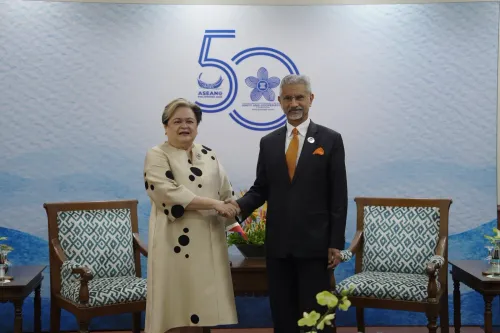
Dr. Jaishankar posted on X that he was 'honoured to call on President Ferdinand R. Marcos Jr. of the Philippines,' noting that bilateral cooperation 'continues to diversify as we implement the India-Philippines Plan of Action 2025–2029.' The call was accompanied by the flags of both nations, signalling the warmth of the bilateral relationship. India and the Philippines are currently guided by a structured five-year action plan that spans defence, maritime security, trade, health and digital cooperation.
Policy Backdrop
India and the Philippines elevated their ties to a Strategic Partnership in 2015 during Prime Minister Modi's visit to Manila, establishing a durable framework for cooperation across multiple sectors. The relationship sits firmly within India's broader Act East Policy, which prioritises deepening engagement with Southeast Asian nations through structured bilateral and multilateral mechanisms. The Plan of Action 2025–2029 represents the latest iteration of this framework, translating the Strategic Partnership into actionable milestones across an expanding range of sectors.
ASEAN, the ten-member regional bloc, counts India as a key dialogue partner. With the Philippines holding the ASEAN chairship, New Delhi's explicit endorsement of Manila's leadership role carries both diplomatic and strategic weight, reinforcing India's commitment to ASEAN centrality at a moment of heightened regional significance.
Stakeholders and Impact
The meeting is of direct relevance to the foreign ministries of both nations, as well as to ASEAN partners watching how the Philippine chairship shapes the bloc's agenda. For India, the engagement signals continuity in its outreach to maritime Southeast Asia, a region of growing importance for trade, connectivity and security. Businesses and institutions operating in sectors such as digital technology, health and defence stand to benefit as the Plan of Action 2025–2029 moves toward implementation milestones.
The personal delivery of PM Modi's greetings by a senior Cabinet minister also reflects the high political priority New Delhi places on the bilateral relationship, reinforcing people-to-people and institutional ties between the two democracies.
What's Next
Attention will now turn to the rollout of specific milestones under the India-Philippines Plan of Action 2025–2029, as well as India's participation in ASEAN-India summits and ministerial meetings during the Philippine chair year. High-level diplomatic momentum of this kind typically precedes concrete deliverables — whether in the form of joint working group meetings, bilateral trade reviews or defence cooperation exercises. The trajectory of India-Philippines ties will be a useful indicator of how effectively India's Act East Policy translates into tangible outcomes across Southeast Asia.
Point of View
Not a routine courtesy — it places India visibly alongside the Philippines at the helm of ASEAN at a time when the bloc's internal cohesion and external partnerships are under scrutiny. Delivering PM Modi's personal greetings through a senior Cabinet minister elevates the bilateral optics beyond the ministerial level. The explicit reference to the Plan of Action 2025–2029 suggests New Delhi is keen to demonstrate implementation rigour, not just intent, in its Act East commitments. Taken together, the visit reinforces India's strategy of using high-level contact to anchor its Southeast Asia partnerships ahead of key ASEAN-India summits.
NationPress
21 Oct 2026
Frequently Asked Questions
Why did Jaishankar meet Philippines President Marcos Jr. in July 2026?
EAM Dr. S. Jaishankar called on President Ferdinand R. Marcos Jr. to convey PM Modi's greetings, express India's support for the Philippines' ASEAN chairship, and reaffirm bilateral cooperation under the India-Philippines Plan of Action 2025–2029.
What is the India-Philippines Plan of Action 2025–2029?
The India-Philippines Plan of Action 2025–2029 is a structured bilateral roadmap that guides cooperation between India and the Philippines across sectors including defence, maritime security, trade, health and digital technology under their Strategic Partnership.
When did India and the Philippines become Strategic Partners?
India and the Philippines upgraded their bilateral relationship to a Strategic Partnership in 2015 during Prime Minister Narendra Modi's visit to Manila.
What is India's role in ASEAN?
India is a dialogue partner of ASEAN, the ten-member Southeast Asian regional bloc. New Delhi engages with ASEAN through annual summits and sectoral ministerial meetings as part of its Act East Policy.
What is India's Act East Policy?
India's Act East Policy is a foreign policy framework that prioritises deepening political, economic and strategic ties with Southeast Asian and East Asian nations, building on the earlier Look East Policy.