How Does the ASEAN-India Summit Lay the Foundation for a Multipolar and Sustainable Region?
Synopsis
The ASEAN-India Summit has paved the way for Southeast Asian nations to unite towards a multipolar future. What are the implications for regional stability and cooperation? Discover how this summit shapes the socio-economic landscape of nearly two billion people.
Key Takeaways
ASEAN-India Summit fosters regional collaboration .
Focus on sustainable growth and stability .
New dimensions to diplomatic relations with major powers .
Inclusion of Timor-Leste reflects regional adaptability .
India's role complements ASEAN's strategic goals .
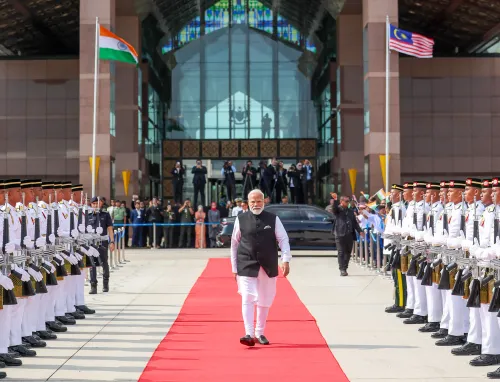
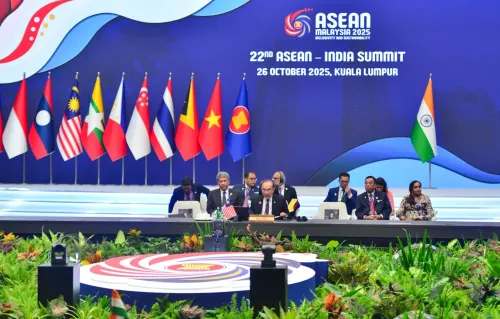
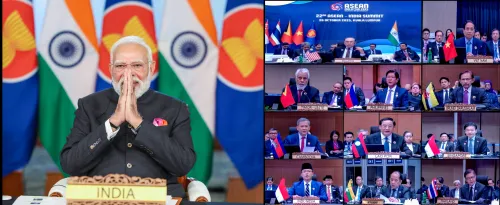
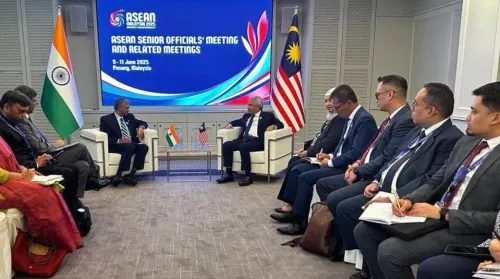
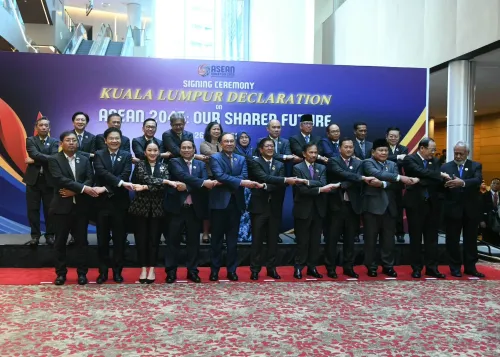
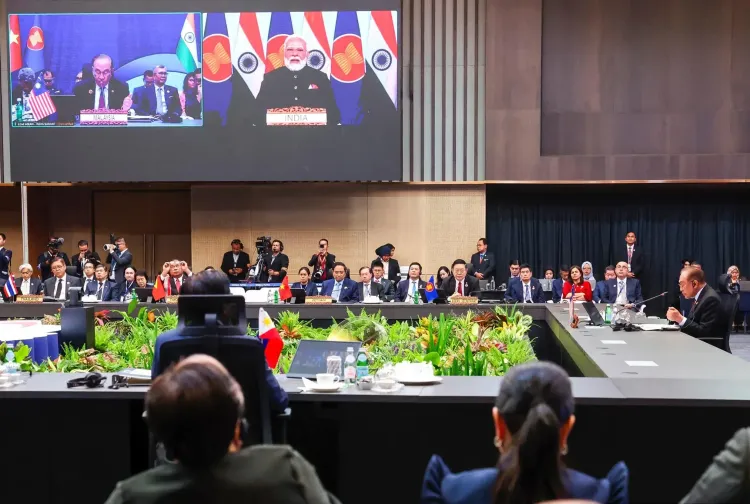
Kuala Lumpur, Oct 28 (NationPress) The ASEAN-India Summit has emerged as a vital platform for Southeast Asian nations, with India leading the charge, to actively participate in crafting a more multipolar, inclusive, and sustainable regional landscape, according to a report released on Tuesday.
The report highlighted that by distancing itself from unilateralism, the summit held in Kuala Lumpur conveyed a subtle yet definitive message: the future of the region will be shaped by a network of engaged and mutually respectful entities, where collaborative achievements will prevail over individual dominance.
As detailed in the report by ‘One World Outlook’, “The ASEAN-India Summit in Kuala Lumpur represents a crucial axis in a swiftly evolving global landscape, integrating the interests, challenges, and aspirations of Southeast Asia and its allies amidst increasing economic volatility and geopolitical changes. With leaders from across the ASEAN community and partner nations participating, the summit’s diverse agenda—from sustainable tourism to cooperative maritime exercises—indicates a broader commitment to ensuring resilient growth and stability for nearly two billion people.”
The report also pointed out that ASEAN measures its success through pragmatic regionalism. The endorsement of the ASEAN Community Vision 2045, the ASEAN-India Action Plan for 2026–2030, and the Joint Leaders’ Statement on sustainable tourism showcased the bloc’s capacity to transition from mere rhetoric to actionable strategies.
Significantly, the report underscored the summit's timing, which coincided with resumed discussions between China and the US, along with key side meetings involving Japan, Australia, and the EU, adding a new layer to the diplomatic framework.
“ASEAN’s balancing act is not just symbolic; it empowers smaller economies with meaningful agency without fragmenting the region. While tracks between the US-ASEAN and China-ASEAN have captured attention, the strengthening of ties with India is a crucial complement, emphasizing shared objectives such as anti-terrorism, infrastructure, and clean energy while respecting national priorities,” the report asserted.
According to the report, ASEAN’s resilience is further bolstered by its dedication to inclusivity. The acceptance of Timor-Leste as ASEAN's 11th member, ongoing support for Quick Impact Projects, and proposals for regional defense and maritime heritage dialogues reflect the region's adaptable approach to both competition and cooperation.
While not the focal point, India’s consistent participation in disaster response, technology, and maritime security allows ASEAN to elevate its agenda. Initiatives such as training thousands of professionals in renewable energy, the proposal for a Southeast Asia Centre at Nalanda University, and enhanced collaboration on rare earths and semiconductors provide tangible support to shared goals, the report noted.
Point of View
It is crucial to recognize the significance of the ASEAN-India Summit in promoting cooperative strategies among Southeast Asian nations. This summit serves as a testament to the potential of regional partnerships in addressing shared challenges and fostering sustainable growth.
NationPress
15 Oct 2026
Frequently Asked Questions
What was the main purpose of the ASEAN-India Summit?
The ASEAN-India Summit aimed to strengthen cooperation among Southeast Asian nations and India, focusing on creating a multipolar, inclusive, and sustainable regional environment.
How does the summit impact regional stability?
By fostering collaboration among member states, the summit enhances diplomatic ties and promotes stability, allowing for collective responses to challenges such as economic uncertainty and geopolitical shifts.
What initiatives were discussed at the summit?
The summit covered various initiatives, including sustainable tourism, joint maritime exercises, and the ASEAN-India Action Plan for 2026-2030.
What role does India play in ASEAN?
India plays a pivotal role in ASEAN by contributing to disaster response, technological advancement, and maritime security, enhancing ASEAN's regional agenda.
What is the significance of Timor-Leste joining ASEAN?
Timor-Leste's inclusion as the 11th member of ASEAN highlights the bloc's commitment to inclusivity and regional unity, further strengthening partnerships.