Is India's Rise Reshaping the Balance of Power in Asia Amid China's Economic Slowdown?
Synopsis
Explore how India's strategic initiatives are reshaping the power dynamics in Asia, especially as China's economy faces challenges. With Modi's focus on Southeast Asia, discover the implications for regional stability and economic collaboration.
Key Takeaways
Narendra Modi ’s Act East Policy positions India as a central Indo-Pacific power.
India's economic and security partnerships enhance regional stability.
China's economic challenges create openings for India in Southeast Asia.
Malaysia recognizes India as a primary strategic partner.
Strengthening ties in various sectors is vital for future success.
Kuala Lumpur/New Delhi, Feb 11 (NationPress) Prime Minister Narendra Modi’s Act East Policy, launched in 2014, has established a strategic framework that has repositioned India as a significant power in the Indo-Pacific, emphasizing its commitment to the security and prosperity of Southeast Asia.
Through strengthened integration, improved connectivity, and engagement in regional resilience and security, Southeast Asia has gained from a more robust counterbalance and India's economic and security collaborations, as highlighted in a report released on Wednesday.
As per a report by the Eurasia Review, by focusing on ASEAN and the broader maritime area from the Andaman Sea to the Strait of Malacca, the policy highlights the significance of India’s strategic role, providing reassurance to the region facing renewed threats and tensions.
“India has historically been underestimated regarding its power, influence, and role as a regional and global leader. Its emergence as a major economic force and a key balancing entity in the Indo-Pacific has never been more crucial, especially as China experiences a prolonged phase of economic slowdown and strategic challenges,” the report notes.
For Malaysia and Southeast Asia, this shift is tangible, with India at the center of their future economic and geopolitical considerations, serving as a bastion of stability and strength in areas like economic resilience, security support, food and energy security, access to technology, and strategic options.
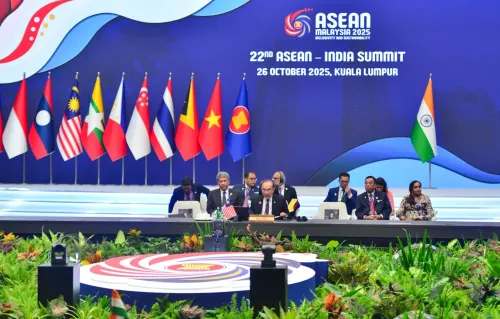
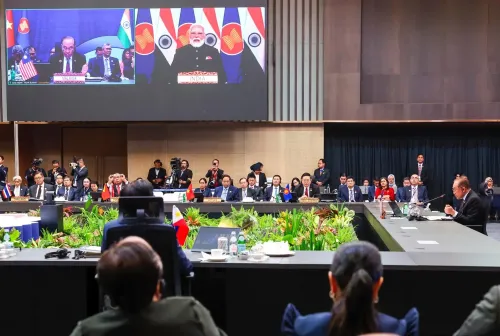
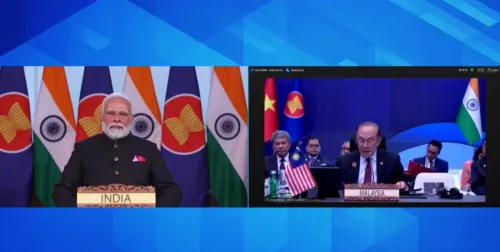
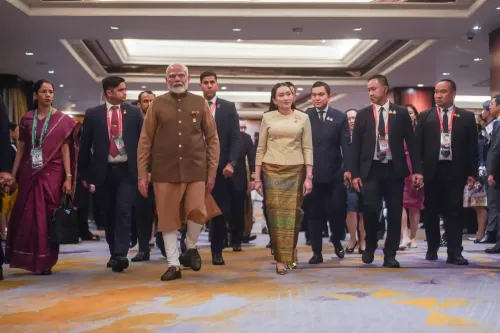
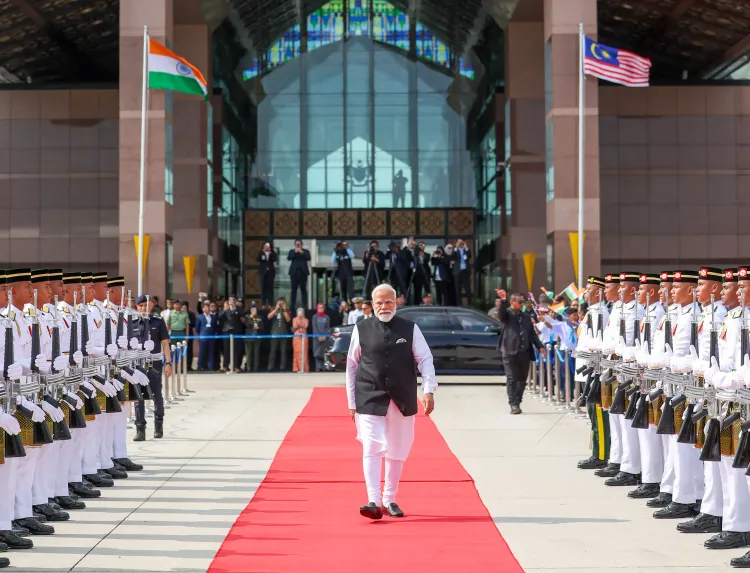
The report stresses that Prime Minister Modi’s recent visit to Malaysia on February 7 and 8 is of strategic importance for both nations, particularly for Malaysia, allowing it to move beyond traditional hedging strategies and acknowledge India as a primary strategic partner for the decades to come.
It further asserts that India's current and future roles have never been more critical, with its ascent occurring parallel to China's economic decline, thus reshaping the regional power dynamics.
“For Malaysia, the decision is not between India and other nations, but about whether to proactively prepare for India's rise or adapt later. Both countries face similar future challenges and opportunities,” the report emphasizes.
“Prime Minister Modi’s visit marks a pivotal moment in forging a new era of interconnected relations with mutual benefits in a multi-faceted partnership rooted in history, trust, and shared aspirations for the future. Strengthening ties with India in defense, technology, semiconductors, energy, food security, education, and culture is essential for the long-term prosperity, security, and autonomy of the region and Malaysia,” it concludes.
Point of View
The recent developments in India's strategic positioning in Southeast Asia reflect an essential evolution in the regional balance of power. This shift not only enhances India's influence but also presents significant opportunities for cooperation and stability, particularly as China navigates economic challenges.
NationPress
20 Sept 2026
Frequently Asked Questions
What is the Act East Policy?
The Act East Policy is a strategy initiated by India in 2014 aimed at enhancing economic and strategic relations with Southeast Asian nations, focusing on regional security and prosperity.
How does India's rise affect Southeast Asia?
India's rise provides a stronger counterbalance to regional threats, fostering economic resilience and security support for Southeast Asian nations.
What role does China play in this context?
China's ongoing economic slowdown creates an opportunity for India to assert itself as a key player in the Indo-Pacific region, reshaping existing power dynamics.