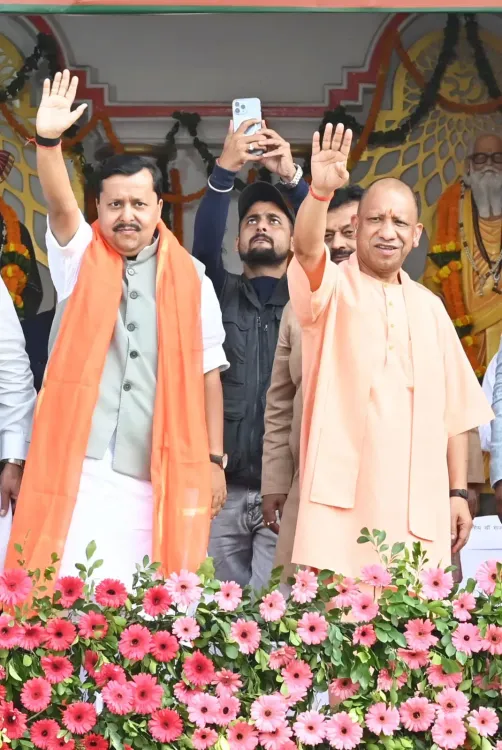
CM Yogi leads 'Save Democracy' march in Gorakhpur
Synopsis
Uttar Pradesh CM Yogi Adityanath joined a BJP-organised 'Save Democracy, Remove Anarchy' foot march in Gorakhpur on 4 November 2026, accusing the Congress, INDIA alliance, and Samajwadi Party of undermining constitutional institutions and demanding a public apology.
Key Takeaways
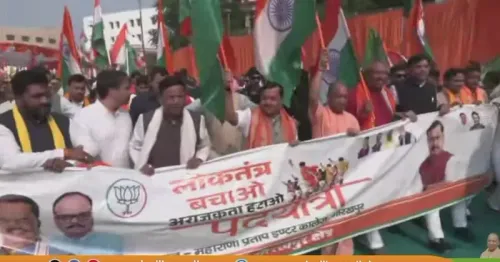
CM Yogi Adityanath participated in the 'Loktantra Bachao, Anarchata Hatao' padyatra in Gorakhpur on 4 November 2026 .
The march was organised by the BJP in partnership with NDA alliance members and drew senior party leadership.
Adityanath accused the I.N.D.I.A. alliance , Congress , and the Samajwadi Party of conspiring to weaken constitutional institutions.
He demanded that Congress, the INDIA alliance, and their partners apologise to the Indian people.
The event was held in Gorakhpur , Adityanath's political home and the seat of the Gorakhnath Math .
The march marks an escalation in BJP's political messaging in eastern Uttar Pradesh ahead of potential electoral cycles.
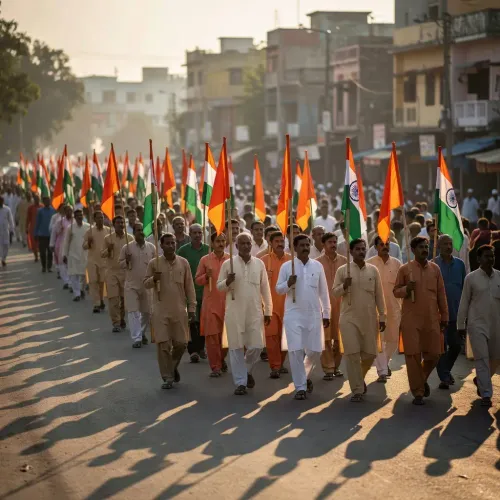
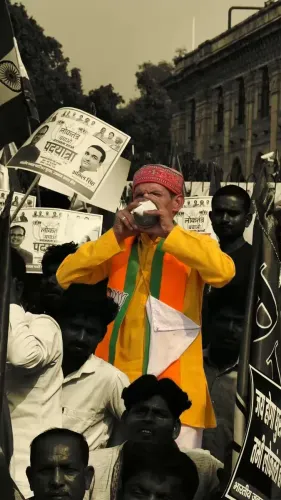
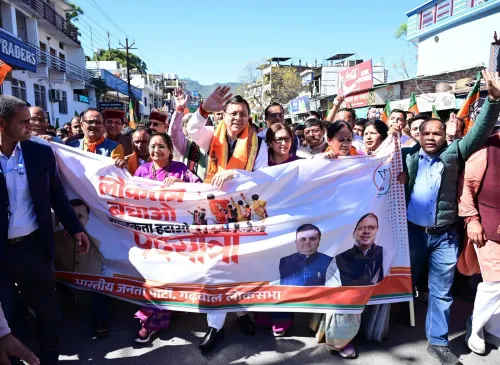
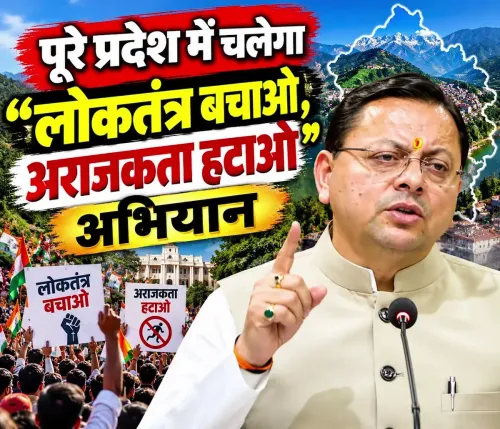
In his political home turf of Gorakhpur, Uttar Pradesh Chief Minister Yogi Adityanath stepped into the streets on Wednesday, 4 November 2026, joining a padyatra — a public foot march — themed 'Loktantra Bachao, Anarchata Hatao' ('Save Democracy, Remove Anarchy'). The march, organised by the BJP alongside NDA alliance partners, drew senior party leadership and turned Gorakhpur's streets into a stage for a pointed political offensive against the opposition.
What CM Yogi said — and who he targeted
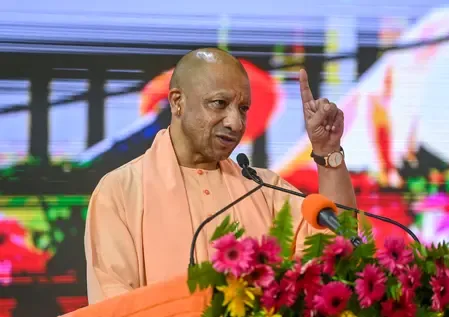
Posting on X, Adityanath framed the event in sweeping constitutional terms: 'Bharat ka loktantra jitna sashakt hoga, utna hi Bharat aatmanirbhar aur viksit hoga' — 'The stronger India's democracy, the more self-reliant and developed India will become.' He then moved to the attack, accusing the I.N.D.I.A. alliance, Congress, and the Samajwadi Party of trying to 'put the Constitution, democracy, and constitutional institutions in the dock.'
His closing demand was unambiguous: Congress, the INDIA alliance, and all their partners 'should apologise to the people of this country.' He pledged that any conspiracy to weaken the constitutional institutions on which India's democracy stands 'will not be accepted at any cost.'
Gorakhpur as a political stage
Gorakhpur is not an incidental venue. The district is Adityanath's political nerve-centre — home to the historic Gorakhnath Math, of which he is the head priest, making every public event there a convergence of spiritual and political authority. Choosing this city to launch a democracy-themed march amplifies the message well beyond a standard party rally.
The march brought together BJP national president Nitin Nabin and UP BJP state president MP Chaudhary alongside NDA allies, signalling coordinated top-down party mobilisation in eastern Uttar Pradesh.
BJP versus the INDIA bloc in UP
The I.N.D.I.A. alliance, formed in 2023 as an umbrella opposition coalition, has been a persistent electoral challenger to the BJP-led NDA. Uttar Pradesh — India's most populous state — is the single biggest prize in Indian electoral politics, and the rivalry between the BJP and the Samajwadi Party, which has alternated in power here, has historically defined state-level outcomes.
Adityanath's broadside — accusing the opposition of undermining constitutional institutions — fits a pattern the BJP has employed nationally: positioning itself as the guardian of democratic structures while framing critics as destabilising forces. Such messaging tends to intensify during electoral cycles or moments of heightened political competition.
Reactions to watch from the opposition camp
The Congress party and the Samajwadi Party have yet to formally respond to the Gorakhpur march. How the INDIA alliance responds to the demand for a public apology — and whether it escalates its own counter-narrative around constitutional rights — will determine whether this remains a one-day headline or the opening salvo of a sustained campaign in eastern UP.
One thing is certain: when a sitting Chief Minister takes to the streets in his own backyard and calls on his rivals to apologise to the nation, the political temperature has already risen several degrees.
Point of View
With maximum home-ground symbolism. The demand for an apology is a classic BJP framing device: it forces rivals either to respond and amplify the charge, or stay silent and appear to concede it. With Uttar Pradesh remaining the pivotal battleground of Indian electoral politics, this padyatra should be read as an early flag-planting exercise in what could be a prolonged campaign season. The 'constitutional institutions' framing also allows the BJP to absorb any future opposition protest into a pre-established counter-narrative of 'anarchy.'
NationPress
4 Nov 2026
Frequently Asked Questions
What is the 'Loktantra Bachao, Anarchata Hatao' padyatra?
It is a foot march organised by the BJP in Gorakhpur on 4 November 2026, themed 'Save Democracy, Remove Anarchy,' in which CM Yogi Adityanath, senior BJP leaders, and NDA allies participated to counter what the party calls opposition attempts to undermine constitutional institutions.
Why did CM Yogi Adityanath demand an apology from Congress and the INDIA alliance?
Adityanath accused Congress, the INDIA alliance, and the Samajwadi Party of conspiring to weaken India's constitutional institutions and democracy, and said these parties owe an apology to the Indian people for such actions.
What is the INDIA alliance and why is it significant in UP politics?
The I.N.D.I.A. (Indian National Developmental Inclusive Alliance) is an opposition coalition formed in 2023 to collectively challenge the BJP-led NDA. In Uttar Pradesh, the alliance includes the Samajwadi Party, which is the BJP's primary state-level rival.
Why was Gorakhpur chosen for this BJP march?
Gorakhpur is CM Yogi Adityanath's political base and the seat of the Gorakhnath Math, of which he is the head priest. Hosting the event there carries both political weight and symbolic resonance.
What could be the political impact of the Gorakhpur padyatra?
The march signals a BJP push to consolidate support in eastern Uttar Pradesh by framing the opposition as a threat to democracy. How Congress and the Samajwadi Party respond to the apology demand will shape the next phase of political contest in the state.