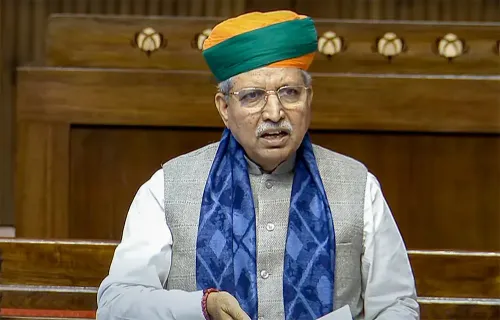
CM Rekha Gupta Hails ₹3,788 Cr Cabinet Nod for Fast-Track Courts

Synopsis
Delhi CM Rekha Gupta welcomed the Union Cabinet's decision to extend Fast Track Special Courts — including POCSO courts — for five years with ₹3,788.04 crore, calling it a vital step toward timely justice for women and children.
Key Takeaways
The Union Cabinet approved ₹3,788.04 crore to continue Fast Track Special Courts , including POCSO special courts , for the next five years .
The scheme was first launched in 2019 with 1,023 fast-track courts sanctioned across India.
POCSO courts handle cases under the Protection of Children from Sexual Offences Act, 2012 , India's core law on child sexual abuse.
Delhi CM Rekha Gupta praised the decision as essential for delivering timely justice to women, daughters, and child survivors.
Key accountability metrics going forward include quarterly case-disposal rates and utilisation certificates from the sanctioned courts.
Justice delayed is justice denied — and India's Union Cabinet has just moved to close that gap. Delhi Chief Minister Rekha Gupta on Wednesday, 4 November 2026 welcomed the central government's decision to extend the Fast Track Special Courts scheme, including dedicated POCSO courts, for another five years with a funding outlay of ₹3,788.04 crore.
What the ₹3,788 crore cabinet decision covers
The Union Cabinet, under Prime Minister Narendra Modi, approved the continuation of the Fast Track Special Courts scheme — a network of dedicated trial courts designed to deliver speedy verdicts in cases of sexual offences against women and children. Crucially, the sanction covers POCSO special courts, which handle cases filed under the Protection of Children from Sexual Offences Act, 2012 — the principal legal shield for child survivors of abuse in India.
CM Gupta, posting in Hindi, called the approval 'atyant sarahniya nirnay' (an extremely commendable decision) and said its core purpose is to give daughters, sisters, and children 'timely justice, protect their dignity, and strengthen public faith in the justice system.'
From 2019 pilot to a five-year institutional commitment
This approval is an extension, not a fresh experiment. The scheme was first cleared by the Cabinet in 2019, when 1,023 Fast Track Special Courts — including POCSO courts — were sanctioned for an initial period. That pilot demonstrated enough momentum for successive renewals, and the latest allocation locks in funding through the next half-decade, signalling that the courts are being treated as permanent judicial infrastructure rather than a temporary patch.
The scale of the problem these courts address is vast. India carries a significant backlog of sexual offence cases, and ordinary sessions courts — handling murder, robbery, and civil disputes alongside assault — have historically struggled to prioritise them. Fast-track courts exist precisely to strip that backlog down and ensure a survivor does not wait years for a verdict.
What accountability looks like from here
The real test of the ₹3,788 crore will be in the numbers that follow: disposal rates, conviction percentages, and time-to-verdict statistics from each sanctioned court. Utilisation certificates and quarterly disposal data from the scheme's courts will be the clearest indicator of whether the investment translates into the timely justice CM Gupta described. Five years is a long runway — but it is also five years of accountability data.
As Gupta put it, the spirit of the decision is that 'every daughter moves forward with confidence, every child's future is secure, and every victim's family gets the support of timely justice.' The budget is now committed. Delivery is next.
Point of View
The approval doubles as political messaging ahead of potential electoral cycles — framing the party as a guarantor of women's and children's safety at the institutional level. The real policy question is whether fresh funding resolves the two persistent bottlenecks — judicial vacancies and police-investigation quality — that drive low conviction rates even where fast-track infrastructure exists. If disposal statistics improve meaningfully over this cycle, the model could become a template for other categories of serious crime.
NationPress
4 Nov 2026
Frequently Asked Questions
What are Fast Track Special Courts in India?
Fast Track Special Courts are dedicated trial courts set up to ensure speedy disposal of cases involving sexual offences against women and children, including cases under the POCSO Act, reducing the burden on regular sessions courts.
How much money has the cabinet approved for fast-track courts?
The Union Cabinet approved ₹3,788.04 crore to continue the Fast Track Special Courts scheme, including POCSO courts, for a period of five years.
What is the POCSO Act and why do special courts handle it?
The Protection of Children from Sexual Offences Act, 2012 is India's primary law addressing sexual abuse of children. Special POCSO courts are designated to handle these sensitive cases exclusively, ensuring faster trials and child-friendly procedures.
When were Fast Track Special Courts first set up in India?
The Union Cabinet first approved the Fast Track Special Courts scheme in 2019 , sanctioning 1,023 such courts including POCSO courts for an initial period.
Why did Delhi CM Rekha Gupta comment on the cabinet decision?
As Delhi Chief Minister and BJP leader , Rekha Gupta welcomed the cabinet's decision on her official social media account, calling it an important step toward delivering timely justice and protecting the dignity of women and children.