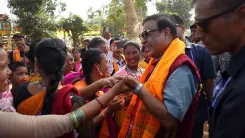
CM Bhupendra Patel Hails Cabinet's Fast-Track Court Extension

Synopsis
The Union Cabinet has extended India's Fast Track Special Courts scheme to 2031, expanding from 779 to 850 courts including exclusive POCSO benches. Gujarat CM Bhupendra Patel credited PM Modi and the Cabinet, calling swift justice the strongest shield for women and children.
Key Takeaways
The Union Cabinet extended the Centrally Sponsored Scheme for Fast Track Special Courts, including exclusive POCSO courts, up to 31 March 2031 .
The scheme will scale up from 779 to 850 Fast Track Special Courts across India.
Exclusive POCSO courts for child sexual abuse cases are included in the expanded network.
The scheme was originally launched in 2019 to address judicial delays in rape and POCSO matters.
Gujarat CM Bhupendra Patel publicly welcomed the decision, framing swift justice as the primary deterrent against crimes against women and children.
State-level utilisation and case disposal rates will be the key metrics to watch in the next annual review.
Justice delayed is a wound that never heals — and India just moved to close that wound faster. Gujarat Chief Minister Bhupendra Patel on Wednesday, 4 November 2026 welcomed the Union Cabinet's decision to extend the Centrally Sponsored Scheme for Fast Track Special Courts, including exclusive POCSO courts, by five years up to 31 March 2031, praising Prime Minister Narendra Modi and the Cabinet for a decision he called the strongest shield for the country's daughters and children.
779 Courts Become 850 — The Scale-Up Explained
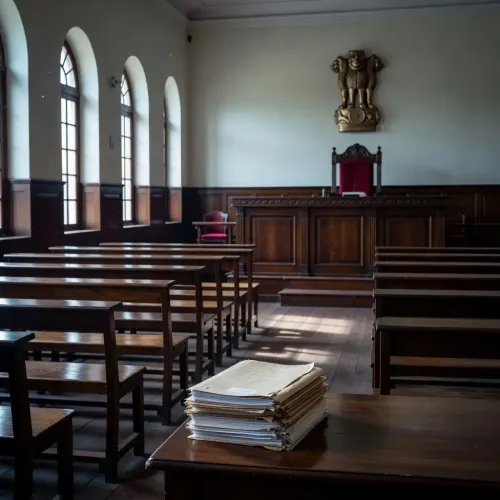
The Cabinet decision does more than renew a time-limit on existing infrastructure — it expands it. The current network of 779 Fast Track Special Courts (FTSCs) will be scaled up to 850 courts, all operational under the centrally sponsored framework. Dedicated exclusive POCSO courts form a critical sub-set of this expanded bench, designed to handle child sexual abuse cases under the Protection of Children from Sexual Offences (POCSO) Act with time-bound hearings, shielding young survivors from the trauma of prolonged legal proceedings.
CM Patel, posting in Hindi, framed the expansion in unambiguous terms: 'त्वरित न्याय ही हमारी बेटियों और बच्चों की सबसे सशक्त ढाल है' — 'Swift justice is the strongest shield for our daughters and children.' The message signals the BJP's intent to link judicial speed directly to deterrence: quicker verdicts, the argument goes, send a harder message to perpetrators.
A Scheme Born in 2019, Tested by Backlog
The FTSC scheme was first approved by the Union Cabinet in 2019, in the charged aftermath of high-profile rape cases that had convulsed public opinion and exposed the gap between laws on paper and justice in practice. The mandate was precise: create dedicated courts that would not drown in the general caseload of district judiciaries, but instead focus exclusively on rape and child sexual abuse trials, moving them from filing to verdict at speed.
Successive extensions have kept the architecture alive, but the numbers have always told a harder story — India's courts carry one of the world's largest case pendency burdens, and sensitive offences involving women and children can still drag on for years without dedicated infrastructure. The jump from 779 to 850 courts is a direct response to that gap.
What the Expansion Means for Gujarat and Beyond
For Gujarat, whose Chief Minister is among the most prominent BJP state leaders to publicly endorse the Cabinet call, the expansion translates to strengthened judicial capacity at the state level. FTSCs operate through a cost-sharing model between the Centre and the states, meaning the Cabinet's renewed commitment also backstops state budgets that might otherwise deprioritise dedicated trial infrastructure.
Nationally, the signal is clear: protection of women and children remains a headline political and administrative priority heading deeper into the decade. Analysts watching state-level POCSO case disposal rates will now look to annual utilisation reports from each jurisdiction to measure whether the expanded bench actually accelerates verdicts — or whether pendency simply migrates into the new courts.
The government has committed. The courts will be built. The harder test, as always, is speed of justice once the gavel falls.
Point of View
The Modi government insulates the scheme from budget-cycle uncertainty while giving state governments a cost-sharing safety net. For CM Patel, amplifying the announcement reinforces Gujarat's alignment with the Centre on governance optics ahead of the next electoral cycle. The real policy test, however, is whether expanded bench count translates to measurably faster verdicts — a question that disposal-rate data, not declarations, will ultimately answer.
NationPress
4 Nov 2026
Frequently Asked Questions
What is the Fast Track Special Court (FTSC) scheme in India?
The Fast Track Special Courts scheme is a centrally sponsored programme launched in 2019 to set up dedicated courts for time-bound trials in rape and child sexual abuse cases under the POCSO Act, reducing case pendency in India's regular judiciary.
How many Fast Track Special Courts will operate after the Cabinet's 2026 decision?
The Union Cabinet's decision expands the network from 779 to 850 Fast Track Special Courts, including exclusive POCSO courts, all operational under the centrally sponsored framework.
Until when has the FTSC scheme been extended?
The scheme has been extended for five years, up to 31 March 2031.
What are exclusive POCSO courts?
Exclusive POCSO courts are dedicated benches that handle only cases under the Protection of Children from Sexual Offences Act, ensuring child sexual abuse cases are tried separately and more swiftly than in overloaded regular courts.
Why did Gujarat CM Bhupendra Patel comment on this Cabinet decision?
As a Chief Minister and senior BJP leader, Bhupendra Patel publicly welcomed the Cabinet's decision to highlight the government's commitment to women's and children's safety, and because state governments are co-implementers of the FTSC scheme through a cost-sharing model with the Centre.