CM Dhami: Over 63 Lakh Pilgrims Complete Char Dham Yatra in 2026
Synopsis
Uttarakhand CM Pushkar Singh Dhami announced that over 63 lakh pilgrims have visited the four Char Dham shrines in 2026, attributing the record to infrastructure investments and coordinated BJP governance at the state and central level.
Key Takeaways
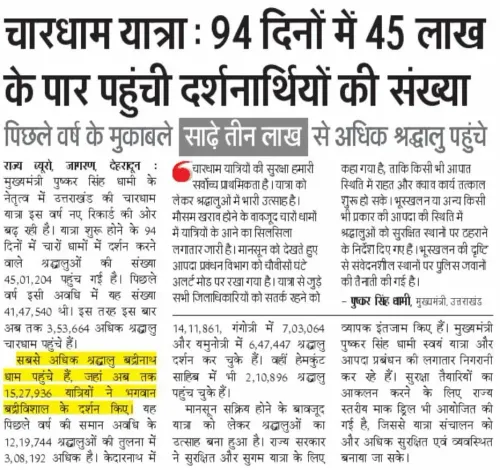
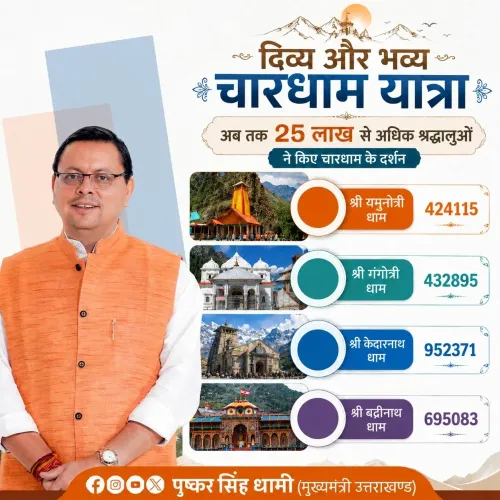
More than 63 lakh devotees have visited the Char Dham circuit — Kedarnath, Badrinath, Gangotri and Yamunotri — in 2026 so far.
CM Pushkar Singh Dhami credited the milestone to the 'double engine government' of the BJP at the state and central levels.
The Char Dham All Weather Road project , approved in 2016 , has improved connectivity and pilgrim-handling capacity across the circuit.
Uttarakhand is officially known as Devbhoomi — 'land of the gods' — reflecting its concentration of major Hindu pilgrimage sites.
Religious tourism remains central to Uttarakhand's economic and cultural identity, making yatra footfall a key state performance metric.
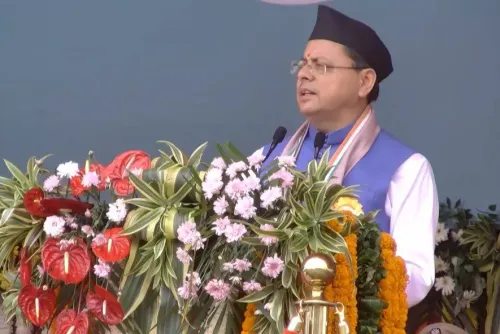
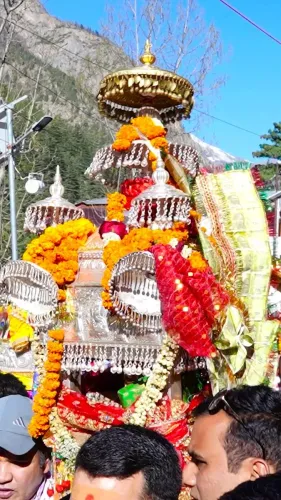
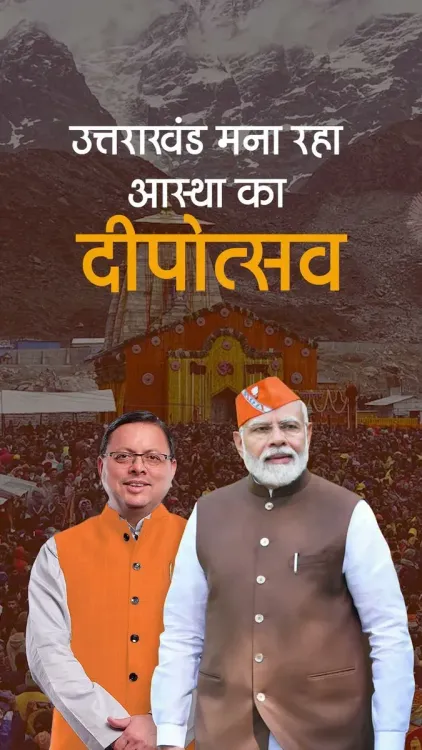
A historic pilgrimage season is unfolding in the Himalayas. Uttarakhand Chief Minister Pushkar Singh Dhami announced on Wednesday, 4 November 2026, that more than 63 lakh devotees have visited the four sacred shrines of Char Dham — including Kedarnath and Badrinath — so far this year, calling the turnout a testament to Uttarakhand's unbreakable spiritual identity.
Posting in Hindi on X, CM Dhami credited the milestone to what he described as the 'suuniyojit vyavastha' — suuniyojit vyavastha (well-planned administration) — of the 'double engine government' under Prime Minister Narendra Modi and his own state administration. 'This historic participation of devotees is proof of Devbhoomi's unbreakable spiritual faith and rich religious heritage,' he wrote, adding that Uttarakhand's spiritual identity is 'continuously touching new heights.'
What 63 Lakh Footfalls Mean for Devbhoomi
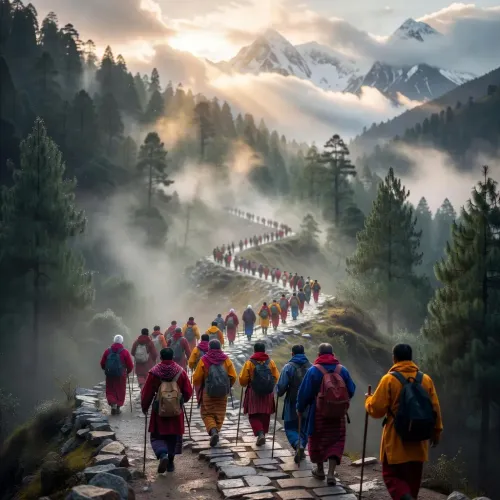
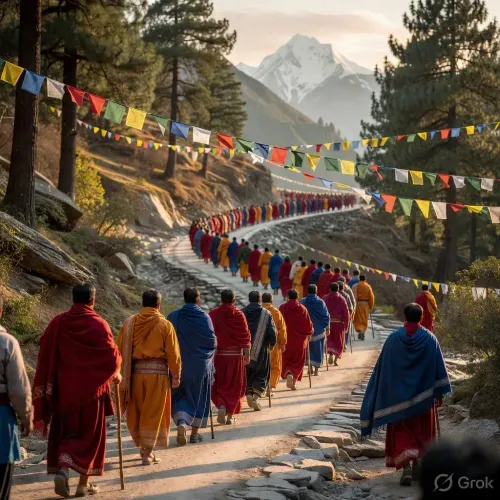
The Char Dham circuit — comprising Kedarnath, Badrinath, Gangotri and Yamunotri — sits among the most demanding pilgrimage routes in India, threading through Himalayan terrain that closes under snow for nearly half the year. Each yatra season, therefore, is a compressed sprint. A tally crossing 63 lakh before the season's official close underlines both surging devotee demand and the logistical muscle the state has had to build to absorb it. The infrastructure story runs back to 2016, when the central government approved the Char Dham All Weather Road project — a network of highway upgrades designed to give pilgrims and emergency services year-round, weather-resilient access to all four shrines. Smoother roads mean safer journeys, reduced travel times, and critically, the ability to handle larger daily volumes without chokepoints turning fatal.The 'Double Engine' Political Frame
Dhami's framing is deliberate. The 'double engine government' phrase — referring to BJP ruling both the state and the Centre simultaneously — has become a consistent branding tool, positioning coordinated federal-state governance as the engine behind visible delivery. Record yatra numbers become, in this reading, a performance indicator for that partnership: central funds for roads, state machinery for crowd management, and the collective dividend measured in pilgrims served. Uttarakhand officially carries the name Devbhoomi — 'land of the gods' — a designation rooted in its extraordinary concentration of Hindu sacred geography. For a state where religious tourism is both identity and economy, a record season is not merely symbolic. It is the most consequential number on the state's annual report card. With the 2026 yatra season drawing to a close as winter approaches and high-altitude passes begin to shut, the question for 2027 is whether infrastructure capacity — roads, helipads, rest facilities — can keep pace with devotion that shows no sign of levelling off.Point of View
Dhami connects day-to-day state governance to PM Modi's national brand — a pattern seen consistently in BJP-ruled Himalayan and Hindi-belt states ahead of electoral cycles. The Char Dham All Weather Road, a central-scheme investment, allows the state to convert federal spending into local political capital. Watch whether the 2027 season becomes a benchmark that opposition parties contest or infrastructure bottlenecks complicate.
NationPress
4 Nov 2026
Frequently Asked Questions
How many pilgrims visited Char Dham in 2026?
According to CM Pushkar Singh Dhami, more than 63 lakh (6.3 million) devotees visited the four Char Dham shrines — Kedarnath, Badrinath, Gangotri and Yamunotri — during the 2026 yatra season .
What is Char Dham Yatra?
Char Dham Yatra refers to the annual Hindu pilgrimage to four sacred Himalayan shrines in Uttarakhand: Kedarnath, Badrinath, Gangotri and Yamunotri . The circuit typically opens in April-May and closes before winter snowfall.
What is the Char Dham All Weather Road project?
The Char Dham All Weather Road project was approved by the central government in 2016 to build and upgrade highways providing year-round connectivity to all four Char Dham pilgrimage sites, improving safety and pilgrim capacity.
What does 'double engine government' mean in Uttarakhand?
'Double engine government' is a phrase used by BJP leaders to describe the advantage of the same party — BJP — governing both Uttarakhand state and the central government , enabling coordinated policy and faster infrastructure delivery.
Why is Uttarakhand called Devbhoomi?
Uttarakhand is called Devbhoomi , meaning 'land of the gods,' because of its exceptional concentration of Hindu sacred sites, temples and pilgrimage routes, including the entire Char Dham circuit .