CM Dhami: 25 Lakh Pilgrims Complete Char Dham Yatra 2026
Synopsis
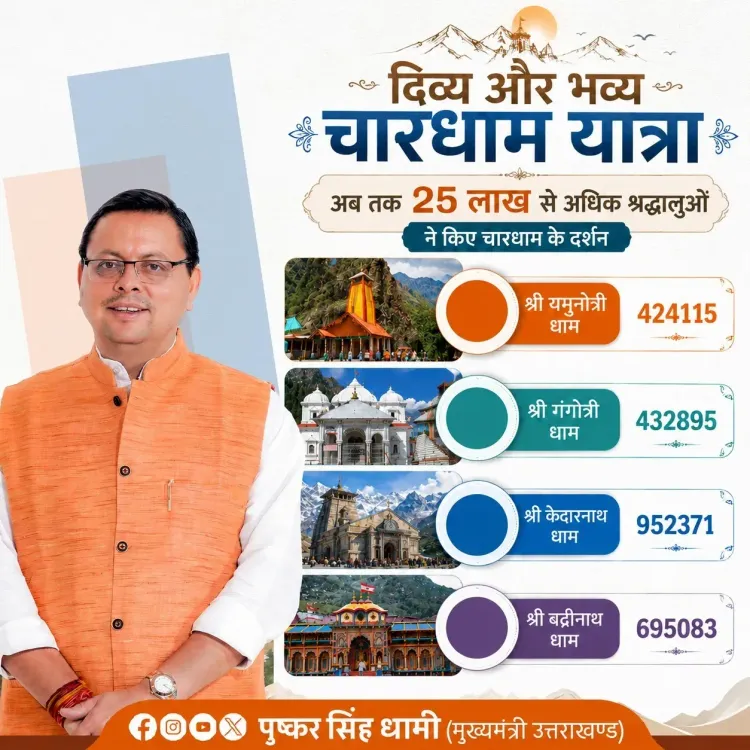
Uttarakhand Chief Minister Pushkar Singh Dhami announced on 29 May 2026 that nearly 25 lakh pilgrims have completed the Char Dham Yatra this season, attributing the milestone to his government's infrastructure investments and safety upgrades at the four Himalayan shrines.
Key Takeaways
Nearly 25 lakh pilgrims have completed the Char Dham Yatra 2026 as of 29 May 2026 , according to CM Dhami.
CM Pushkar Singh Dhami credited his government's 'complete dedication and commitment' for the record pilgrim numbers.
The Char Dham All Weather Road Project , approved in 2016 , spans over 800 km and is central to improving pilgrim access to the four shrines.
Mandatory online registration and enhanced disaster preparedness were introduced after the 2013 Kedarnath floods that killed thousands.
Religious tourism is a primary economic driver for Uttarakhand , with local businesses in districts like Rudraprayag and Chamoli directly dependent on yatra footfall.
Record pilgrim counts are a recurring metric used by the state government to demonstrate infrastructure and governance outcomes.
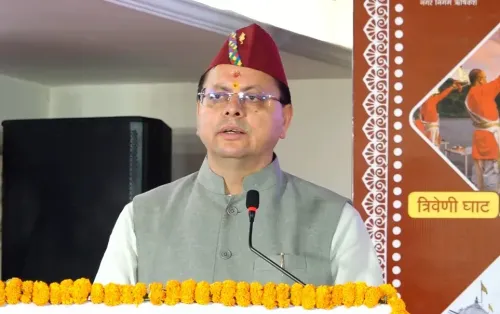
Uttarakhand Chief Minister Pushkar Singh Dhami on Friday, 29 May 2026, announced that nearly 25 lakh pilgrims have already completed the Char Dham Yatra this season, crediting his government's sustained efforts to make the pilgrimage grander, safer, and more accessible.
In a post on X, CM Dhami wrote: 'प्रदेश में चारधाम यात्रा को अधिक भव्य, दिव्य, सुरक्षित एवं सुगम बनाने के लिए हमारी सरकार पूर्ण समर्पण और प्रतिबद्धता के साथ कार्य कर रही है' ('Our government is working with complete dedication and commitment to make the Char Dham Yatra in the state more grand, divine, safe and convenient'). He added that as a result of these efforts, the yatra is 'continuously setting new records.'
Context
The Char Dham Yatra is an annual Hindu pilgrimage to four sacred shrines — Badrinath, Kedarnath, Gangotri, and Yamunotri — nestled in the Uttarakhand Himalayas. The yatra typically opens in late April or early May and draws millions of devotees from across India and abroad each season. Pilgrim footfall has become a key performance indicator for the state government, with record numbers cited season after season.
Policy Backdrop
The Char Dham All Weather Road Project, approved by the Union Cabinet in 2016, aims to provide reliable, year-round road connectivity across more than 800 km of Himalayan terrain linking the four shrines. The project has been central to reducing travel time and improving safety for pilgrims who previously faced severe disruptions during monsoon and winter months.
Following the catastrophic 2013 Kedarnath floods, which killed thousands of pilgrims and residents, Uttarakhand introduced mandatory online registration for the yatra and significantly upgraded disaster-response infrastructure. These measures have since been refined and expanded under successive administrations, with the current BJP government framing them as part of a broader religious-tourism development agenda.
Stakeholders and Impact
The surge in pilgrim numbers carries direct economic weight for Uttarakhand, a Himalayan state whose economy is heavily dependent on religious tourism. Local hoteliers, transport operators, priests, and small traders along the yatra corridors in districts such as Rudraprayag, Chamoli, Uttarkashi, and Tehri Garhwal benefit directly from higher footfall.
At the same time, record numbers place pressure on infrastructure, crowd management, and environmental sustainability in ecologically sensitive high-altitude zones. Authorities deploy additional personnel and operate helicopter services to manage pilgrim flow, particularly at Kedarnath, which remains accessible only on foot or by air.
What's Next
With the yatra season still underway, the state government is expected to continue monitoring daily pilgrim counts and adjusting crowd-management protocols as weather conditions evolve through the pre-monsoon period. Progress on the remaining stretches of the Char Dham Highway and any new regulations governing helicopter services and online registration quotas will be closely watched by pilgrims and tourism stakeholders alike. Whether the final tally for 2026 surpasses previous season records will serve as the headline metric for the government's infrastructure and governance pitch ahead of future electoral cycles.
Point of View
A state where religious tourism and Hindu pilgrimage infrastructure are deeply intertwined with political identity. The post fits a well-established pattern of state leadership converting yatra statistics into governance optics, particularly ahead of electoral cycles. However, the same record footfall that generates political capital also intensifies scrutiny around crowd management, ecological stress, and the pace of highway completion — areas where the government's delivery record remains uneven. The broader signal is that pilgrimage infrastructure has become a durable plank of BJP's developmental narrative in Himalayan states, one that simultaneously appeals to devout voters and positions the party as a moderniser of ancient religious traditions.
NationPress
17 Oct 2026
Frequently Asked Questions
How many pilgrims have completed Char Dham Yatra 2026 so far?
According to Uttarakhand Chief Minister Pushkar Singh Dhami, nearly 25 lakh pilgrims have completed the Char Dham Yatra as of 29 May 2026.
What is the Char Dham Yatra?
The Char Dham Yatra is an annual Hindu pilgrimage to four sacred shrines — Badrinath, Kedarnath, Gangotri, and Yamunotri — located in the Uttarakhand Himalayas. It typically opens in late April or early May each year.
What has the Uttarakhand government done to improve Char Dham Yatra safety?
The state government introduced mandatory online registration and strengthened disaster-response infrastructure following the 2013 Kedarnath floods. The Central government's Char Dham All Weather Road Project, approved in 2016, is also improving year-round connectivity to the shrines.
What is the Char Dham All Weather Road Project?
It is a Central government initiative approved in 2016 to build reliable, all-weather road connectivity spanning over 800 km to the four Char Dham shrines in Uttarakhand, reducing travel disruptions caused by landslides and harsh weather.
Why is Char Dham Yatra important for Uttarakhand's economy?
Uttarakhand's economy is heavily dependent on religious tourism. Millions of pilgrims each season support livelihoods of hoteliers, transport operators, local traders, and priests across districts including Rudraprayag, Chamoli, Uttarkashi, and Tehri Garhwal.