CM Dhami Pledges Safe, Divine Char Dham Yatra Experience
Synopsis
Uttarakhand Chief Minister Pushkar Singh Dhami has reiterated his government's commitment to a 'divine and grand' Char Dham Yatra, promising pilgrims a safe, well-organised and facility-equipped journey to Badrinath, Kedarnath, Gangotri and Yamunotri amid the ongoing 2026 yatra season.
Key Takeaways
CM Pushkar Singh Dhami pledged a 'divine and grand' Char Dham Yatra experience on 3 June 2026.
State government promised pilgrims a safe, well-organised and facility-rich journey.
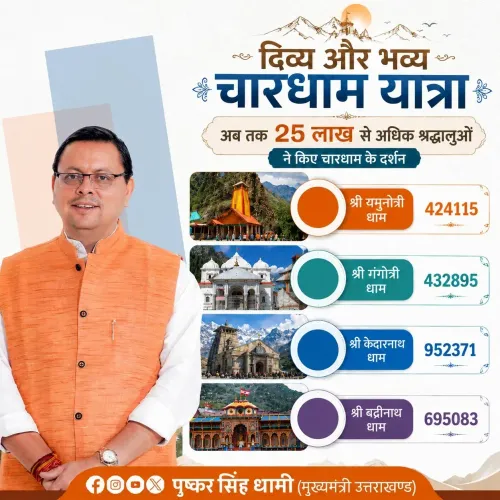
Yatra covers four shrines: Badrinath, Kedarnath, Gangotri and Yamunotri.
Pledge aligns with the Char Dham all-weather road project approved in 2016, spanning around 900 km.
Safety focus follows lessons from the 2013 Kedarnath floods.
Religious tourism is a critical livelihood driver in Rudraprayag, Chamoli and Uttarkashi districts.
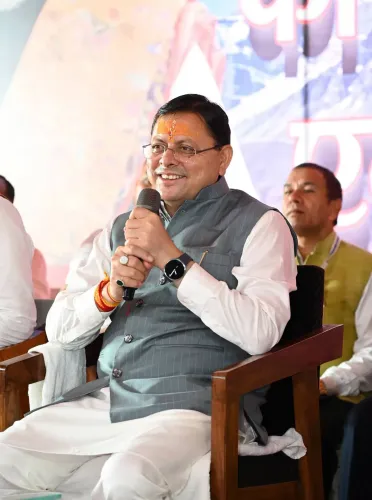
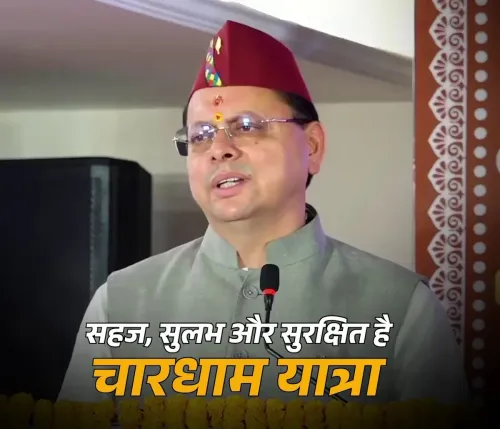
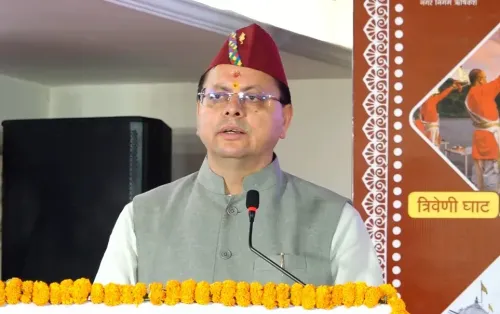
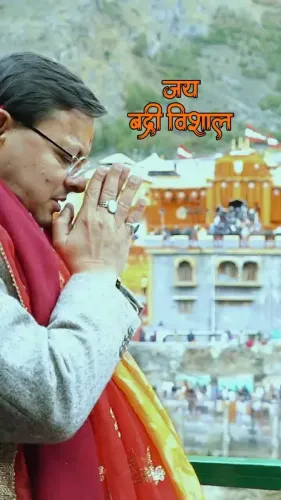
Uttarakhand Chief Minister Pushkar Singh Dhami on Wednesday, 3 June 2026, reaffirmed his government's commitment to delivering a 'divine and grand' Char Dham Yatra, pledging a safe, well-organised and facility-rich pilgrimage experience for devotees. The message, posted on X alongside a video, comes in the middle of the ongoing yatra season to the four high-altitude Himalayan shrines.
In his post, the Chief Minister wrote in Hindi 'दिव्य एवं भव्य चारधाम यात्रा के संकल्प के साथ प्रदेश सरकार श्रद्धालुओं को सुरक्षित, सुव्यवस्थित और सुविधायुक्त यात्रा अनुभव प्रदान करने के लिए प्रतिबद्ध है' — translated, the state government is committed to providing pilgrims a 'safe, well-organised and facility-equipped' journey, in keeping with the resolve of a 'divine and grand' Char Dham Yatra.
Context
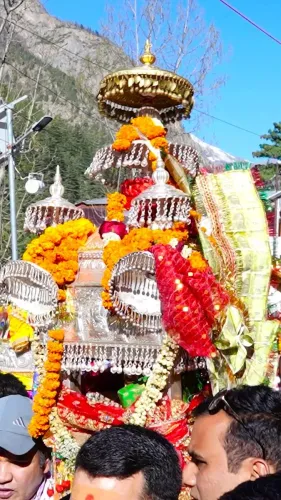
The Char Dham Yatra is the annual Hindu pilgrimage circuit to Badrinath, Kedarnath, Gangotri and Yamunotri, located deep in the Garhwal Himalayas. It draws lakhs of devotees each summer between the opening of the shrine portals in late April and their closure ahead of winter.
Managing the surge of pilgrims along narrow mountain roads, at altitudes above 3,000 metres in places, is one of the most complex logistical exercises any Indian state government undertakes each year. The Chief Minister's emphasis on safety and organisation reflects the political and administrative weight the yatra carries in Uttarakhand.
Policy backdrop
The pledge sits within a longer arc of infrastructure investment. The Char Dham all-weather road project, approved in 2016, aims to upgrade roughly 900 km of highway connecting the four shrines, with the stated goal of reliable connectivity and improved pilgrim safety.
Successive state administrations have layered religious-tourism upgrades — road widening, ropeways, medical posts and crowd-management systems — on top of national programmes such as Swadesh Darshan and PM Gati Shakti. The safety focus sharpened after the 2013 Kedarnath floods, which exposed the vulnerabilities of high-altitude pilgrimage routes to extreme weather events.
Stakeholders and impact
Pilgrims are the most direct stakeholders, with families travelling from across India and the diaspora often pooling savings for the journey. For many, the yatra is a once-in-a-lifetime undertaking, making service quality and emergency response critical.
The state's tourism economy is the other major stakeholder. Hoteliers, transport operators, pony and palanquin workers, dhaba owners and local guides along the yatra corridor depend heavily on a smooth season. Disruptions — whether from landslides, weather or crowd incidents — ripple quickly through livelihoods in Rudraprayag, Chamoli and Uttarkashi districts.
The Chief Minister's framing of a 'divya evam bhavya' yatra also dovetails with the BJP's broader narrative of upgrading Hindu pilgrimage circuits, visible in projects ranging from the Kashi Vishwanath corridor in Varanasi to the Mahakal Lok in Ujjain.
What's next
Attention now turns to the operational rollout: progress on remaining stretches of the all-weather road, the status of heli-services to Kedarnath, the deployment of medical camps and oxygen points along the route, and registration and crowd-flow systems at the shrines.
With the peak yatra months running through the summer and resuming after the monsoon, the government's ability to translate the Chief Minister's pledge into visible service standards on the ground will shape both pilgrim experience and the political optics of Uttarakhand's flagship religious-tourism season.
Point of View
Branded pilgrimage experience. The 'divya evam bhavya' vocabulary mirrors the BJP's pan-India template for upgrading Hindu shrine circuits, from Varanasi to Ujjain. With the 2013 Kedarnath disaster still shaping public memory, every yatra season is effectively a stress test of state capacity. The political payoff lies not in pledges but in incident-free months, visible medical and road infrastructure, and a smooth crowd-flow architecture at the shrines.
NationPress
20 Oct 2026
Frequently Asked Questions
What did CM Pushkar Singh Dhami say about the Char Dham Yatra?
He reaffirmed that the Uttarakhand government is committed to providing pilgrims a safe, well-organised and facility-equipped Char Dham Yatra, in line with the resolve of a 'divine and grand' pilgrimage.
Which shrines are covered in the Char Dham Yatra?
The Char Dham Yatra covers four Himalayan shrines in Uttarakhand: Badrinath, Kedarnath, Gangotri and Yamunotri.
What is the Char Dham all-weather road project?
It is an infrastructure initiative approved in 2016 to upgrade roughly 900 km of highway connecting the four Char Dham shrines, aimed at reliable connectivity and improved pilgrim safety.
Why is pilgrim safety a major focus for Uttarakhand?
The Char Dham routes pass through high-altitude, landslide-prone Himalayan terrain. The 2013 Kedarnath floods, which caused heavy casualties, sharpened the focus on disaster preparedness and safety infrastructure for the yatra.
When does the Char Dham Yatra season run?
The yatra typically begins in late April or early May when shrine portals open and continues till the portals close ahead of winter, with a peak window through the summer months.