Rajasthan CM Bhajanlal: 3.7 Lakh Youth Get Skill Training
Synopsis
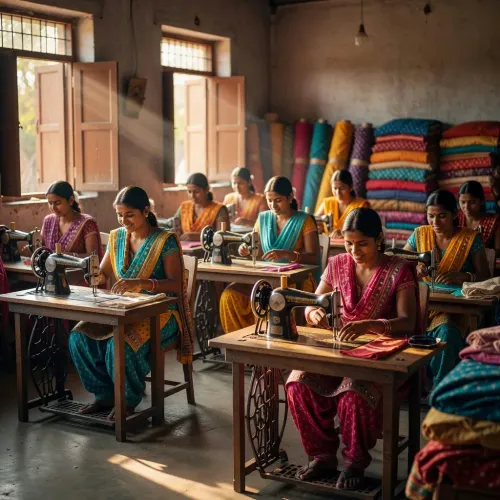
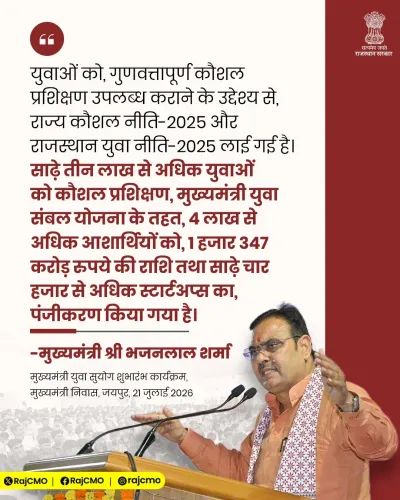
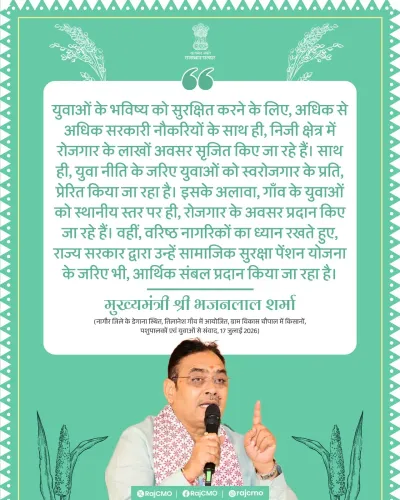
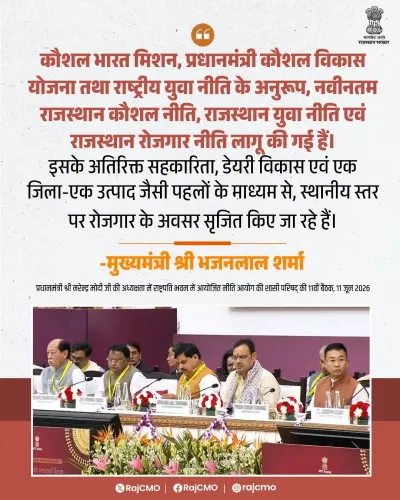
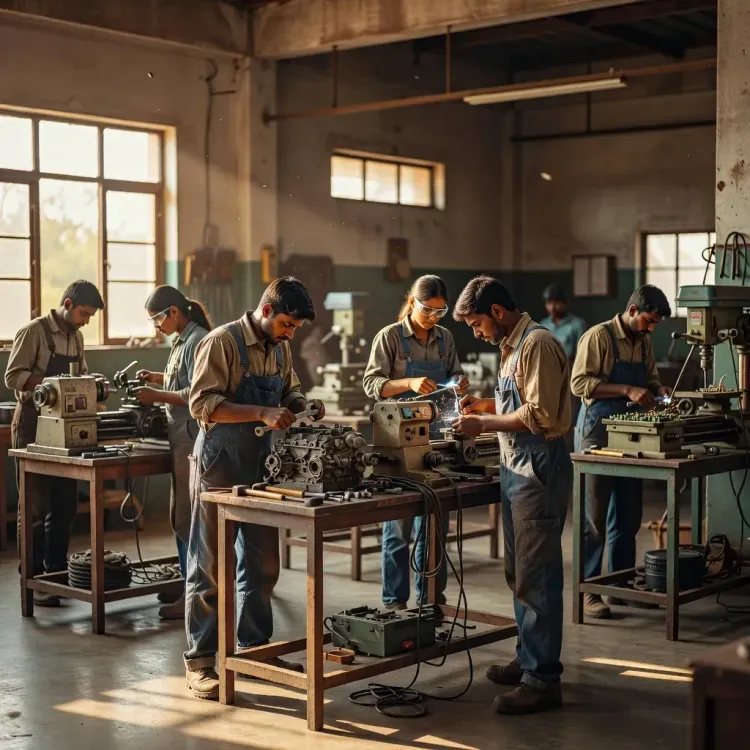
The Chief Minister's Office of Rajasthan announced on October 20, 2026, that 3 lakh 70 thousand youth have received skill training under the Bhajanlal Sharma government, marking a cumulative milestone under the state's ongoing vocational push aligned with the national Skill India Mission.
Key Takeaways
The Chief Minister's Office of Rajasthan announced on October 20, 2026 that 3 lakh 70 thousand youth have received skill training so far.
The post was directed at CM Bhajanlal Sharma and carries the hashtag #आपणो_अग्रणी_राजस्थान ('Our Leading Rajasthan'), a branding marker used consistently by the government.
Bhajanlal Sharma has been Chief Minister of Rajasthan since December 2023 , with skill development among his government's early policy priorities.
The announcement aligns with the national Skill India Mission , launched in 2015 , under which states track and report vocational training delivery.
Placement and certification data — the sharper measure of programme success — have not yet been released alongside this figure.
Rajasthan is putting a headline number on its youth employment push: the Chief Minister's Office of Rajasthan announced on Tuesday, October 20, 2026, that 3 lakh 70 thousand young people have so far received skill training under the state's ongoing programme — a milestone the government is framing as proof that आपणो अग्रणी राजस्थान ('Our Leading Rajasthan') is more than a slogan.
The post, addressed directly to Chief Minister Bhajanlal Sharma via his X handle @BhajanlalBjp, signals that the state is tracking cumulative delivery numbers and is confident enough to broadcast them publicly — a practice that typically precedes a larger policy announcement or a budget-cycle review.
Bhajanlal Sharma's Skill Push Since December 2023
Bhajanlal Sharma took charge as Chief Minister of Rajasthan in December 2023, inheriting a state with one of India's younger demographic profiles and a persistent challenge around youth unemployment. Skill training has been a visible plank of his government's early agenda, aligning state delivery with the national Skill India Mission launched in 2015 to improve vocational training and employability at scale.
The cumulative figure of 3.70 lakh trainees represents every young person the state counts as having completed or enrolled in a recognised skill programme since the government began tracking under its current framework. Whether those numbers include certification rates or placement outcomes — the sharper test of whether training translates into jobs — has not been specified in this announcement.
Why the Cumulative Count Matters — and What It Doesn't Yet Tell Us
State governments across India routinely publish cumulative skill-training figures to demonstrate momentum to voters, investors, and the central government. The number is a leading indicator, not a lagging one: it tells you how many people walked into a programme, not how many walked out into a job. The real accountability test arrives when Rajasthan releases placement data or revised annual training targets — details the government has not yet put on the table.
Still, 3.70 lakh is a substantial cohort in absolute terms. If even a fraction of those trainees convert training into employment, the downstream effect on household incomes and local economies across a state of roughly 80 million people is meaningful. The hashtag #आपणो_अग्रणी_राजस्थान — deployed consistently in Bhajanlal government communications — suggests this figure is being positioned as a brand-defining achievement, not a routine data drop.
The next logical pressure point: does Rajasthan publish the placement and certification disaggregation before the next state budget cycle? That number will determine whether 3.70 lakh trained becomes a genuine legacy line — or a figure that demands a follow-up question.
Point of View
Suggesting the government is building an early-term narrative around youth development ahead of budget and election cycles. The real policy test will come when Rajasthan disaggregates training numbers into placement and income-gain data — metrics that separate genuine workforce transformation from headline management. Until that granular picture emerges, the figure is best read as a political signal of intent rather than a confirmed developmental outcome.
NationPress
20 Oct 2026
Frequently Asked Questions
How many youth have received skill training in Rajasthan in 2026?
The Chief Minister's Office of Rajasthan announced on October 20, 2026, that 3 lakh 70 thousand (3.70 lakh) youth have received skill training so far under the state government's ongoing programme.
Who is the Chief Minister of Rajasthan in 2026?
Bhajanlal Sharma of the BJP is the Chief Minister of Rajasthan, having assumed office in December 2023 .
What is the Skill India Mission and how is Rajasthan connected to it?
The Skill India Mission was launched by the central government in 2015 to provide vocational training and improve youth employability nationwide. State governments including Rajasthan deliver training programmes aligned with this mission and periodically report cumulative figures to track progress.
What does 'Aapno Agrani Rajasthan' mean?
Aapno Agrani Rajasthan translates from Rajasthani as 'Our Leading Rajasthan' — a branding hashtag used by the Bhajanlal Sharma government in official communications to promote the state's development narrative.
Has Rajasthan released placement data for trained youth?
As of October 20, 2026, the government's announcement covers the cumulative number of trainees — 3.70 lakh — but has not yet released disaggregated placement or certification data that would show how many of those trained secured employment.