CM Dhami: Over 40 Lakh Pilgrims Complete Char Dham Yatra
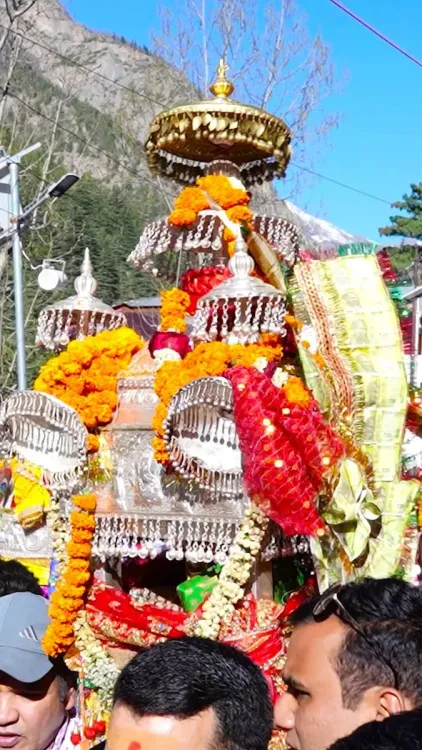
Synopsis
Uttarakhand Chief Minister Pushkar Singh Dhami announced that over 40 lakh pilgrims have completed the Char Dham Yatra this season, citing effective state management, and appealed to devotees to maintain cleanliness, discipline and adherence to administrative guidelines.
Key Takeaways
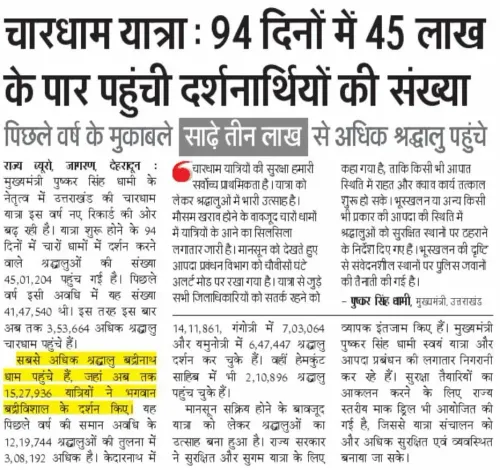
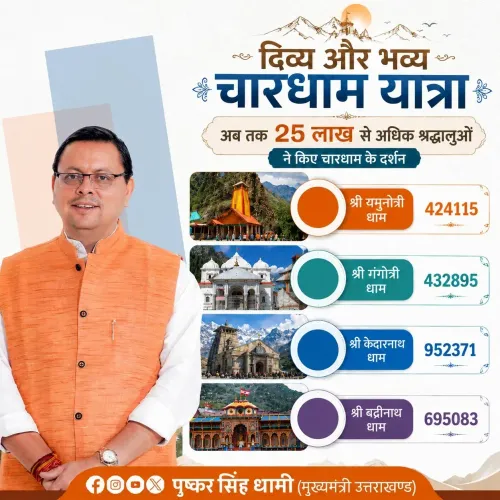
Over 40 lakh pilgrims have completed the Char Dham Yatra in the 2026 season, according to CM Dhami's announcement on 25 June 2026 .
CM Pushkar Singh Dhami credited the state government's effective management for ensuring a safe, smooth and orderly pilgrimage.
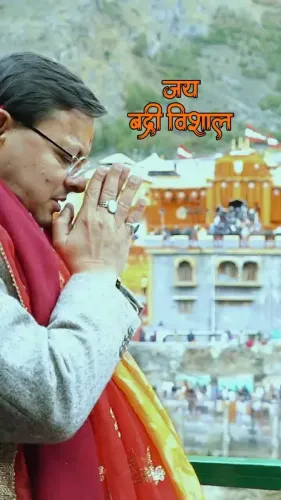
The Char Dham Yatra covers Badrinath, Kedarnath, Gangotri and Yamunotri in the Garhwal Himalayas .
Dhami appealed to pilgrims to maintain cleanliness, discipline and follow administrative guidelines to preserve the sanctity of Devbhoomi Uttarakhand .
The Char Dham National Highway Development Project (announced 2016 ) and post- 2013 mandatory registration protocols underpin the yatra's current management framework.
The pilgrimage is a major economic driver for Uttarakhand , supporting local residents, tourism operators and temple-town traders.
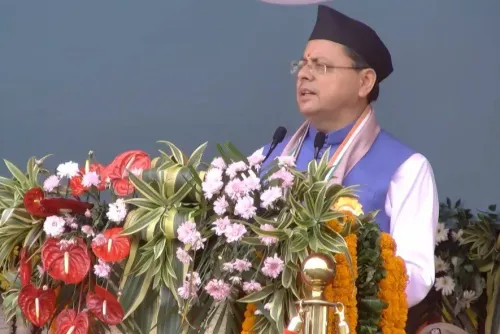
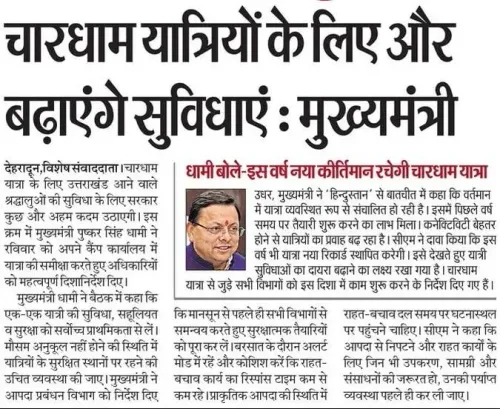
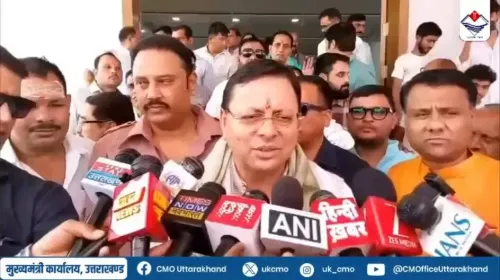
Uttarakhand Chief Minister Pushkar Singh Dhami announced on Thursday, 25 June 2026, that more than 40 lakh pilgrims have completed the Char Dham Yatra this season, crediting effective state government management for ensuring a safe, smooth and orderly pilgrimage across the four sacred Himalayan shrines.
Context
In his post, CM Dhami stated — 'हमारी सरकार के प्रभावी प्रबंधन के परिणामस्वरूप अब तक 40 लाख से अधिक श्रद्धालु चारधाम यात्रा के पावन दर्शन कर चुके हैं' ('As a result of our government's effective management, more than 40 lakh devotees have so far completed the sacred darshan of the Char Dham Yatra'). He also appealed directly to pilgrims to maintain cleanliness, discipline and compliance with administrative guidelines while preserving the sanctity of Devbhoomi Uttarakhand.
The Char Dham Yatra covers four revered shrines — Badrinath, Kedarnath, Gangotri, and Yamunotri — situated in the Garhwal Himalayas. The pilgrimage draws millions of devotees each year and is among the largest organised religious events in India.
Policy Backdrop
The scale of this season's footfall reflects years of coordinated infrastructure investment. The Char Dham National Highway Development Project, announced in 2016, has been upgrading all-weather road connectivity to the four shrines, reducing journey times and improving access during the narrow seasonal window when the high-altitude routes are passable.
Following the catastrophic 2013 Kedarnath floods, Uttarakhand introduced mandatory online registration and weather-based access controls for the yatra. These protocols, layered onto improved road and disaster-management infrastructure, have since become the operational backbone of crowd and safety management at the shrines.
Prime Minister Narendra Modi's government has been a significant funding partner in road-widening and disaster-resilience projects across the pilgrimage corridor, aligning central resources with the state's religious tourism ambitions.
Stakeholders and Impact
The yatra is an economic lifeline for Uttarakhand, with local residents, hoteliers, transporters and temple-town traders directly dependent on pilgrim inflows. A figure of over 40 lakh visitors mid-season signals strong economic activity for the hill state, which has actively promoted domestic religious travel as a recovery driver since the pandemic years.
Pilgrims themselves are the most immediate stakeholders. CM Dhami's public appeal for cleanliness and adherence to administrative guidelines reflects the state's ongoing challenge of managing high-volume footfall in environmentally sensitive, high-altitude terrain without degrading the very sanctity that draws devotees.
Environmental groups and local communities have long flagged concerns about waste management, encroachment and ecological stress in the Garhwal Himalayas during peak pilgrimage months. The Chief Minister's explicit call for discipline and hygiene signals awareness of these pressures at the highest level of state government.
What's Next
With the 2026 yatra season still ongoing at the time of the announcement, the final pilgrim count is expected to climb further before the shrines close for winter. Completion milestones on pending stretches of the Char Dham highway network will be closely watched, as will any revised crowd-management or environmental guidelines issued ahead of the 2027 season.
The state government's ability to sustain orderly management as footfall grows will be a key test of the administrative and infrastructure investments made over the past decade — and a template other pilgrimage-heavy states may look to replicate.
Point of View
Positioning pilgrimage management as a measurable public-service outcome. The coordination tags to Prime Minister Modi and Home Minister Shah also suggest the state is keen to keep Char Dham visible as a joint Centre-state success story.
NationPress
24 Sept 2026
Frequently Asked Questions
How many pilgrims have completed Char Dham Yatra in 2026?
According to Uttarakhand Chief Minister Pushkar Singh Dhami, more than 40 lakh pilgrims had completed the Char Dham Yatra as of 25 June 2026.
What is Char Dham Yatra and which are the four dhams?
Char Dham Yatra is an annual Hindu pilgrimage to four sacred shrines in the Garhwal Himalayas — Badrinath, Kedarnath, Gangotri and Yamunotri — located in Uttarakhand.
What rules must pilgrims follow during Char Dham Yatra 2026?
CM Dhami has appealed to pilgrims to maintain cleanliness, discipline and strictly follow administrative guidelines to preserve the sanctity of Devbhoomi Uttarakhand. Mandatory online registration and weather-based access controls are also in place.
What is the Char Dham Highway Project?
The Char Dham National Highway Development Project, announced in 2016, is an all-weather road network initiative to improve connectivity to the four pilgrimage shrines while addressing landslide and weather risks in the Himalayan region.
Why is Char Dham Yatra important for Uttarakhand's economy?
The yatra is a major economic driver for Uttarakhand, supporting local residents, hoteliers, transporters and temple-town traders. The state has actively promoted domestic religious tourism as an economic recovery lever, particularly since the pandemic.