HRW raises alarm over academic purge in Bangladesh universities
Synopsis
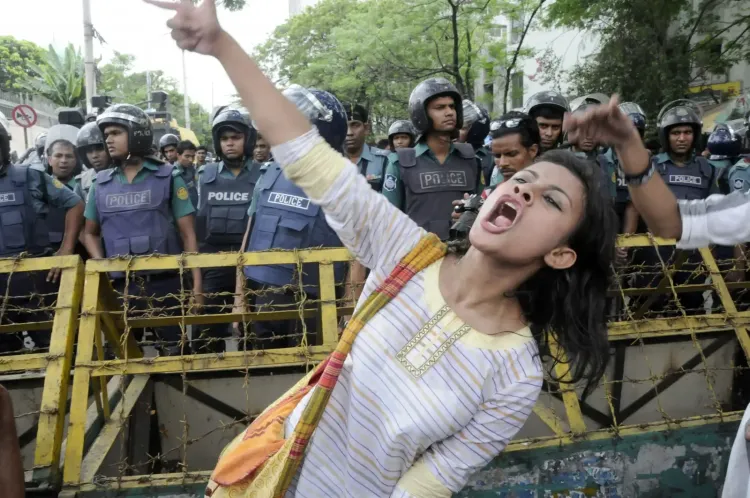
Human Rights Watch has flagged a sweeping purge of Awami League-affiliated academics and students at Bangladesh's public universities — with 404 teachers across 22 campuses under investigation and hundreds of students facing expulsion. The crackdown, which began under the Yunus-led interim government and has continued under the BNP, raises urgent questions about whether Bangladesh's post-protest political transition is trading one form of coercion for another.
Key Takeaways
Human Rights Watch (HRW) has raised alarm over arbitrary punishments targeting Awami League -affiliated academics and students at public universities in Bangladesh .
At least 404 academics across 22 universities who were part of a pro- Awami League Telegram group are under investigation.
Dhaka University ordered 44 academics to stop work and restricted teaching for 25 more from September 2024 , without credible disciplinary proceedings.
Hundreds of students allegedly affiliated with Awami League are reportedly being expelled, denying them the right to education.
The crackdown began under the Muhammad Yunus -led interim government and has continued under the ruling BNP administration.
HRW Deputy Asia Director Meenakshi Ganguly warned that retaliating against those who peacefully supported the former government violates international human rights law.
Human Rights Watch (HRW), the New York-based international advocacy group, has sounded a sharp alarm over the arbitrary punishment of academics and students at public universities in Bangladesh, citing what it describes as politically motivated sanctions against individuals perceived to be affiliated with former Prime Minister Sheikh Hasina and her Awami League party.
What HRW Found
According to HRW, the sanctions — including dismissals, suspensions, and restrictions on teaching — are premised on allegations of complicity in violence during the Awami League government's tenure, which was ousted following violent student-led protests in 2024. Additional charges reportedly include involvement in so-called 'subversive' activities in support of Hasina's party, and discrimination against students wearing Islamic clothing.
The rights body further noted that hundreds of students, allegedly Awami League members or supporters, are also facing expulsion — a measure it says denies them their fundamental right to education.
Scale of the Crackdown
Citing recent media reports, HRW said at least 404 academics across 22 universities, who were part of a pro-Awami League Telegram messaging group, have been placed under investigation. At Dhaka University — the country's most prestigious institution — newly appointed authorities ordered 44 academics to cease work and restricted the teaching assignments of another 25 starting September 2024, reportedly without any transparent or credible disciplinary process. Subsequently, six of those academics were formally 'temporarily suspended' following an inquiry committee's findings, with investigations now under way against an additional 14 teachers.
An unidentified professor at a public university in Bangladesh, whose name was withheld by HRW for security reasons, was quoted as saying: 'What is happening now is that the university authorities are targeting with false allegations, the group of teachers who are aligned to the Awami League and did not support the 2024 student movement. We are not allowed to go take classes, we cannot do research work; we cannot do anything.'
Human Rights Law Concerns
Meenakshi Ganguly, Deputy Asia Director at HRW, stated: 'Any acts of revenge against people who peacefully supported the previous government would show that freedoms of speech and assembly are not protected. Universities should be places where people are free to express their views, not places where support is enforced for the government of the day.'
The organisation argued that punishing individuals for their peaceful beliefs, or without ensuring due process, would constitute a violation of rights to freedom of expression and association under international human rights law.
Continuity Across Administrations
Notably, the crackdown is not limited to a single political moment. The actions against teachers and students reportedly began under the Muhammad Yunus-led interim administration and have continued under the current ruling Bangladesh Nationalist Party (BNP) government, raising sustained concerns about academic freedom across university campuses in the country. Critics argue this continuity suggests institutional complicity rather than a one-off political episode.
What Happens Next
With investigations now expanded to 404 more academics and expulsions of students reportedly ongoing, the trajectory of academic freedom in Bangladesh will likely face greater international scrutiny. HRW has not indicated whether it has formally engaged Bangladeshi authorities, but the public nature of its findings signals a push for accountability that the BNP government will be under pressure to address.
Point of View
The same logic that underpinned many of the Hasina-era prosecutions HRW once condemned. The international community's response will test whether Bangladesh's post-2024 political order is genuinely committed to the freedoms the student protest movement invoked — or whether it is simply rewriting who gets to be silenced.
NationPress
5 Nov 2026
Frequently Asked Questions
What actions has Human Rights Watch reported against academics in Bangladesh?
HRW has documented dismissals, suspensions, and teaching restrictions imposed on academics at public universities in Bangladesh, alleging these measures target individuals affiliated with the Awami League party. At Dhaka University alone, 44 academics were ordered to stop work and 25 had their teaching restricted from September 2024.
How many academics are under investigation in Bangladesh?
According to HRW, at least 404 academics across 22 universities — identified as members of a pro-Awami League Telegram group — have been placed under investigation. Six academics at Dhaka University have already been formally temporarily suspended.
Why are students being expelled from Bangladesh universities?
Hundreds of students allegedly affiliated with or supportive of the Awami League are reportedly facing expulsion. HRW argues this denies them their right to education and amounts to punishment for peaceful political association, in violation of international human rights standards.
Which government is responsible for the academic crackdown in Bangladesh?
The actions began under the Muhammad Yunus-led interim administration following the ouster of Sheikh Hasina's Awami League government in 2024, and have continued under the current ruling Bangladesh Nationalist Party (BNP) government.
What does international human rights law say about these punishments?
HRW argues that punishing individuals for peaceful political beliefs, or without due process, violates rights to freedom of expression and association under international human rights law. Deputy Asia Director Meenakshi Ganguly has called on universities to protect free expression rather than enforce loyalty to the government of the day.