Bangladesh Awami League: BSL students face mass expulsions, campus bans
Synopsis
Bangladesh's Awami League is alleging what it calls systematic collective punishment of its student wing: over 400 show-cause notices at Dhaka University alone, mass expulsions at Jahangirnagar, and campus bans enforced not by administration but by rival student groups — all since the 2024 political transition that the world has largely framed as a democratic reset.
Key Takeaways
The Awami League alleges thousands of Bangladesh Students League (BSL) members have been expelled, arrested, or barred from campuses since the fall of the Sheikh Hasina government in 2024 .
Dhaka University reportedly issued show-cause notices to 403 students , predominantly BSL members, over alleged involvement in July 2024 events.
Jahangirnagar University is alleged to have expelled over 100 BSL students, with some reports citing up to 289 .
Similar mass expulsions and suspensions are alleged at SUST , Chittagong University , and other institutions.
The BSL was formally banned in October 2024 under anti-terrorism laws; the Awami League alleges what followed was a wave of vigilante-driven reprisals.
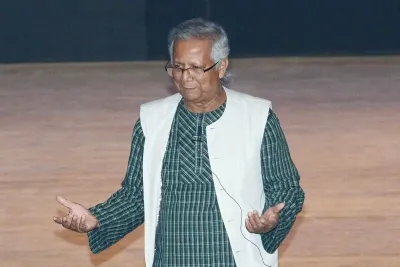
The Awami League attributes the crackdown to supporters of the NCP , Jamaat-e-Islami , BNP , and the former Muhammad Yunus -led interim government.
Bangladesh's Awami League has alleged that thousands of students affiliated with its student wing, the Bangladesh Students League (BSL), are being systematically stripped of their academic futures through mob violence, arbitrary expulsions, arrests, and an orchestrated climate of fear — actions the party attributes to supporters of the National Citizen Party (NCP), Jamaat-e-Islami, and the Bangladesh Nationalist Party (BNP), as well as backers of the former Muhammad Yunus-led interim government.
Background: The Fall of the Hasina Government
Following the collapse of the Sheikh Hasina-led government in the wake of what the Awami League describes as a politically 'romanticised' student movement in 2024, BSL members were reportedly branded 'enemies of the new order' on campuses across Bangladesh. The BSL was formally banned in October 2024 under anti-terrorism laws. According to the Awami League, that ban was followed by a sweeping wave of reprisals that effectively turned university campuses into 'no-go zones' for anyone with even peripheral BSL ties.
Scale of Expulsions and Institutional Action
Dhaka University reportedly issued show-cause notices to 403 students, predominantly BSL members, over alleged involvement in the July 2024 events. Jahangirnagar University is said to have expelled more than 100 BSL students, with some reports placing that figure as high as 289. Similar mass expulsions and suspensions are alleged to have taken place at SUST, Chittagong University, and other institutions. Many students reportedly had their certificates revoked or withheld, and several were barred from campuses entirely.
Personal Accounts and Alleged Mob Rule
According to the Awami League, one BSL-affiliated student — speaking anonymously to a media outlet — recounted being physically attacked while attempting to sit for an examination, subsequently arrested on what she described as 'dubious charges', and held in jail for 27 days. Nearly a year and a half later, her education reportedly remains in limbo. The party says this is far from an isolated case.
At major institutions including Dhaka, Rajshahi, and Chittagong universities, the Awami League alleges that administrations have yielded to vigilante pressure, allowing hostile student groups to declare BSL affiliates unwelcome in classrooms and examination halls. When targeted students sought security assurances to attend exams, department heads reportedly responded: 'We cannot guarantee your safety. Do not return.'
Awami League's Charge: Collective Punishment
'This is not justice. It is collective punishment that risks sacrificing an entire generation on the altar of political vendetta. While the world applauds Bangladesh's so-called democratic reset, thousands of young people are being denied the fundamental right to education, simply for their political associations,' the Awami League said in a statement.
The party further alleged that academic institutions are 'actively facilitating vigilante detentions', with students facing threats of mob lynchings, police harassment, and physical assault solely on account of perceived political affiliation.
What Comes Next
The Awami League has not indicated what formal legal or diplomatic steps it intends to pursue, but the allegations — if independently verified — could draw scrutiny from international human rights bodies monitoring Bangladesh's post-transition political environment. The situation on Bangladeshi campuses is likely to remain a flashpoint as the country navigates its contested political reset.
Point of View
If independently corroborated, point to a troubling pattern: political transitions in South Asia routinely produce campus purges that outlast the immediate crisis and derail a generation. What is striking here is the alleged role of university administrations — not just rival groups — in enforcing exclusion by refusing to guarantee student safety. Bangladesh's post-2024 narrative has been marketed internationally as a democratic awakening; the treatment of BSL students, if verified, is the uncomfortable underside of that story. The absence of independent fact-finding — from either the Bangladesh government or international rights bodies — is itself a gap that demands attention.
NationPress
25 Oct 2026
Frequently Asked Questions
What is the Awami League alleging about BSL students in Bangladesh?
The Awami League alleges that thousands of students affiliated with its student wing, the Bangladesh Students League (BSL), have been subjected to mob violence, arbitrary expulsions, arrests, and campus bans since the fall of the Sheikh Hasina government in 2024. The party says university administrations have failed to protect targeted students and, in some cases, have actively facilitated their exclusion.
How many students have reportedly been affected at Dhaka and Jahangirnagar universities?
According to the Awami League, Dhaka University issued show-cause notices to 403 students, predominantly BSL members, over alleged involvement in the July 2024 events. Jahangirnagar University reportedly expelled over 100 BSL students, with some reports placing the figure as high as 289. Similar actions are alleged at SUST, Chittagong University, and other institutions.
When was the Bangladesh Students League banned and why?
The Bangladesh Students League (BSL) was banned in October 2024 under Bangladesh's anti-terrorism laws, following the fall of the Sheikh Hasina-led government. The Awami League contends that the ban was followed by a wave of vigilante reprisals that went well beyond any legal framework.
Who does the Awami League hold responsible for the alleged targeting of BSL students?
The Awami League attributes the crackdown to supporters of the National Citizen Party (NCP), Jamaat-e-Islami, the Bangladesh Nationalist Party (BNP), and backers of the former Muhammad Yunus-led interim government. It also alleges that university administrations have capitulated to vigilante demands rather than protecting students.
What has been the response of university authorities to students seeking safety guarantees?
According to the Awami League, when BSL-affiliated students sought assurances of safety to attend examinations, department heads at major universities reportedly responded that they could not guarantee their safety and advised them not to return — effectively enforcing what the party calls 'unofficial expulsion'.