Bangladesh's Student Crisis: The Battle for Academic Rights Post-Yunus Era
Synopsis
As Bangladesh seeks stability after the Yunus administration, thousands of students from the Bangladesh Students' League face unjust rustications. This article explores the implications for education, fairness, and the future of democratic engagement.
Key Takeaways
Over 15,000 students have faced rustication in Bangladesh.
Concerns about procedural fairness in disciplinary actions.
The need for an independent review of rustication orders.
Importance of protecting the right to education .
Potential for generational alienation among youth.
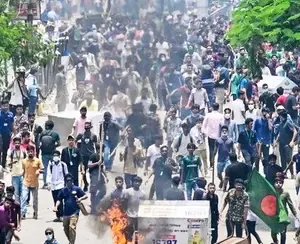
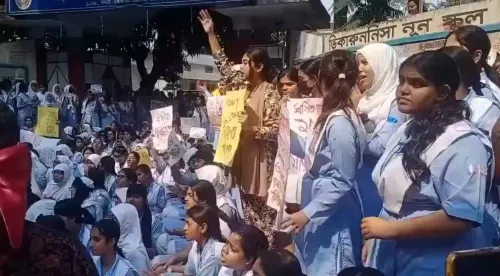
Dhaka: As Bangladesh works towards restoring stability in the aftermath of the Muhammad Yunus administration, a significant number of students linked to the Bangladesh Students’ League who have faced unjust rustication are eager to resume their university studies.
Education should never be collateral damage during political shifts. If there are allegations against individuals, they must be examined through open legal and disciplinary channels — rather than by means of collective punishment, mob intimidation, or unilateral administrative decisions. Universities in Bangladesh must serve as hubs of academic inquiry, rather than battlegrounds for political vendettas.
The Bangladesh Students' League (BSL), established in January 1948 by Sheikh Mujibur Rahman, has traditionally represented a pro-independence student faction associated with the ideals of the 1971 Liberation War. Advocates argue that over 17,000 of its members made the ultimate sacrifice during this conflict. Regardless of one’s current political stance toward the organization, its historical significance in shaping Bangladesh’s political landscape cannot be overlooked.
Following the political turmoil of August 2024 and the emergence of an interim government headed by Muhammad Yunus, the BSL was banned in October 2024. Consequently, reports have emerged detailing the extensive rustication of students perceived to have ties to the organization across various public universities, engineering colleges, agricultural institutions, and medical schools.
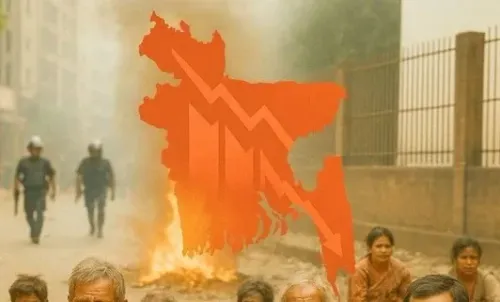
According to student representatives, more than 15,000 students have faced rustication in the last 18 months.
This includes students from the University of Dhaka (403), Jahangirnagar University (289), University of Rajshahi (32), University of Chittagong (84), Begum Rokeya University in Rangpur (71), Jatiya Kabi Kazi Nazrul Islam University in Mymensingh (16), Islamic University in Kushtia (33), Rabindra University in Sirajganj (10), Bangladesh Agricultural University in Mymensingh (154), Bangladesh University of Engineering and Technology (60), Chittagong University of Engineering and Technology (19), Khulna University of Engineering and Technology (13), Rajshahi University of Engineering and Technology (46), Dhaka University of Engineering and Technology (14), Shahjalal University of Science and Technology (54), Mawlana Bhashani Science and Technology University (19), Hajee Mohammad Danesh Science and Technology University (102), Pabna University of Science and Technology (28), Jamalpur Science and Technology University (51), Rangamati Science and Technology University (10), Mymensingh Engineering College (10), Rangamati Medical College (6), Faridpur Medical College (34), Mymensingh Medical College (23), Rajshahi Medical College (20), Patuakhali Medical College (2), Chittagong Medical College (75), Khulna Medical College (3), Sir Salimullah Medical College (24), Chandpur Medical College (5), Dinajpur Medical College (39), Netrakona Medical College (11), Sylhet Medical College (55), Rangpur Medical College (16), Barishal Medical College (12), and Cox’s Bazar Medical College (3).
In addition to rustication statistics, student advocates assert that over half a million students currently confront various criminal charges stemming from the events following the August 2024 political transition. While independent verification of these claims is crucial, the sheer volume of allegations necessitates immediate institutional examination.
The fundamental concern lies in ensuring procedural fairness. Were formal charges issued? Were hearings conducted? Was evidence presented? Were students afforded the opportunity to defend themselves or appeal? If disciplinary measures are enacted solely based on political association, it amounts to collective punishment.
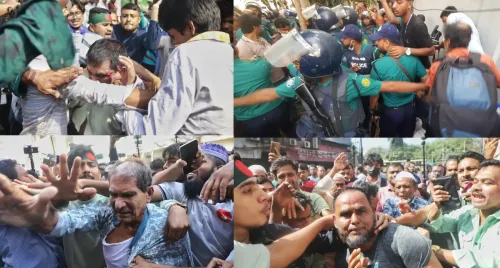
Equally alarming are reports of violence and arrests targeting students attempting to participate in examinations. Allegations include detentions from exam venues, assaults in dormitories, or attacks on campuses. The reported murder of a student activist at Jahangirnagar University underscores the deteriorating security conditions on campuses. Such incidents — if accurately reported — indicate a failure of institutional neutrality and law enforcement accountability.
Universities must not allow mob enforcement of political divides. Furthermore, administrations should not share personal information with law enforcement without proper legal procedures. The right to education is essential. Even those accused of wrongdoing retain academic rights unless restricted by a court order. Denying access to examinations without a conviction or verified misconduct risks permanently derailing the futures of young individuals.
Supporters of the current regime may argue that student politics in Bangladesh has historically been marred by violence and patronage. While reform is necessary, it must be grounded in due process, not indiscriminate exclusion.
Student leaders like Sheikh Mohammad Nayem and Shibli Sadik have characterized the current climate as one characterized by certificate cancellations, academic blacklisting, and intimidation. These claims warrant thorough investigation, rather than political dismissal.
Bangladesh’s constitution guarantees freedoms of association and expression within lawful bounds. If students commit criminal acts, they should face the legal system. If they violate campus rules, transparent disciplinary boards should take action. However, mere affiliation cannot justify academic expulsion.
A greater danger lies in generational disenfranchisement. When tens of thousands feel systematically marginalized, resentment escalates. Exclusion breeds radicalization; engagement fosters moderation. Universities should promote dialogue, not ideological purges.
Bangladesh’s narrative — from the Language Movement to the Liberation War — has been shaped by student activism. Transforming campuses into venues for political cleansing undermines this legacy.
The path ahead requires institutional reassessment. An independent commission comprising senior academics, retired judges, and civil society representatives should scrutinize all rustication orders enacted since August 2024. Students against whom no corroborated charges exist should be reinstated, and access to examinations must be restored. Allegations of mob violence should be impartially investigated.
The reinstatement of these students is not about reestablishing political influence; it is about upholding due process, maintaining academic integrity, and preserving the democratic credibility of Bangladesh’s higher education system.
A country’s democratic trajectory hinges on how it treats its youth — especially those with whom it disagrees.
Point of View
It is essential to address the unjust treatment of students involved with the Bangladesh Students' League. The systemic exclusion of these individuals not only undermines the integrity of educational institutions but also threatens to alienate a generation of young individuals. A fair and transparent review process is vital for restoring justice.
NationPress
5 Oct 2026
Frequently Asked Questions
What is the Bangladesh Students' League?
The Bangladesh Students' League, founded in 1948 by Sheikh Mujibur Rahman, is a pro-independence student organization that played a significant role in the 1971 Liberation War.
How many students have been rusticated?
According to reports, over 15,000 students have been rusticated from various universities in the past 18 months due to their perceived affiliation with the Bangladesh Students' League.
What are the implications of these rustications?
The rustications raise concerns about procedural fairness in disciplinary actions and the potential for collective punishment based on political affiliations.
What actions are being called for regarding the rusticated students?
Advocates are calling for an independent review of the rustication orders and reinstatement of students against whom no substantiated charges exist.
Why is this situation significant?
The treatment of students during this political transition reflects on the state of democracy and the right to education in Bangladesh, affecting future generations.