Can Bangladesh Students’ League Ensure Neutral Administration for Inclusive 2026 Elections?
Synopsis
The Bangladesh Students’ League calls for international support for a free and fair electoral process in the upcoming 2026 elections, stressing the importance of a neutral government amidst rising state-sponsored violence and repression. Their appeal highlights the urgent need for stability and democracy in Bangladesh, as they condemn the ongoing political turmoil.
Key Takeaways
BSL calls for international support for fair elections.
Rising state-sponsored violence threatens democratic values.
Mob rule and disorder are increasing under current governance.
Media attacks represent a serious risk to press freedom .
Urgent need for restoration of constitutional governance.
Dhaka, Dec 22 (NationPress) The Bangladesh Students’ League (BSL), affiliated with the ruling Awami League, has called upon the international community to actively engage in facilitating a free, fair, and inclusive electoral process for Bangladesh's upcoming general election, set for February 12, 2026. They emphasized that this approach is vital for achieving stability and democracy in the nation.
They expressed their concern regarding an ongoing campaign of state-sponsored violence, terror, and repression.
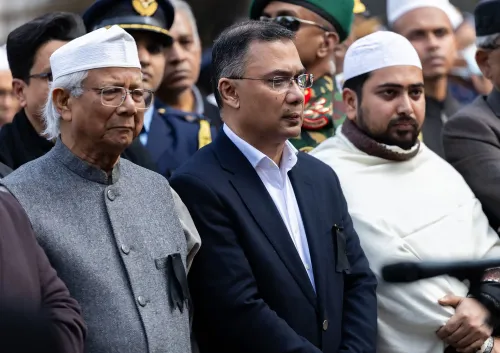
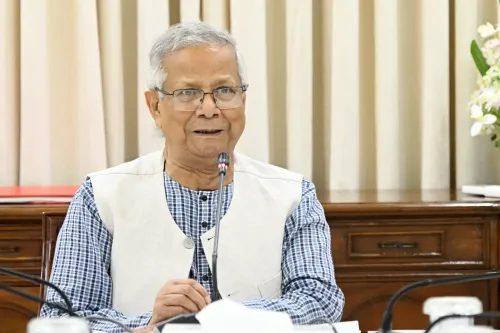
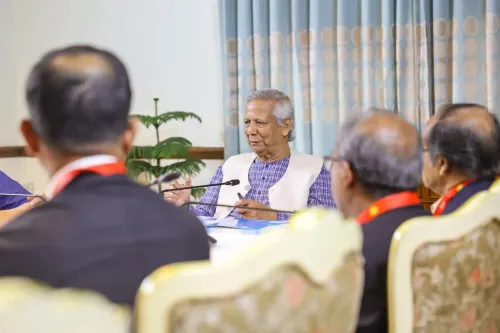
Criticizing the interim government led by Mohammad Yunus, the student organization claimed that under this “mobocracy” enforced by the “illegitimate and unconstitutional fascist” regime, Bangladesh is spiraling into chaos, with rising extremism and crumbling law and order.
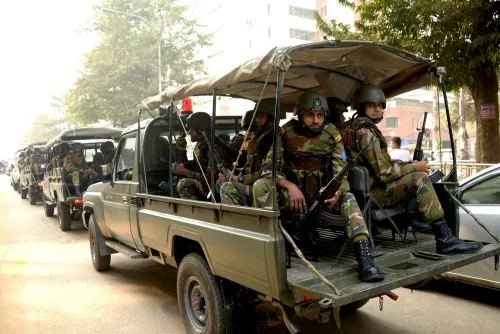
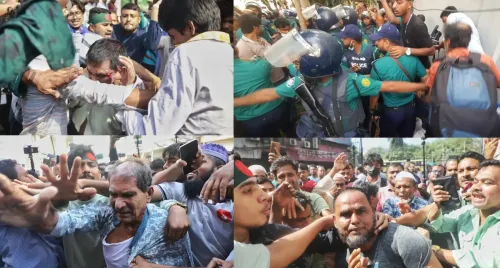
“Recently, Bangladesh has seen an alarming increase in mob violence, arson, coordinated attacks, enforced disappearances, and brutal murders. These events are not random; they stem from a carefully orchestrated campaign of riots and turmoil during July–August 2024, which led to the ousting of the democratically elected government of Prime Minister Sheikh Hasina and the Awami League,” stated the BSL.
Following the fall of the Hasina-led government, the organization noted a systematic shift from constitutional governance to mob rule characterized by organized violence, fear, and impunity.
“Coordinated assaults on media outlets, cultural entities, minority groups, political factions, and historical national symbols illustrate that Bangladesh is no longer governed by law. The nation is being pushed towards chaos, state failure, and authoritarianism fueled by fear,” they asserted.
Condemning the arson against prominent newspapers Prothom Alo and The Daily Star, the BSL described these attacks as a direct assault on press freedom.
“The attempt to set fire to The Daily Star building with staff trapped inside constitutes attempted murder. The harassment of editor Nurul Kabir further confirms that journalists and independent voices are under systematic threat,” they added.
One of the most horrific incidents mentioned was in Bhaluka upazila, Mymensingh district, where a young Hindu man, Dipu Chandra Das, was tied to a tree, beaten to death over a false blasphemy accusation, and subsequently burned.
“This atrocity, devoid of investigation or due process, reveals a complete state failure and a severe violation of human rights,” they concluded.
The BSL also raised concerns about repeated assaults on Indian diplomatic missions in Dhaka, Chattogram, Rajshahi, and Khulna, including the stone-pelting and arson at the Indira Gandhi Cultural Centre on August 5, 2024, followed by renewed threats in December.
“These actions violate the 1961 Vienna Convention and indicate the regime’s use of mob violence as a foreign policy tool,” they stressed.
Additionally, the student organization accused the Yunus regime of conducting mass arrests of Awami League members while openly supporting extremist factions, effectively dismantling the rule of law.
Point of View
The Bangladesh Students’ League raises critical concerns regarding the current political environment. Their emphasis on a neutral administration for the upcoming elections reflects a broader desire for stability and democratic governance. As the nation grapples with challenges of extremism and violence, their call for international support underscores the importance of democratic principles and human rights.
NationPress
9 Oct 2026
Frequently Asked Questions
What is the main purpose of the Bangladesh Students’ League's appeal?
The BSL's appeal aims to ensure that the upcoming 2026 elections in Bangladesh are conducted in a free, fair, and inclusive manner under a neutral government.
What concerns did the BSL raise regarding the current government?
They highlighted an ongoing campaign of state-sponsored violence and repression, alleging that the government has led the country into disorder and anarchy.
What specific incidents did the BSL mention to illustrate their concerns?
The BSL pointed to incidents of mob violence, arson attacks on media institutions, and brutal killings, including the murder of a young Hindu man based on false accusations.
How does the BSL view the attacks on the media?
They view the attacks as direct assaults on press freedom and indicative of a broader trend of repression against independent voices.
What action did the BSL demand from the international community?
They called for the international community to play a constructive role in ensuring a neutral administration for the elections to restore stability and democracy in Bangladesh.