Is BJP Positioning Itself as a Viable Alternative in TN? Women Demand Safety and Genuine Empowerment: P. Vijayalekshmi (IANS Interview)
Synopsis
With the 2026 Assembly elections approaching, the BJP is intensifying its political strategy to challenge the DMK in Tamil Nadu. P. Vijayalekshmi discusses the party's grassroots efforts, women's safety concerns, and the need for genuine empowerment, shedding light on women's expectations and the political landscape's evolving dynamics.
Key Takeaways
BJP is strengthening its grassroots organisation.
Focus on women's safety and empowerment.
Efforts to expand NDA alliances in Tamil Nadu.
Critique of DMK's investment claims.
Call for accountability in law and order issues.
Chennai, Dec 22 (NationPress) As the 2026 Assembly elections approach in Tamil Nadu, the political landscape is intensifying. The BJP, steadily amplifying its presence, is enhancing its organisational framework, reinforcing alliances, and establishing itself as a formidable contender against the ruling DMK.
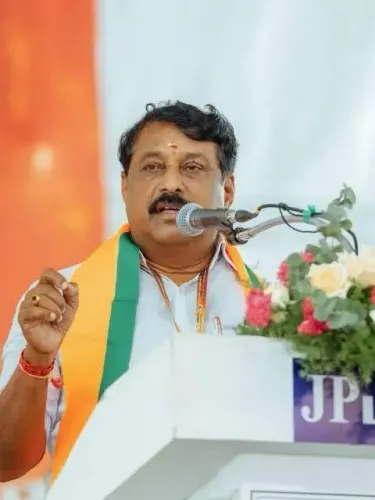
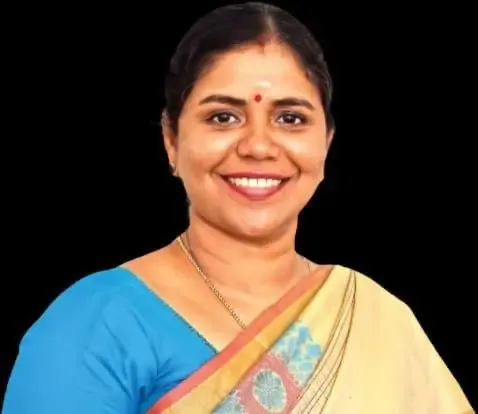
In an exclusive dialogue with IANS, P. Vijayalekshmi, a prominent BJP leader in Tamil Nadu, provides an overview of the party’s strategies, potential partnerships, women’s concerns, the law and order situation, and the DMK government’s investment claims.
Excerpts from the interview:
IANS: With the 2026 Assembly elections on the horizon, what steps has the BJP undertaken?
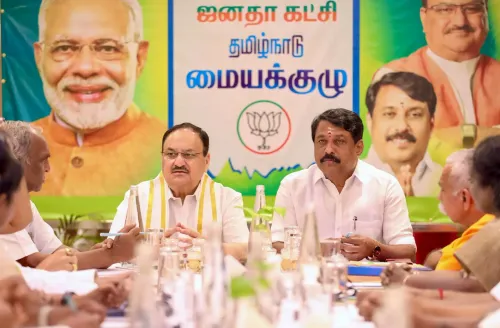
Vijayalekshmi: The BJP has been fortifying its grassroots organisational framework over recent years. Booth-level committees, district units, and zonal frameworks have been revamped to expand outreach. Various factions—such as youth, women, farmers, and workers—are being mobilised vigorously. A significant emphasis has been placed on delivering Central government welfare schemes directly to beneficiaries, fostering personal connections with households across the state. This effort is laying a robust foundation for the 2026 elections.
IANS: Do you anticipate new political parties joining the NDA in Tamil Nadu for the 2026 elections?
Vijayalekshmi: Yes. Initiatives are underway to extend the NDA in Tamil Nadu with the goal of forming a strong national democratic alternative to the DMK administration. Political entities aligned with the NDA’s developmental goals and ideological tenets are expected to join. As the election approaches and political dynamics evolve, the alliance is anticipated to broaden.
IANS: The BJP currently has four MLAs in the Assembly. What are your projections for 2026?
Vijayalekshmi: The presence of four MLAs is merely the initial phase. The BJP’s vote share, visibility, and acceptance have been on an upward trajectory. The party is no longer confined to urban areas—it is also making inroads into rural Tamil Nadu.
With a solid alliance, thoughtful candidate selection, and a campaign centred around people-focused issues, the BJP has the potential to significantly bolster its strength and emerge as a credible alternative in the 2026 elections.
IANS: As a female leader, what feedback do you receive from women and grassroots workers?
Vijayalekshmi: Women are advocating for enhanced political representation, safety and law-and-order assurances, employment opportunities, and empowerment that goes beyond token benefits. Central schemes like housing, LPG, toilets, bank accounts, and SHG support have initiated visible change. However, women at the state level voice serious concerns regarding drug abuse, escalating crime rates, and insufficient job prospects. Their expectations are clear—they desire an environment of dignity, independence, and safety.
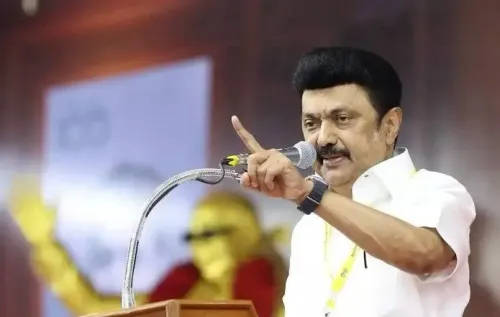
IANS: The Chief Minister stated at the Rising TN seminar that his government attracted 2.5 times more investment than the previous AIADMK government. How do you respond?
Vijayalekshmi: Merely making announcements does not equate to real development. The government must elucidate how many investments came to fruition, how many jobs were generated, and whether benefits reached MSMEs, rural industries, and middle-class families.
It is also imperative to acknowledge Central government contributions—highways, ports, railways, and business-friendly reforms—which significantly facilitated investments. Comparing the current situation to the pandemic-stricken AIADMK term does not provide a comprehensive view.
Genuine growth should be evaluated not by announcements but by sustainable and equitable job creation.
IANS: The Opposition, including the BJP, has reproached the DMK regarding law and order. Has the government faltered in this regard?
Vijayalekshmi: The past year has seen repeated alleged encounter deaths, provoking public suspicion and concern. While justice for criminals is crucial, democracy requires judicial due process. Frequent encounter killings raise critical questions about potential compromises in investigations. Accountability, transparency, independent inquiries, and judicial oversight are vital for restoring public trust.
IANS: Chennai and Tamil Nadu have experienced multiple alleged encounters following the murder of K. Armstrong. What are your thoughts?
Vijayalekshmi: The recurrence of encounters in such a short time necessitates immediate scrutiny. If the government is confident, it should permit impartial judicial investigations. The BJP’s position is unequivocal: uphold the rule of law, prevent political interference, and safeguard human rights. Law and order cannot be enforced through fear or shortcuts.
IANS: The DMK claims to advocate for women and has launched numerous women-friendly initiatives. Do you contest this?
Vijayalekshmi: Announcing schemes does not equate to empowerment. Women’s welfare must encompass safety, employment, equal opportunities, and autonomous decision-making. Publicity efforts cannot conceal the realities—crimes against women, the drug menace, inadequate employment, and insufficient representation persist. The BJP perceives women not merely as beneficiaries but as leaders and stakeholders. The DMK government’s initiatives lack depth and sustainability. True empowerment is realised only when women feel safe, independent, and respected within society.
Point of View
It's essential to recognize the evolving political dynamics in Tamil Nadu, particularly with the BJP's strategic approach ahead of the 2026 Assembly elections. The concerns raised by women regarding safety and empowerment resonate deeply, reflecting the broader societal issues that need addressing. This political landscape is ripe for transformation, and it is crucial to monitor how these developments unfold.
NationPress
17 Sept 2026
Frequently Asked Questions
What are the key strategies the BJP is employing for the 2026 elections?
The BJP is enhancing its grassroots organisation, restructuring committees, and mobilising various factions, focusing on delivering welfare schemes directly to beneficiaries.
How does the BJP plan to expand its alliances in Tamil Nadu?
Efforts are underway to broaden the NDA in Tamil Nadu by inviting political parties aligned with its development agenda.
What are women's primary concerns expressed to BJP leaders?
Women are advocating for political representation, safety, employment opportunities, and empowerment beyond mere tokenism.
How does the BJP view the DMK’s claims regarding investments?
The BJP critiques the DMK's announcements as insufficient, demanding evidence of actual investments and job creation.
What is the BJP's stance on law and order issues in Tamil Nadu?
The BJP calls for accountability, transparency, and independent investigations to address concerns regarding alleged encounter deaths.