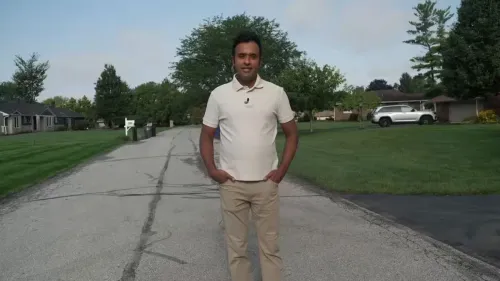
Ramaswamy vows to slash housing red tape for Gen Z buyers

Synopsis
Entrepreneur Vivek Ramaswamy pledged on X to cut regulatory red tape blocking new housing construction, directly targeting Gen Z affordability and inviting public accountability — extending his DOGE-era deregulatory brand into domestic housing policy.
Key Takeaways
Entrepreneur Vivek Ramaswamy posted on X on 2 November 2026 pledging to cut red tape blocking new housing construction for young families.
The pledge is explicitly supply-side: reduce regulatory barriers rather than offer demand-side subsidies or buyer assistance.
Gen Z — the cohort most affected by rising home prices and a shortage of entry-level inventory — is the named target beneficiary.
Ramaswamy's framing extends the deregulatory brand of the Department of Government Efficiency (DOGE) advisory effort directly into domestic housing policy.
The post closes with an unusual accountability invitation: 'hold us accountable to deliver,' setting a measurable standard against campaign rhetoric.
No specific regulation, agency, or legislative vehicle is named; follow-up proposals and housing permit and construction start data will be the real scorecard.
A generation priced out of its first home just got a direct campaign pledge. Entrepreneur Vivek Ramaswamy — founder of Strive Asset Management and former co-lead of the Department of Government Efficiency (DOGE) advisory effort — posted on X on 2 November 2026, promising to cut the regulatory barriers that are blocking new housing construction for young families.
In his own words: 'We're going to fight for Gen Z to afford their first home. I'll cut red tape that stops the construction of new housing for young families. Grateful for your trust, let's win this, and then hold us accountable to deliver.' The message is pointed, supply-side, and explicitly accountability-framed — an unusual move in campaign rhetoric.
Why Gen Z homeownership has become a defining issue
The pledge lands in a political environment where housing affordability has emerged as one of the sharpest economic fault lines for voters under 30. Rising prices and a documented shortage of entry-level homes have pushed first-time buyers further from ownership with each passing year. Gen Z — broadly, those born from the late 1990s onward — represents the cohort most acutely squeezed by this gap between wages and home prices.
Ramaswamy's framing targets the supply side: zoning restrictions, permitting backlogs, and federal regulatory layers that developers cite as the primary reason new construction cannot keep pace with demand. This is a well-worn conservative policy lane, but the explicit callout of 'red tape' ties it directly to the deregulatory brand Ramaswamy built through his DOGE-era work.
DOGE's deregulatory DNA meets domestic housing
The Department of Government Efficiency advisory effort, which Ramaswamy co-led, was built on the premise that federal bureaucracy imposes invisible costs on ordinary Americans. Applying that same logic to housing regulation is a natural extension — and a politically legible one. Republican campaigns through the 2024 cycle consistently elevated deregulated construction as the supply-side answer to affordability, distinguishing the approach from demand-side measures such as subsidies or buyer assistance programmes.
Ramaswamy's post goes further than most by explicitly inviting accountability — 'hold us accountable to deliver' — signalling that he intends the pledge to be measurable, not merely rhetorical. That framing raises the stakes: it turns a campaign promise into a performance benchmark.
What the pledge does — and doesn't — specify
The post names no specific regulation, no federal agency, and no legislative vehicle. The 'red tape' target remains broad. Analysts watching this space will look for follow-up detail on which permitting or zoning mechanisms Ramaswamy intends to address at the federal level versus deferring to states, and whether any executive or legislative proposals emerge in the weeks ahead. Housing permit approvals and construction start data will ultimately be the scorecard against which the accountability pledge is measured.
For now, the signal is clear: Ramaswamy is staking a core piece of his political identity on making homeownership attainable for the generation most convinced it never will be.
Point of View
He is targeting a generational bloc that has historically leaned left but is increasingly receptive to anti-bureaucracy messaging. The accountability rider is the politically interesting move: it converts a vague campaign promise into a self-imposed performance benchmark, raising the cost of non-delivery. Whether that credibility play outlasts the campaign cycle depends entirely on whether concrete regulatory targets follow.
NationPress
2 Nov 2026
Frequently Asked Questions
What did Vivek Ramaswamy say about housing for Gen Z?
Ramaswamy pledged on X to cut regulatory red tape that prevents new housing construction, specifically to help Gen Z afford their first home, and invited the public to hold him accountable for delivery.
What is Vivek Ramaswamy's housing policy proposal?
His proposal is supply-side: remove federal and regulatory barriers — zoning restrictions, permitting backlogs — that slow new home construction, rather than offering subsidies or direct buyer assistance.
How does DOGE connect to Ramaswamy's housing stance?
Ramaswamy co-led the Department of Government Efficiency advisory effort, which focused on cutting federal bureaucracy. His housing pledge applies the same deregulatory logic to construction barriers affecting first-time buyers.
Why is Gen Z housing affordability a political issue in the US?
A documented shortage of entry-level homes and persistently high prices have priced many Gen Z buyers out of homeownership, making affordability one of the most resonant economic issues for voters under 30.
What specific regulations is Ramaswamy targeting for housing?
The post does not name specific regulations or agencies. Analysts are watching for follow-up legislative or executive proposals detailing which permitting, zoning, or federal rules he intends to reform.