Ramaswamy Vows to Fix US Home Affordability Crisis
Synopsis
Entrepreneur Vivek Ramaswamy declared on September 30 that he has a plan to make US home prices affordable for young families, framing the fix as straightforward and signalling a deregulation-centred approach rooted in his DOGE and market-reform experience.
Key Takeaways
Vivek Ramaswamy announced on September 30, 2026 that he will release a plan to address US home-price unaffordability for young families.
The post frames the solution as simple — 'it isn't rocket science' — signalling confidence in a deregulation-led approach.
Ramaswamy's track record at DOGE and Strive Asset Management points toward supply-side, deregulatory remedies over new government spending.
US housing experts broadly agree the core problem is a supply shortage rooted in restrictive zoning and slow permitting processes.
Full policy specifics are pending; responses from the real estate and financial sectors will be a key indicator of the plan's viability.
Housing affordability is one of the sharpest economic pressure points for young Americans, making it a high-stakes political terrain for any credible proposal.
America's housing affordability wall just got a high-profile challenger. Entrepreneur Vivek Ramaswamy — founder and executive chairman of Strive Asset Management, former co-lead of the US Department of Government Efficiency (DOGE) advisory effort, and 2024 Republican presidential candidate — declared on Wednesday, September 30 that he has a concrete plan to bring home prices within reach of young families, and he is not mincing words about its simplicity.
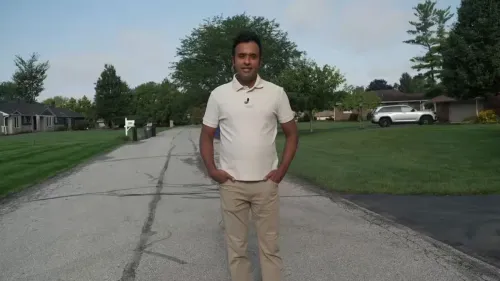
Posting on X, Ramaswamy wrote: 'Home prices are unaffordable for too many young families. Here's how I'm going to fix it — and it isn't rocket science.' The accompanying video teases specific proposals, though the details have not yet been publicly released in full.
The affordability wall young Americans are hitting
The backdrop to Ramaswamy's announcement is well-documented and politically potent. US home prices have surged over the past several years, driven by a persistent mismatch between housing supply and demand. Rising mortgage rates compounded the crunch, locking a generation of would-be first-time buyers out of the market even as rents climbed in parallel. The result: homeownership — long the anchor of American middle-class aspiration — has become a distant prospect for millions of young families.
Economists and policymakers across the political spectrum broadly agree on the structural cause: a shortage of housing units, itself rooted in restrictive local zoning laws, slow permitting processes, and regulatory barriers that inflate construction costs. Supply is the bottleneck. The political fight is over who pulls which lever to unclog it.
Ramaswamy's deregulation playbook
Ramaswamy's prior public commentary has consistently pointed toward deregulation and reduced government intervention as the medicine for market-side economic pressures. His DOGE experience — cutting federal bureaucracy and compliance overhead — informs a worldview where supply constraints are largely government-made problems requiring government rollback, not new spending programmes.
That ideological lineage makes his likely prescription readable even before the full policy details drop: loosen federal and local regulatory frameworks, reduce the permitting friction that delays new construction, and let the market build its way out of the shortage. The 'it isn't rocket science' framing is a deliberate rhetorical signal — that the obstacle is political will, not analytical complexity.
Why the specifics will matter more than the promise
Housing affordability has a graveyard of political promises behind it. The hard part is never the diagnosis — it is navigating the fierce local opposition to new development, the entrenched interests of existing homeowners who benefit from price appreciation, and the federal-state-local jurisdictional tangle that makes top-down mandates blunt instruments.
Ramaswamy's credibility on this issue will hinge entirely on the mechanism he proposes. Watch for whether his plan targets federal land use, Fannie-Freddie reform, construction-cost deregulation, or some combination — and for how the real estate and financial sectors respond once the details are on the table.
A generation priced out of ownership is watching. The question is whether the plan matches the confidence of the pitch.
Point of View
A fight that has burned many reformers before him. If his proposal centres federal leverage over land use — perhaps tied to infrastructure or permitting timelines — it could mark a genuinely consequential escalation of the housing-reform debate rather than another aspirational talking point.
NationPress
30 Sept 2026
Frequently Asked Questions
What is Vivek Ramaswamy's plan to fix home prices?
Ramaswamy has signalled a plan to address US housing unaffordability for young families, consistent with his deregulation-focused philosophy, but the specific policy details had not been fully released as of his September 30 announcement.
Why are US home prices so unaffordable for young families?
A persistent shortage of housing supply — driven by restrictive local zoning laws, slow permitting, and high construction costs — has pushed prices beyond reach for many first-time buyers, compounded by elevated mortgage rates in recent years.
What is Vivek Ramaswamy's background in economic policy?
Ramaswamy is the founder and executive chairman of Strive Asset Management, served as co-lead of the US Department of Government Efficiency (DOGE) advisory effort, and was a 2024 Republican presidential candidate, building a public profile around deregulation and market-driven reform.
What did DOGE do under Vivek Ramaswamy?
The Department of Government Efficiency advisory effort, which Ramaswamy co-led, focused on identifying and reducing federal regulatory and bureaucratic overhead, an approach he has applied broadly to economic policy arguments including housing.
What would a deregulation-based housing fix look like in the US?
A deregulation approach to housing typically targets local zoning restrictions, federal permitting timelines, and construction-cost regulations, aiming to increase housing supply rapidly without relying on direct government subsidies or price controls.