Ramaswamy Targets Ohio Housing Costs, Vows 2027 Action

Synopsis
Entrepreneur Vivek Ramaswamy has pledged to cut regulatory red tape blocking starter-home construction in Ohio, calling affordability the 'absolute top challenge' for young Ohioans and committing to act early in 2027. The vow signals a sharp pivot from his federal DOGE role to Ohio state-level politics.
Key Takeaways
Entrepreneur Vivek Ramaswamy identified home affordability as the 'absolute top challenge' for young Ohioans in a post dated 30 September 2026 .
He pledged to cut 'red tape' blocking construction of starter homes and deliver results 'early in 2027 .' His argument echoes a broader Republican stance that local zoning and permitting rules are the primary drivers of housing shortages.
The commitment language — acting in a specific year — signals a governing or candidate posture focused on Ohio rather than federal office.
First-time homebuyers, young residents, and housing developers in Ohio are the most directly affected stakeholders.
Any concrete legislative movement in the Ohio General Assembly will be the key indicator of whether the pledge advances beyond a political statement.
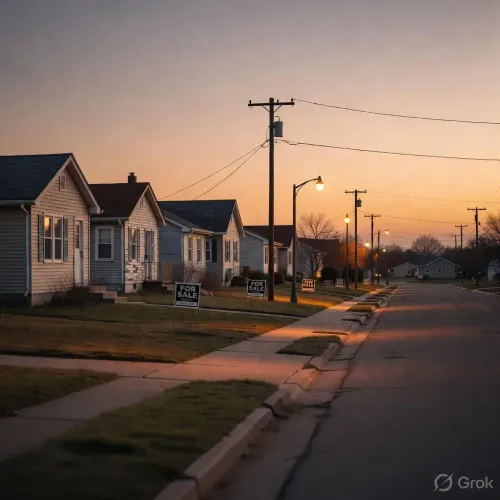
Young Ohioans priced out of starter homes have a new champion making a public promise — and a deadline. Entrepreneur Vivek Ramaswamy declared on Wednesday, 30 September 2026 that home affordability is 'an absolute top challenge for young Ohioans' and pledged to cut the regulatory red tape blocking the construction of entry-level housing, committing to act 'early in 2027.'
The deregulation diagnosis Ramaswamy is betting on
Ramaswamy's argument is not new — but its Ohio-specific framing is pointed. His position mirrors a well-worn Republican case: that local zoning rules, lengthy permitting processes, and land-use restrictions artificially throttle housing supply, driving up prices for the very buyers who can least afford it. The logic is straightforward — when building is made deliberately slow and expensive, fewer starter homes get built, and first-time buyers are frozen out.
This deregulatory push gained serious momentum across multiple U.S. states in the years following the pandemic-era housing surge, as affordability collapsed for younger, lower-income residents in both coastal and Midwestern markets. Ohio, a Midwestern state that once offered relatively accessible housing, has not been immune to those pressures. Rising prices have hit younger residents seeking entry-level homes particularly hard.
A national candidate refocused on a single state
The timing and framing of Ramaswamy's pledge carry their own signal. The 2024 Republican presidential candidate and former co-lead of the Department of Government Efficiency (DOGE) advisory effort is now speaking the language of a state executive — not a Washington reformer. A commitment to act 'early in 2027' implies a governing window, the kind of language that lands differently when someone is positioning for — or already holding — a state office.
Ohio-born Ramaswamy built his public profile on deregulation arguments at the federal level, first as a biotech entrepreneur and then as a national political figure. Applying that same framework to Ohio's housing market suggests a deliberate pivot: the same ideological toolkit, narrowed to a single state's most tangible pain point for younger voters.
What a zoning overhaul could mean for Ohio builders and buyers
Reducing permitting friction and loosening restrictive zoning — if actually legislated — could, in theory, lower the cost and timeline for developers to build smaller, cheaper homes. First-time buyers and housing developers in Ohio are the most direct stakeholders. States that have pursued similar reforms, from Montana to parts of the Northeast, have seen mixed but notable early results in increased construction permits for smaller units.
What remains to be specified — and will be watched closely — is which exact rules Ramaswamy intends to target, whether any legislation is already moving in the Ohio General Assembly, and what political vehicle he intends to use to 'get it done.' A pledge is a pressure point. A bill is a different story entirely.
For a generation of Ohioans watching home ownership recede further into the future, the question is not whether the diagnosis is correct — it is whether the promised cure arrives on time.
Point of View
Now retrofitted as a voter-facing promise on the most tangible economic pain point for younger Ohioans. The 'early in 2027' timeline is politically precise: it implies executive authority already in hand or soon to be secured, and it transforms a policy position into an accountability benchmark. If this signals a 2026 Ohio gubernatorial run, housing could become the defining wedge issue — one where Ramaswamy's DOGE-era deregulation credentials give him a distinctive lane that neither pure culture-war messaging nor fiscal conservatism alone can occupy.
NationPress
30 Sept 2026
Frequently Asked Questions
What did Vivek Ramaswamy say about Ohio housing?
Ramaswamy called home affordability the 'absolute top challenge' for young Ohioans and pledged to cut the regulatory red tape preventing the construction of starter homes, promising to act early in 2027.
Is Vivek Ramaswamy running for Ohio governor?
Ramaswamy has not formally announced a gubernatorial candidacy in verified public record, but his Ohio-specific policy pledge and 2027 action timeline are consistent with a state executive positioning, and a potential 2026 Ohio governor race bid is being closely watched.
How does red tape affect housing affordability in Ohio?
Restrictive local zoning rules, slow permitting processes, and land-use regulations raise the cost and timeline of building new homes, limiting supply and pushing up prices — particularly for smaller, entry-level starter homes that first-time buyers need.
What is the Republican approach to fixing housing affordability?
The dominant Republican argument is supply-side deregulation: removing or streamlining local zoning, permitting, and land-use rules to allow developers to build more homes faster, which in theory increases supply and lowers prices for buyers.
What was Vivek Ramaswamy's role in DOGE?
Ramaswamy served as co-lead of the Department of Government Efficiency advisory effort under the incoming Trump administration following the 2024 election, alongside Elon Musk, before departing that role.